

Key Takeaways
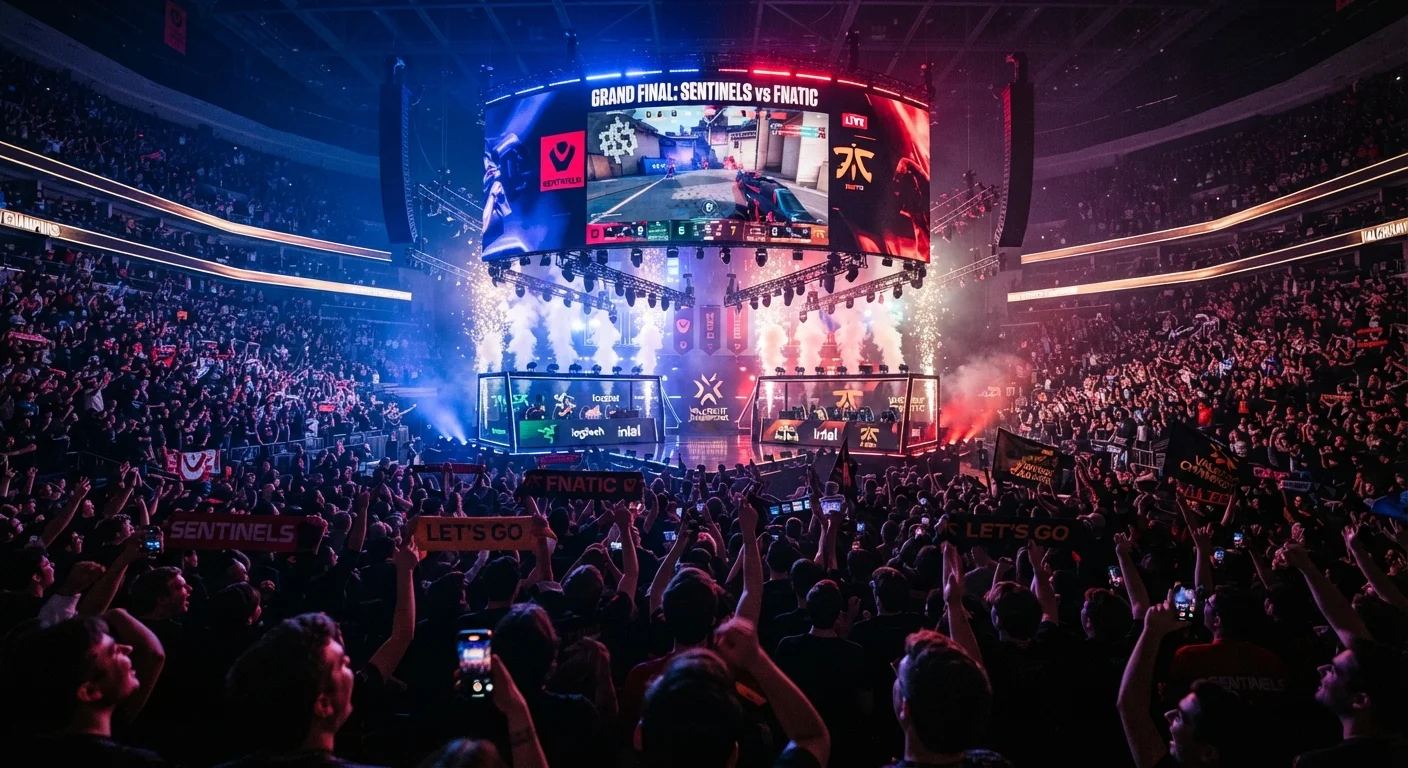
- Esports refers to organized, competitive video gaming watched by live and online audiences.
- Major tournaments follow league or bracket formats similar to traditional sports seasons.
- Most esports content is streamed free on platforms like Twitch and YouTube.
- Sponsorships, media rights, and merchandise are the primary revenue streams for esports organizations.
- Global viewership for esports has consistently reached tens of millions per major event.
Start here
What Esports Actually Is
Next
How Competitive Events Are Structured
Then
Where and How to Watch Esports
Go deeper
The Business Behind the Broadcast
Wrap up
Why Esports Viewership Keeps Growing
What Esports Actually Is
Esports - short for electronic sports - is organized, competitive video gaming performed at a professional or semi-professional level in front of an audience. Think of it less like a solitary gaming session and more like watching a basketball game: there are teams, coaches, analysts, live commentary, and fans rooting for their favorite players to win.
Esports
Organized competitive video gaming played professionally in front of live or online audiences, with structured rules, teams, and prize stakes.
MOBA
Multiplayer Online Battle Arena - a game genre where two teams compete to destroy each other's base, requiring strategy and teamwork. League of Legends is a famous example.
Tournament bracket
A structured elimination format where teams advance by winning matches until one champion remains, similar to the NCAA March Madness format in college basketball.
Prize pool
The total money available to winning teams and players in a tournament, funded by organizers, publishers, or community contributions.
Media rights
Agreements that grant a platform or network the legal permission to broadcast an event, often in exchange for a licensing fee paid to the event organizer.
Skin (in-game)
A purely cosmetic digital item that changes how a character or weapon looks without affecting gameplay, often sold to fund tournaments or generate revenue for publishers.
The category spans dozens of game genres. A real-time strategy game like StarCraft places a premium on rapid decision-making; a first-person shooter like Counter-Strike demands split-second reflexes and team coordination; a multiplayer online battle arena (MOBA) like League of Legends blends both. Each genre creates a different kind of viewing experience, but all share the core ingredients - skilled competitors, high stakes, and an audience.
How Competitive Events Are Structured
Most esports titles organize competition in one of two broad formats: league play or open tournaments. League formats mirror traditional sports seasons - teams compete in regular-season matches over several weeks, with top performers advancing to playoffs. The League of Legends Championship Series (LCS) in North America is a well-known example of this model.
Open or invitational tournaments, by contrast, often culminate in single massive events called Majors or Worlds. Teams qualify through regional circuits and then converge for a championship bracket that can span a week or more. Prize pools at these events have historically ranged from hundreds of thousands to several million dollars, funded partly by game publishers and partly by community-driven crowdfunding mechanics built into certain games.
New to watching? Start with the finals
If you're exploring esports for the first time, jump straight to a championship or Major final rather than a regular-season match. Finals have the highest production quality, the most energetic commentary, and the clearest narrative stakes - all of which make the experience far more gripping for newcomers.
Understanding the structure matters for viewers because it affects when to tune in. Regular-season matches are plentiful and low-stakes; playoff and championship matches are rarer but carry enormous audience energy. Checking a tournament's official schedule before committing to watch can help you catch the moments that matter most.
Where and How to Watch Esports
The vast majority of esports content is consumed online, and much of it is free. Twitch remains the dominant live-streaming platform for competitive gaming, while YouTube hosts both live broadcasts and extensive archives of past matches. Some publishers stream directly on their own websites or apps. For a broader look at how these platforms work from a viewer's perspective, see how gaming streaming platforms work for viewers.
Watching esports has social dimensions built right in. Live chat, viewer polls, and on-screen interactive elements keep fans engaged between rounds. Some tournaments even support co-viewing experiences - a feature explored in depth in our look at watch parties and co-viewing features on streaming platforms.
For those who prefer in-person attendance, major championships are held in arenas across the world, from Los Angeles to Seoul. Tickets are sold through standard event marketplaces, and the live experience typically includes large-screen production, cosplay from fans, and meet-and-greet opportunities with pro players.
The Business Behind the Broadcast
Esports organizations generate revenue through several channels that will feel familiar to fans of traditional sports. Sponsorships from consumer electronics, energy drinks, and apparel companies represent a major income stream. Media rights deals - where platforms pay for exclusive broadcast access - have grown in significance as viewership numbers have attracted mainstream advertisers. This dynamic mirrors what's happening across the broader sports media landscape, which you can read about in how live sports rights are reshaping where fans watch.
Community-funded prize pools explained
In some games, a portion of proceeds from in-game item sales flows directly into the tournament prize pool. This means fans who purchase cosmetic items are, in a small way, contributing to the winnings of professional players. The model has generated prize pools worth tens of millions of dollars for certain annual championships.
Merchandise, in-game item sales, and ticket revenue round out the business model. Some games fund prize pools through the sale of digital cosmetic items - skins or virtual accessories - that fans buy to support a tournament. This community-funded approach has produced some of the largest prize pools in competitive gaming history.
On the talent side, professional players negotiate contracts with teams, earn shares of prize money, and may carry separate sponsorship deals. The career path resembles that of any performance-driven athlete - high earning potential at the top, with intense competition for roster spots. Gaming content creators who build audiences outside structured league play represent an adjacent but distinct career track.
Why Esports Viewership Keeps Growing
Several structural factors make esports a durable entertainment category rather than a passing trend. First, video gaming itself is one of the most widely practiced leisure activities in the US - a built-in fan pipeline that traditional sports rarely enjoy. Second, esports content is globally accessible with low friction: no cable subscription required, no geographic restriction in most cases.
Younger audiences - particularly those who grew up with broadband internet and gaming culture - have shown a strong preference for esports over some legacy broadcast sports. This generational shift has kept advertisers and rights-holders attentive. For context on how digital-first entertainment continues to disrupt older models, see how cloud gaming is changing the equation for players and viewers alike.
Liquipedia
A comprehensive wiki covering schedules, rosters, and results for dozens of esports titles. Useful for understanding tournament structures and tracking standings across leagues.
Esports Charts
A data platform that tracks viewership statistics for esports events worldwide, helping you understand which games and tournaments attract the largest audiences.
Ultimately, esports works as entertainment for the same reasons any competitive event does: skill, drama, narrative, and community. Whether you're a lifelong gamer or simply curious about what millions of people are tuning into, the entry point has never been more accessible.