

Key Takeaways
- The envelope system caps spending by category using a fixed cash allocation each month.
- Physical cash creates a psychological spending limit that cards and apps often don't replicate.
- Digital envelope tools let you apply the same method without carrying cash.
- The system works best for variable spending categories like groceries, dining, and entertainment.
- Fixed expenses like rent and utilities are usually paid separately, outside the envelope framework.
- Consulting a financial professional can help you adapt any budgeting method to your full financial picture.
The Envelope System
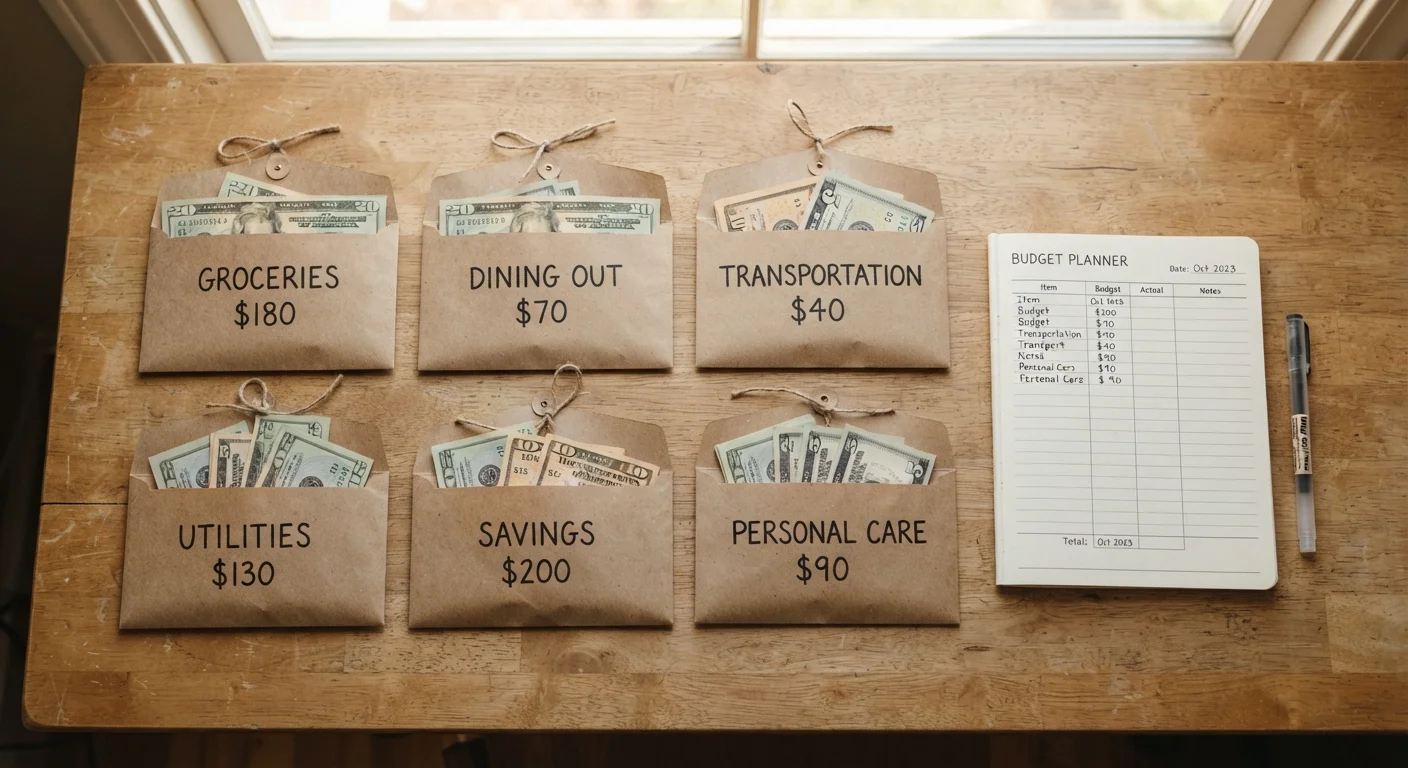
The envelope system is a cash-based budgeting method where you divide your monthly income into physical envelopes, each labeled for a specific spending category - groceries, gas, dining out, and so on. Once an envelope is empty, spending in that category stops for the month. The system makes overspending tangible and immediate rather than invisible.
Digital adaptations replicate this logic using virtual "envelopes" or spending buckets within budgeting apps, preserving the category-cap mechanic without requiring physical cash.
How the Envelope System Works
The mechanics are straightforward. At the start of each month - or each pay period - you withdraw cash equal to your planned variable spending. You then sort that cash into labeled envelopes, one per spending category. Common envelopes include groceries, gasoline, dining out, personal care, and entertainment.
Throughout the month, you spend only from the relevant envelope. Buy groceries, pay from the grocery envelope. When the envelope is empty, spending in that category is done until the next funding date. There is no overdraft, no credit buffer - just the physical reality of what remains.
Fixed, predictable expenses - mortgage or rent, utilities, insurance premiums, subscription services - are generally handled outside the envelope system via automatic payments or scheduled transfers. The envelope method targets the categories where daily decision-making actually influences how much you spend.
For a broader look at how this approach compares with other frameworks, see budgeting methods compared.
Start with Just Two or Three Envelopes
New users often over-engineer the system with a dozen categories, then abandon it within weeks. Start with the two or three categories where you most frequently overspend - usually groceries, dining, and personal spending. Once those feel natural, add more envelopes gradually.
Why Cash Creates a Spending Boundary
There is a documented behavioral difference between paying with cash and paying with a card. Handing over physical bills registers as a more concrete loss than a card swipe, which is why the envelope system can curb overspending even when a person intellectually knows their card balance. Researchers in behavioral economics have referred to this as the "pain of paying" - cash makes that pain immediate.
This is the envelope system's most practical advantage: it moves the spending limit from an abstract number in a spreadsheet to a visible, tangible stack of bills. When half the grocery envelope is gone by mid-month, the message is impossible to ignore.
“Giving every dollar a name before the month begins is the single most powerful shift a person can make in their financial life. The envelope is just the mechanism - the mindset is what changes behavior.”
— Behavioral Finance Research Community, Widely cited perspective in personal finance education literature
Understanding the vocabulary behind this approach will help - terms like discretionary spending, fixed vs. variable expenses, and cash flow are covered in the common budgeting terms guide.
Adapting the Envelope System for Digital Payments
Paying entirely in cash is impractical for many people - online shopping, automatic bill pay, and contactless payments are woven into daily life. The good news is that the envelope method's underlying logic transfers cleanly to digital tools.
Virtual envelope systems work by assigning a monthly dollar cap to each spending category within a budgeting app or a simple spreadsheet. As transactions post, they are categorized and deducted from the relevant bucket. When a bucket hits zero, the constraint is the same - you've reached your limit for the month.
~1 in 3
Americans report having no monthly budget
Surveys from the National Financial Educators Council consistently find that a substantial share of U.S. adults do not follow a formal budget, highlighting the gap the envelope system is designed to close.
12-18%
Typical overspend in discretionary categories
Behavioral finance research suggests consumers routinely underestimate variable spending by this margin when relying on mental accounting rather than explicit category limits.
The tradeoff compared with physical cash is that digital envelopes require discipline to enforce. With physical cash, the constraint is automatic; with a virtual system, you must choose to respect the limit. Those who prefer structure with more tracking flexibility might also explore spreadsheet vs. app-based budgeting for comparison.
Thoughtful expense categorization is especially important in digital versions - categories that are too broad make it hard to see where money is actually going.
Is the Envelope System Right for You?
The envelope system suits people who have struggled with overspending in specific categories, who find abstract numbers unconvincing, or who want a method with built-in friction. It is particularly effective for groceries, dining, and entertainment - categories where a few unplanned purchases can silently erode a budget.
It is less suited to households with highly irregular income, since the method depends on knowing your monthly allocation in advance. It also demands a willingness to engage with your budget actively - checking envelopes, reconciling spending, and refunding them each cycle.
The envelope approach reflects a different philosophy than strategies that prioritize saving first; if you're curious how the two compare, pay-yourself-first vs. traditional budgeting explores that distinction in depth.
This article is for general informational and educational purposes only and does not constitute personalized financial advice. Consider consulting a qualified financial professional before making significant changes to your budgeting or financial planning approach.
The System Doesn't Replace a Full Budget
The envelope method manages how you spend, but it doesn't replace the need to track income, save for goals, or plan for irregular expenses like car repairs or medical bills. Think of it as one tool within a broader financial plan, not a complete solution on its own.