

Key Takeaways
- Credit monitoring alerts you to changes in your credit report, but does not prevent unauthorized activity.
- Monitoring services cannot fix errors on your report - that requires a formal dispute process.
- Free monitoring options exist, so paying for a service is not always necessary.
- A credit freeze offers stronger identity protection than monitoring alone.
- Regular self-review of your credit report remains an essential habit alongside any monitoring service.
Provides timely alerts to potential fraud
When a new account opens or an inquiry hits your file, an alert can arrive within hours - giving you a faster response window than waiting for a paper statement.
Tracks credit score changes over time
Many services display score trends, helping you see whether your credit-building habits are working or whether an unexpected dip warrants investigation.
Free options are widely available
Numerous credit card issuers and financial apps offer no-cost monitoring features, making basic surveillance accessible without a monthly subscription.
Reduces time spent manually reviewing reports
Automated alerts surface relevant changes so you don't have to scrutinize every line of your report on a weekly basis.
Cannot prevent fraud from occurring
Monitoring is inherently after-the-fact - a fraudulent account has already been opened by the time an alert reaches you. It informs; it does not block.
Cannot correct errors on your report
Disputing inaccurate information requires a separate formal process with the credit bureau and, sometimes, the creditor involved. Monitoring only surfaces the problem.
May miss activity across all three bureaus
Single-bureau monitoring services only flag changes reported to one bureau, meaning fraudulent accounts reported to the other two could go unnoticed for weeks.
Does not protect existing accounts
Takeovers of current bank or credit card accounts, and many forms of tax identity theft, fall outside the scope of standard credit monitoring.
Our Verdict
Credit monitoring is a useful early-warning tool that can help you catch suspicious activity or score changes quickly. However, it is reactive by nature - it notifies you after something happens rather than stopping it. Used alongside proactive steps like credit freezes, regular report reviews, and dispute processes, monitoring can be a valuable piece of a broader credit-health strategy.
Credit monitoring is best suited for consumers who want timely alerts about changes to their credit file and are prepared to act on those alerts promptly.
What Credit Monitoring Actually Does
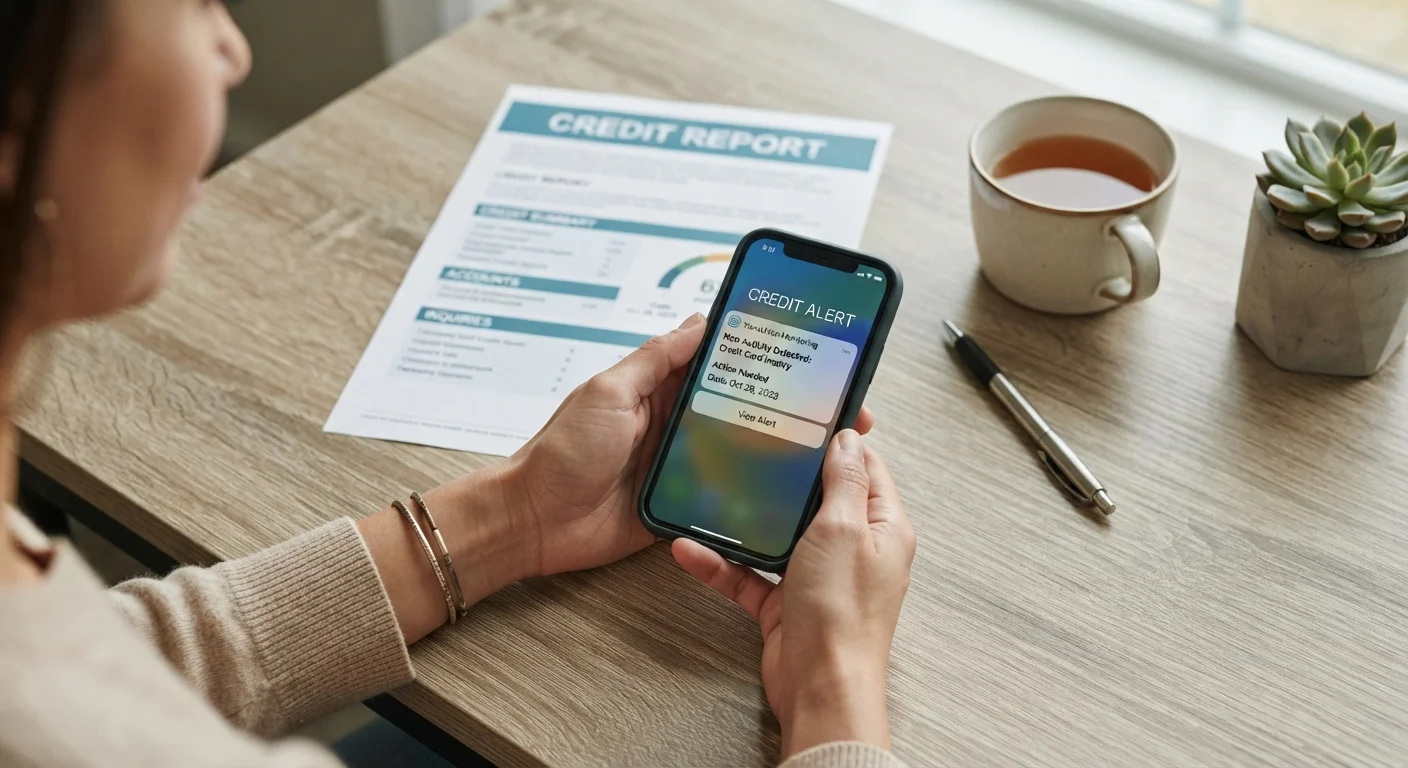
Credit monitoring is a service - offered by credit bureaus, financial institutions, and third-party companies - that watches your credit file and notifies you when certain changes occur. These alerts typically cover events such as a new account being opened in your name, a hard inquiry from a lender, a change in your credit score, a late payment being reported, or your personal information appearing on the dark web.
To understand what monitoring is tracking, it helps to be clear on the underlying data. Your credit report is the detailed record of your borrowing history compiled by the three major credit bureaus - Equifax, Experian, and TransUnion. Your credit score is a numerical summary calculated from that report. Learn how a credit score and credit report differ and why the distinction shapes what monitoring can and cannot catch.
Most monitoring services pull data from one or more bureaus, so coverage varies. A single-bureau service may miss activity reported only to the other two. Before relying on any service, it is worth confirming which bureaus it monitors.
Provides timely alerts to potential fraud
When a new account opens or an inquiry hits your file, an alert can arrive within hours - giving you a faster response window than waiting for a paper statement.
Tracks credit score changes over time
Many services display score trends, helping you see whether your credit-building habits are working or whether an unexpected dip warrants investigation.
Free options are widely available
Numerous credit card issuers and financial apps offer no-cost monitoring features, making basic surveillance accessible without a monthly subscription.
Reduces time spent manually reviewing reports
Automated alerts surface relevant changes so you don't have to scrutinize every line of your report on a weekly basis.
What Credit Monitoring Cannot Do
The most important thing to understand about credit monitoring is that it is reactive, not preventive. If someone opens a fraudulent credit card in your name, a monitoring service will alert you - but only after the account has already been created. It does not block the attempt.
Monitoring also cannot repair your credit file. If you receive an alert about an error - say, a debt that isn't yours or a payment incorrectly marked late - you must go through the formal dispute process to correct it. That involves contacting the bureau directly and, in some cases, the original creditor. Our guide to disputing errors on your credit report walks through how that process works.
Finally, monitoring does not protect accounts you already have open. Bank account takeovers, fraudulent charges on existing credit cards, and tax identity theft typically won't appear on your credit report until significant damage has already occurred - and many services won't catch them at all.
Cannot prevent fraud from occurring
Monitoring is inherently after-the-fact - a fraudulent account has already been opened by the time an alert reaches you. It informs; it does not block.
Cannot correct errors on your report
Disputing inaccurate information requires a separate formal process with the credit bureau and, sometimes, the creditor involved. Monitoring only surfaces the problem.
May miss activity across all three bureaus
Single-bureau monitoring services only flag changes reported to one bureau, meaning fraudulent accounts reported to the other two could go unnoticed for weeks.
Does not protect existing accounts
Takeovers of current bank or credit card accounts, and many forms of tax identity theft, fall outside the scope of standard credit monitoring.
Monitoring vs. Stronger Protective Measures
If your primary concern is preventing someone from opening new credit in your name, a credit freeze is more effective than monitoring alone. A freeze restricts lenders from accessing your credit file entirely, making it nearly impossible for a fraudster to open new accounts - even with your Social Security number. Monitoring, by contrast, simply tells you when a new account appears.
A fraud alert is a middle-ground option: it asks lenders to take extra verification steps before extending credit, without fully blocking access. Compare credit freezes and fraud alerts to decide which level of protection fits your situation.
Freezes Are Free and Reversible
Under federal law, placing and lifting a credit freeze with all three major bureaus is free for any consumer. A freeze can be temporarily lifted when you apply for new credit and reinstated afterward. This makes it a low-friction option for consumers who want stronger protection without ongoing cost.
None of these tools replace the habit of reviewing your full credit report periodically. Use our annual credit report audit checklist to know what to look for each time you pull your report.
Free vs. Paid Monitoring: What to Weigh
Many consumers pay for credit monitoring services when free alternatives exist. Under federal law, you are entitled to a free credit report from each of the three major bureaus periodically through AnnualCreditReport.com. Several credit card issuers and financial apps also offer complimentary score tracking and basic alert features.
Paid services typically offer broader coverage - monitoring across all three bureaus, dark web scanning, identity theft insurance, and dedicated resolution support. Whether that extra layer is worth the cost depends on your personal risk tolerance and circumstances. If you have recently experienced identity theft or have reason to believe your information has been compromised, more comprehensive coverage may be worth considering.
1 in 5
Americans with errors on credit reports
A Federal Trade Commission study found that approximately one in five consumers had a verifiable error on at least one of their three major credit reports.
33%
Identity theft victims who had monitoring
Consumer Sentinel Network data suggests a significant share of identity theft victims had some form of monitoring in place, underlining its reactive rather than preventive nature.
This article is for general informational and educational purposes only and does not constitute personalised financial or legal advice. For guidance specific to your situation, consult a qualified financial professional.