

Key Takeaways
- A credit score condenses your borrowing history into a single number lenders use to evaluate risk.
- Payment history carries the most weight in most scoring models - missed payments hurt significantly.
- Credit utilization, or how much of your available credit you use, is the second most influential factor.
- Scores can vary across bureaus because not all lenders report to all three.
- Understanding the factors behind your score is the first step to improving it deliberately.
Credit Score
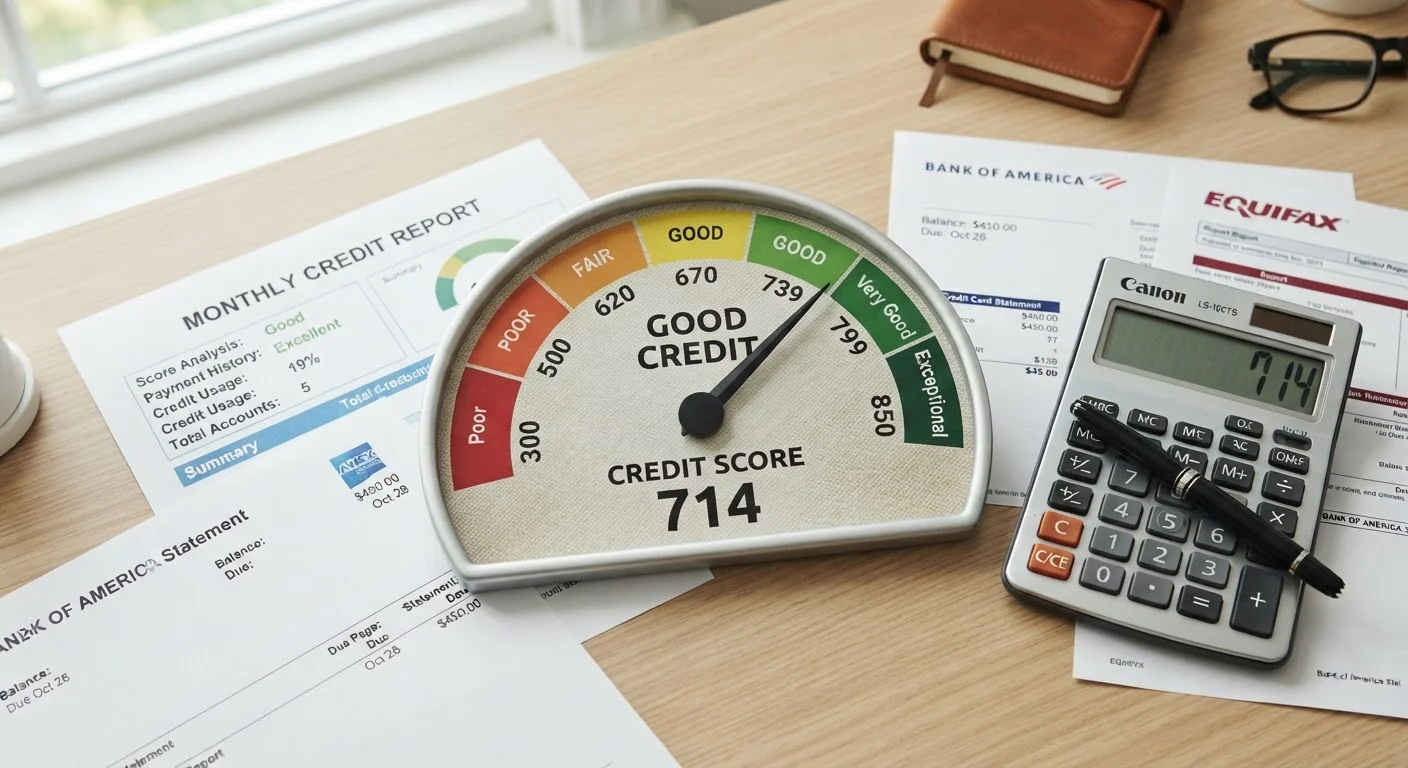
A credit score is a three-digit number, typically ranging from 300 to 850, that summarizes how reliably you've managed borrowed money. Lenders use it to quickly assess the likelihood that you'll repay a new loan or credit card on time. The higher the number, the lower the perceived risk you represent to a lender.
Most lenders rely on FICO scores, developed by Fair Isaac Corporation, though VantageScore - a competing model created by the three major credit bureaus - is also widely used. Both models use the same 300-850 scale but weight factors slightly differently.
A Number Built From Your Borrowing Behavior
Think of your credit score as a financial report card - except instead of grades, it reflects patterns in how you've used and repaid credit over time. It isn't an opinion or an estimate; it's a calculation derived from real data in your credit report.
That underlying data comes from lenders, credit card issuers, and other creditors who report your activity to one or more of the three major credit bureaus: Equifax, Experian, and TransUnion. A scoring algorithm then processes that data to produce a number. The score doesn't tell a lender everything about you financially - it tells them one specific thing: how statistically likely you are to repay what you owe. For a fuller picture of how that raw data is assembled, see how your credit report and credit score differ.
300-850
Standard FICO and VantageScore range
Both major scoring models use this scale, with higher numbers indicating lower credit risk according to scoring methodology.
35%
Weight of payment history in FICO scores
Fair Isaac Corporation publishes the approximate weighting of each factor category in its FICO scoring model.
~200M
US adults with a FICO score on file
According to FICO's published data, the vast majority of US adults who have used credit have a scoreable file at one or more bureaus.
The Core Factors Behind the Calculation
Under the dominant FICO model, five categories of information feed into your score. Each carries a different weight, meaning changes in some areas move your score more dramatically than changes in others.
- Payment history (~35%): Whether you pay on time is the single largest factor. Late payments, collections, and defaults leave lasting marks.
- Amounts owed / Credit utilization (~30%): This measures how much of your available revolving credit you're using. Carrying high balances relative to your credit limits signals risk. Credit utilization is one of the most actionable factors you can influence quickly.
- Length of credit history (~15%): Longer, well-managed credit histories tend to produce higher scores. This is why closing old accounts can sometimes be counterproductive.
- Credit mix (~10%): A combination of installment loans (like auto or student loans) and revolving credit (like credit cards) can reflect positively on your score.
- New credit / Hard inquiries (~10%): Applying for multiple new credit lines in a short period can temporarily lower your score, as each application triggers a hard inquiry.
For a deeper look at how these factors interact, see the full breakdown of FICO's five factors.
Check Your Credit Report Before Your Score
Your score is only as accurate as the data behind it. Errors on your credit report - an account that isn't yours, a payment incorrectly marked late - can drag your score down unfairly. US consumers are entitled to free annual credit reports from each bureau at AnnualCreditReport.com. Reviewing your report for errors is a smart first step before focusing on improving your score.
Why Your Score Can Vary - and What That Means
You don't have just one credit score. You have many - because scores depend on which bureau's data is being used, which scoring model is applied (FICO vs. VantageScore, or different versions of FICO), and when the score is pulled. A mortgage lender may use a different FICO version than an auto lender.
This can feel disorienting, but the underlying logic remains the same across models. If you manage the core factors well - especially payment history and utilization - your scores across bureaus and models will generally reflect that. Variations between bureaus often trace back to differences in what each lender chooses to report. Understanding how each bureau operates can clarify why your numbers don't always match.
It's also worth knowing that your credit score is only one piece of what lenders evaluate. Your debt-to-income ratio - the share of your monthly income that goes toward debt payments - can be just as consequential in a lender's decision, even if it never appears in your credit score.
Scoring Models Are Not Identical
FICO and VantageScore both use the 300-850 range, but their algorithms differ. A score of 720 from one model doesn't guarantee a 720 from another. When a lender tells you the score they'll use to evaluate your application, it's worth asking which specific model and version they rely on - this can help you understand where to focus your improvement efforts.
This article is for general informational purposes only and does not constitute personalized financial or credit advice. Consult a qualified financial professional for guidance specific to your situation.