

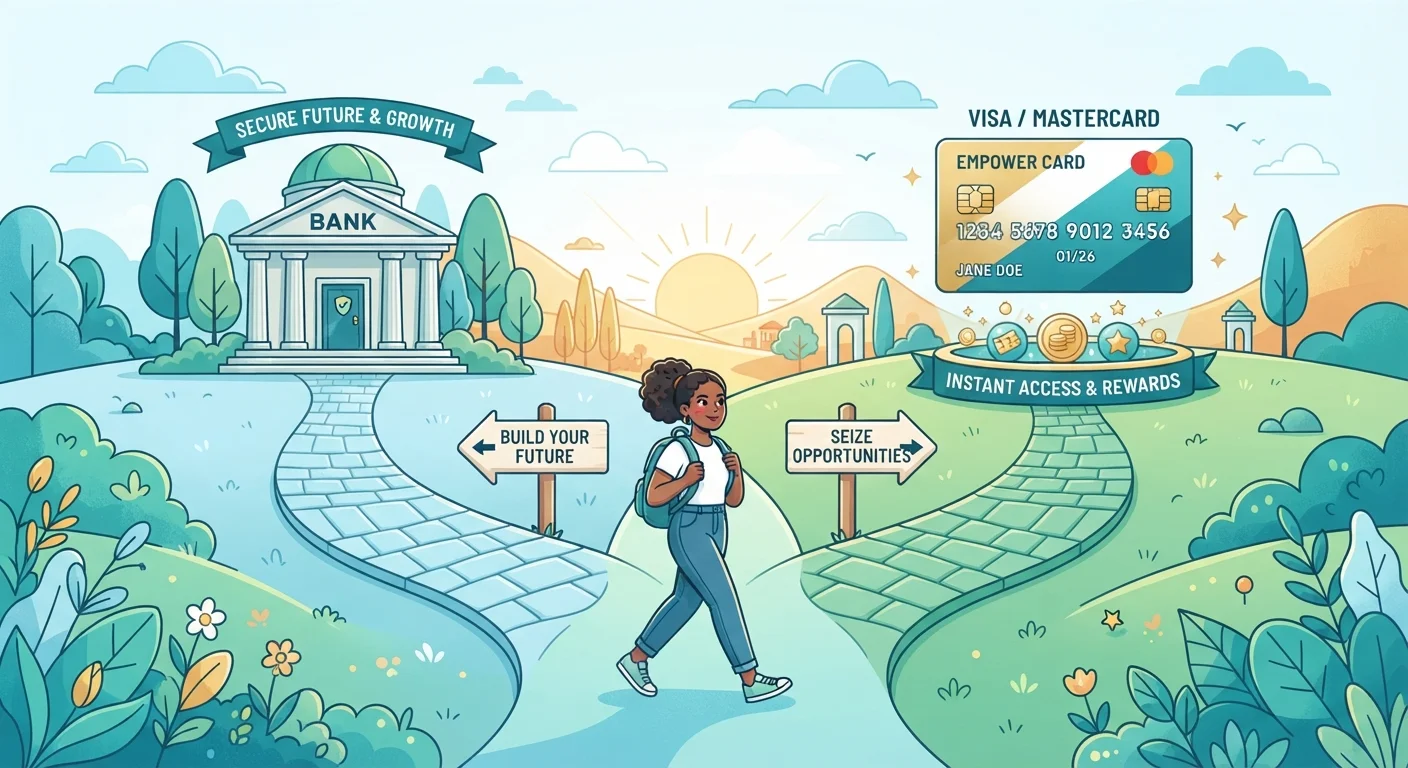
Key Takeaways
- Secured credit cards require an upfront deposit that typically becomes your credit limit.
- Credit-builder loans hold your payments in a savings account until the loan is paid off.
- Both tools report to major credit bureaus, helping you build a credit history over time.
- Your spending habits and savings goals can help determine which option fits better.
- Using either tool responsibly - paying on time, every time - is what actually moves your score.
Our Verdict
Secured credit cards and credit-builder loans are both legitimate, effective tools for building credit from scratch. The right choice depends on whether you need to practice managing revolving credit or prefer a structured savings mechanism with predictable payments. Many consumers find that using both over time provides the broadest credit-building foundation.
| Best for | Recommended |
|---|---|
| Those who want immediate purchasing power while building credit | Secured Credit Card |
| Those who prefer a structured, savings-oriented approach | Credit-Builder Loan |
| Those looking to diversify their credit mix | Both Tools Combined |
| Those who want to avoid the temptation of revolving debt | Credit-Builder Loan |
Why Starting From Zero Credit Is a Real Challenge
Having no credit history can feel like a catch-22: lenders want to see a track record before they extend credit, but you can't build a track record without someone giving you a chance. This situation - sometimes called being "credit invisible" - affects millions of Americans, particularly young adults, recent immigrants, and anyone who has previously relied only on cash or debit.
The good news is that two widely available financial products are specifically designed for this starting point: secured credit cards and credit-builder loans. Understanding how each works - and how they differ - can help you choose the path that fits your financial habits and goals. For a broader look at how credit scores develop over time, see our complete credit score guide.
This article is for general informational purposes only and does not constitute personalized financial advice. Consult a qualified financial professional for guidance specific to your situation.
How Secured Credit Cards Work
A secured credit card functions like a standard credit card with one key difference: you make a refundable security deposit - often between $200 and $500 - that typically becomes your credit limit. Because the lender holds your deposit as collateral, approval standards are much lower than for traditional cards.
You then use the card for everyday purchases and receive a monthly bill. Paying that bill on time - and ideally in full - gets reported to the major credit bureaus (Equifax, Experian, and TransUnion), which gradually builds your credit file. This is revolving credit in its most accessible form.
Check Bureau Reporting Before You Commit
Not every secured card or credit-builder loan reports to all three major credit bureaus - Equifax, Experian, and TransUnion. Reporting to all three gives you the broadest credit-building impact. Before you open any account specifically to build credit, confirm the lender's reporting practices in writing or in the product's terms and conditions.
After demonstrating responsible use - typically six to twelve months - many issuers will either upgrade your account to an unsecured card or refund your deposit. When evaluating a secured card, check whether the issuer reports to all three major bureaus, as not all do.
Potential Drawbacks
- Your deposit ties up cash you may need elsewhere.
- Some secured cards carry annual fees that reduce the value of your deposit.
- Carrying a high balance relative to your limit (called a high credit utilization ratio) can actually hurt your score, so keeping balances low is essential.
Before applying, it's worth reviewing what to consider before opening a new credit account, including how a hard inquiry can affect your score.
How Credit-Builder Loans Work
A credit-builder loan works in the opposite direction from a traditional loan. Instead of receiving funds upfront and paying them back, you make fixed monthly payments - typically over 6 to 24 months - and the lender holds that money in a locked savings account. When you complete all payments, the funds (minus any fees or interest) are released to you.
Each on-time payment is reported to the credit bureaus, building your payment history - the single most important factor in most credit scoring models. Because no money changes hands until the end, the lender's risk is minimal, making these products accessible even to people with no credit history at all.
| Secured Credit Card | Credit-Builder Loan | |
|---|---|---|
| How it works | Deposit-backed revolving card for purchases | Payments held in savings; released at end of term |
| Immediate access to funds | Yes - spend up to your deposit amount | No - funds released after loan is repaid |
| Credit type built | Revolving credit | Installment credit |
| Reports to credit bureaus | Yes (most issuers; verify before applying) | Yes (most lenders; verify before applying) |
| Savings component | No - deposit is collateral, not savings | Yes - you accumulate savings over the term |
| Key risk | High utilization or missed payments | Missing payments; fees reduce total payout |
| Typical upfront cost | Security deposit ($200-$500+) | First monthly payment; may have small fee |
Credit-builder loans are commonly offered by credit unions, community banks, and some online financial services. They also come with a built-in savings component, which can be a meaningful benefit if you struggle to set money aside consistently.
Potential Drawbacks
- You don't receive the funds immediately, so this product doesn't give you spending power today.
- Missing a payment can damage the credit profile you're trying to build.
- Interest and fees reduce the total amount you receive at the end.
Choosing the Right Tool - or Using Both
Neither option is universally superior. Your choice should reflect how you manage money day to day and what you need most right now.
If you want to practice budgeting with a payment card and learn to manage a revolving balance responsibly, a secured card gives you that experience. If you'd rather automate a fixed monthly payment and build savings simultaneously, a credit-builder loan may feel more natural. It's also worth knowing that credit scoring models consider your mix of credit types, so having both an installment account and a revolving account on your report can be beneficial over time.
Another path some people explore is becoming an authorized user on a trusted family member's or friend's card. That approach has its own trade-offs - understand what transfers and what doesn't before pursuing it.
One Late Payment Can Undo Months of Progress
Payment history is generally the most heavily weighted factor in mainstream credit scoring models. A single payment that is 30 or more days late can cause a noticeable drop in your score and remain visible on your credit report for up to seven years. If you're worried about forgetting, set up autopay for at least the minimum amount due - then pay any remaining balance manually.
Regardless of which tool you choose, the behavior that matters most is simple and non-negotiable: make every payment on time. Payment history typically accounts for the largest share of most credit scores. Late or missed payments can set your progress back significantly and remain on your credit report for years.
If you're working to recover from a damaged score rather than building from zero, some of these same tools apply - but the strategies differ. See approaches that tend to move the needle on a low credit score for more targeted guidance.