

Key Takeaways
- Revolving credit lets you borrow repeatedly up to a limit; installment credit provides a lump sum repaid over fixed payments.
- Credit cards are the most common revolving accounts; mortgages, auto loans, and personal loans are installment examples.
- Your credit utilization ratio - a key score factor - applies only to revolving credit, not installment balances.
- Having both credit types in your credit file can positively influence your credit mix, one of five scoring factors.
- Missing payments on either type harms your score; understanding each helps you manage repayment strategically.
Our Verdict
Neither revolving nor installment credit is inherently superior - each serves a different financial purpose. Revolving credit offers flexibility for ongoing or unpredictable expenses, while installment credit delivers structured repayment for large, defined purchases. Maintaining both responsibly tends to reflect positively on your overall credit profile.
| Best for | Recommended |
|---|---|
| Everyday purchases and flexible spending needs | Revolving credit |
| Large one-time expenses with predictable repayment | Installment credit |
| Building a well-rounded credit profile | A mix of both credit types |
What Is Revolving Credit?
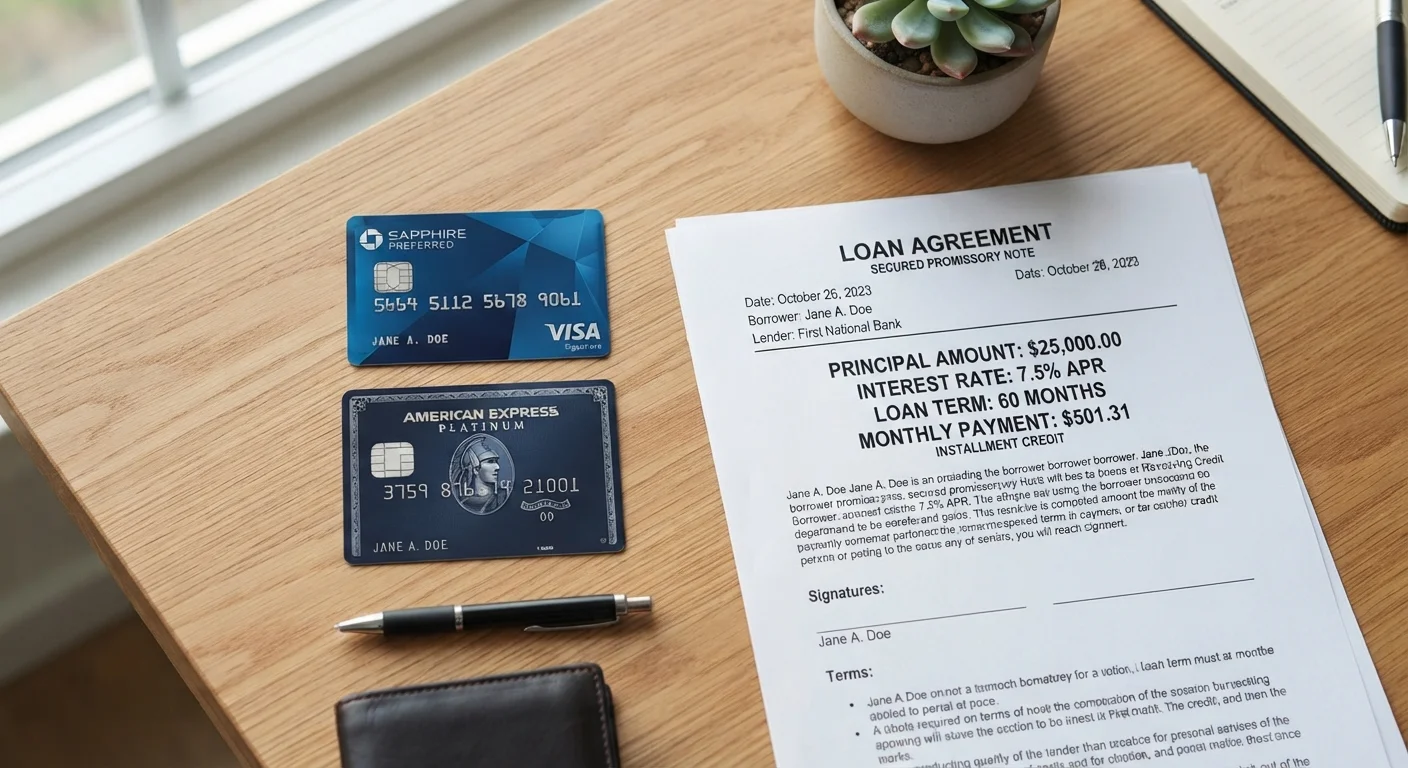
Revolving credit is a type of borrowing with a set credit limit that you can draw from, repay, and draw from again - repeatedly, over time. Think of it like a reservoir: as long as you stay within your limit, you can use funds, pay them back, and use them again without applying for new credit each time.
Credit cards are the most familiar example, but home equity lines of credit (HELOCs) also fall into this category. Each billing cycle, you receive a statement reflecting your current balance. You can pay the full balance - avoiding interest - or carry a portion forward, which triggers interest charges on what remains.
One critical metric tied exclusively to revolving accounts is credit utilization - the percentage of your available revolving credit you're currently using. For example, a $2,000 balance on a $10,000 credit limit represents 20% utilization. Credit utilization is one of the most influential factors in most scoring models, so keeping it low - generally below 30% - is widely recommended by financial educators.
Paying in Full Avoids Interest Entirely
With revolving credit, you only pay interest if you carry a balance from one billing cycle to the next. Paying your full statement balance by the due date each month means you use the credit - and potentially build your score - without incurring interest charges. This is one of the clearest advantages revolving credit holds for disciplined users.
What Is Installment Credit?
Installment credit works differently: a lender provides a fixed lump sum, and you repay it in equal, scheduled payments (installments) over a defined period. The loan amount, interest rate, and repayment timeline are established upfront, making your monthly obligation predictable.
Common examples include mortgages, auto loans, student loans, and personal loans. Because the borrowing happens once and is repaid on a fixed schedule, installment accounts don't carry a revolving balance - and they don't factor into your credit utilization ratio.
Student loans and your credit profile follow installment credit rules - they appear on your report, and on-time payment history contributes positively to your score. Missing payments, however, can cause lasting damage.
| Feature | Revolving Credit | Installment Credit | |
|---|---|---|---|
| How funds are accessed | Draw repeatedly up to a limit | Lump sum disbursed upfront | |
| Repayment structure | Flexible; minimum payment required | Fixed scheduled payments | |
| Common examples | Credit cards, HELOCs | Mortgages, auto loans, personal loans | |
| Affects credit utilization ratio | Yes | No | |
| Interest accrual | On carried balance each cycle | On outstanding principal over term | |
| Contributes to credit mix | Yes | Yes |
How Each Type Affects Your Credit Score
Your credit score and credit report reflect the same accounts but serve different purposes. Understanding how revolving and installment credit each influence scoring helps you make more informed decisions.
- Payment history (the largest scoring factor): Both account types report your payment behavior. On-time payments help; missed or late payments hurt - regardless of credit type.
- Credit utilization: Applies only to revolving accounts. Installment loan balances are not factored into this ratio.
- Length of credit history: Both contribute. Older accounts in good standing generally benefit your score.
- Credit mix: Scoring models typically reward a diversified mix - having both revolving and installment accounts in your file. This factor usually carries less weight than payment history or utilization, but it still counts.
- New credit inquiries: Applying for either type triggers a hard inquiry. Hard inquiries vs. soft inquiries differ meaningfully in how they affect your score.
If you're newer to credit, the path toward establishing both types is worth understanding. Secured cards and credit-builder loans represent beginner-friendly entry points into each category.
30%
Recommended maximum credit utilization
Many credit educators and scoring analysts suggest keeping revolving utilization at or below 30% to avoid score penalties, though lower is generally better.
35%
Weight of payment history in FICO scoring
According to FICO, payment history is the single largest component of a standard FICO credit score, applying equally to both revolving and installment accounts.
10%
Weight of credit mix in FICO scoring
FICO indicates that credit mix - which rewards having both revolving and installment accounts - accounts for roughly 10% of a standard FICO score.
Managing Both Credit Types Wisely
Having access to both revolving and installment credit doesn't automatically improve your financial position - responsible management does. A few practical principles apply across both types:
- Pay on time, every time. Payment history is the dominant scoring factor. Even one missed payment can meaningfully lower a score, and negative marks can remain on a credit report for up to seven years.
- Watch your revolving balances closely. Since utilization only counts for revolving credit, carrying high balances on credit cards has an outsized effect on scores. Paying down revolving balances before statement closing dates can reflect a lower utilization to credit bureaus.
- Don't take on installment debt without a clear repayment plan. Because installment loans have fixed terms, falling behind - especially on secured loans like mortgages or auto loans - carries serious consequences, including potential loss of collateral.
- Check your credit report regularly. Both account types appear on your report. Review them to confirm accuracy, since errors on either type can drag down your score unjustly. If something looks wrong, you have the right to dispute it with the reporting bureau.
This article provides general financial education and is not personalized financial or credit advice. For guidance tailored to your specific situation, consider consulting a licensed financial counselor or adviser.
This article is for informational purposes only and does not constitute financial, credit, or legal advice. Please consult a qualified financial professional regarding your individual circumstances.