

Key Takeaways
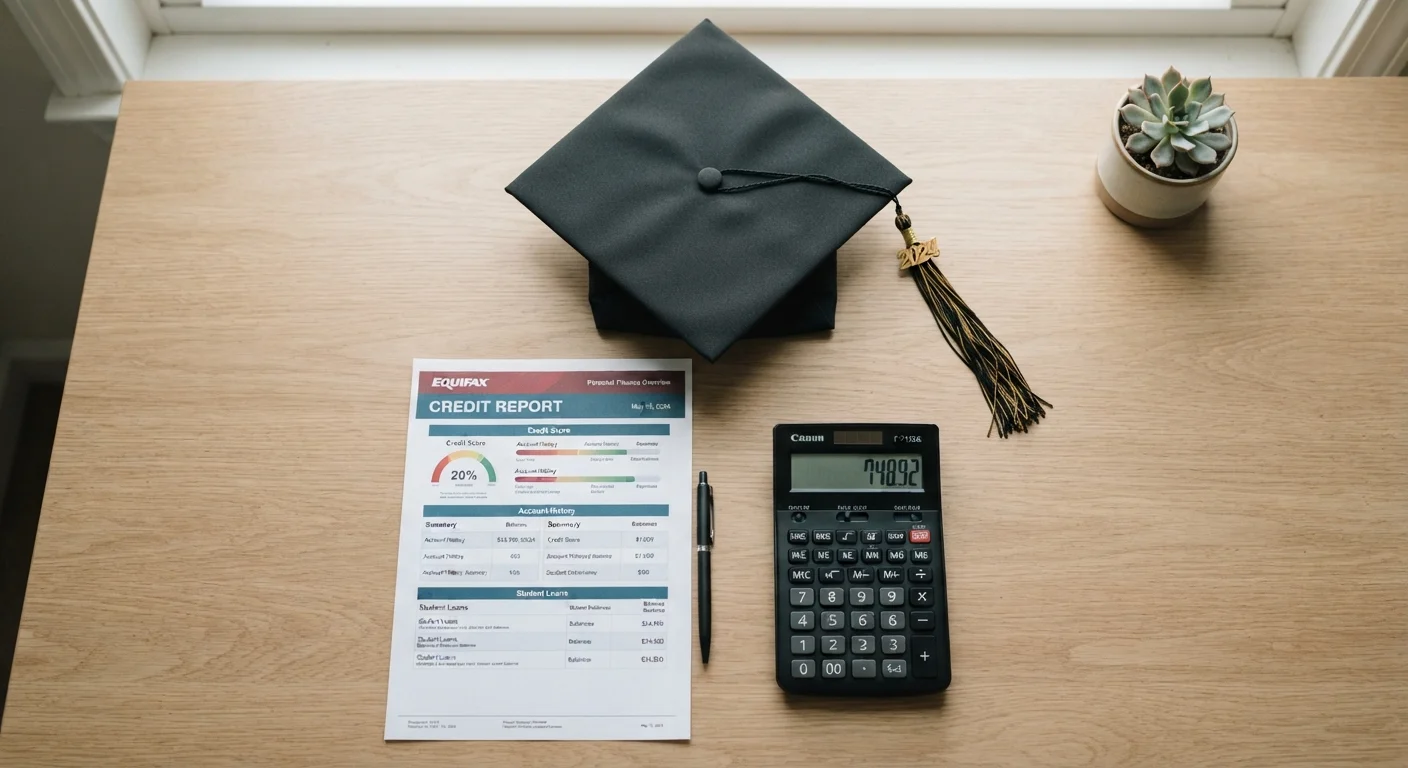
- Student loans appear on your credit report as installment accounts and affect multiple credit score factors.
- On-time payments build positive credit history; missed payments can cause significant and lasting damage.
- Defaulting on a federal student loan triggers severe credit consequences beyond a simple late payment.
- Income-driven repayment and deferment options exist to help borrowers avoid missed payments.
- Paying off a student loan doesn't immediately remove it - positive history can remain for up to 10 years.
Student Loan Credit Impact
Student loans are installment loans - a type of credit you repay in fixed monthly payments over time. They appear on your credit report just like any other loan, influencing your payment history, credit mix, and total debt load. How you manage them directly shapes your credit profile for years.
Federal and private student loans are reported separately to credit bureaus; each loan (or each disbursement in some cases) may appear as its own trade line on your credit report.
How Student Loans Show Up on Your Credit Report
When a student loan is issued, it is reported to the three major credit bureaus - Equifax, Experian, and TransUnion - as an installment account. This is the same category as auto loans and personal loans. As explained in our guide on revolving vs. installment credit, installment accounts are repaid in fixed monthly amounts over a set period, as opposed to revolving credit like a credit card.
If you have multiple federal loans from different academic years, each may appear as a separate trade line on your report. Private loans are similarly reported but as distinct accounts from your private lender. This means a borrower with several loans could have five, six, or more separate student loan entries - all tracked individually.
What Lenders Can See on Your Report
When a lender reviews your credit file, they can see each student loan listed individually - including the original balance, current balance, payment status, and month-by-month payment history. Missing even a single payment creates a visible record that stays with you. Knowing this can be a powerful motivator for proactive communication with your servicer.
What appears on your report: the lender's name, loan balance, monthly payment amount, account status, and your full payment history. Lenders reviewing your credit can see all of it.
Credit Score Factors That Student Loans Influence
Student loans touch several of the main factors that determine your credit score:
- Payment history (most impactful): Every on-time payment adds positive history. Every missed or late payment does the opposite. This single factor carries the most weight in standard credit scoring models.
- Amounts owed: Your outstanding student loan balance contributes to your total debt load, which affects your overall credit utilization picture - particularly relevant when lenders calculate your debt-to-income ratio.
- Length of credit history: Student loans taken out early in adulthood often become the oldest accounts on a borrower's report, which supports a longer average credit age - generally a positive factor.
- Credit mix: Having an installment loan alongside credit cards demonstrates that you can manage different types of credit, which can modestly benefit your score.
43 million
Americans with federal student loan debt
According to the U.S. Department of Education, approximately 43 million borrowers hold federal student loans.
~$37,000
Average federal student loan balance per borrower
Federal Student Aid data indicates the average federal student loan debt per borrower is roughly $37,000, though individual balances vary widely.
7 years
How long a late payment stays on your credit report
Under the Fair Credit Reporting Act (FCRA), most negative items including late student loan payments remain on credit reports for seven years.
What Happens When Payments Are Missed or Loans Default
A single missed payment on a student loan can have significant consequences. As detailed in our article on what happens to your credit when you miss a payment, late payments are typically reported to credit bureaus once they are 30 days past due, and they can remain on your report for seven years.
Federal student loans have a longer delinquency window before formal default - generally 270 days - compared to most private loans. However, default carries serious consequences: the full balance may become immediately due, the account may be sent to collections (see our guide on collections accounts and credit), and the credit damage can be severe and long-lasting.
Contact Your Servicer Before You Miss a Payment
If you're struggling to make a payment, reach out to your loan servicer before the due date - not after. Federal loan servicers are required to inform you about income-driven repayment plans and deferment options. Acting early gives you the best chance of avoiding a negative credit mark altogether.
Managing Student Loans to Protect Your Credit
Borrowers have more tools than many realize to stay in good standing. Federal loan programs offer income-driven repayment (IDR) plans that cap monthly payments as a percentage of discretionary income, making payments more manageable. Deferment and forbearance allow temporarily pausing payments without triggering a negative credit mark - provided they're formally authorized by your servicer.
If you co-signed a student loan or had someone co-sign for you, be aware that the loan affects both parties' credit profiles. Our piece on co-signing a loan walks through exactly how that shared responsibility works. Staying in consistent communication with your loan servicer - especially during financial hardship - is one of the most effective steps borrowers can take to avoid credit damage.
This article provides general financial education and is not personalized financial or legal advice. For guidance specific to your situation, consult a qualified financial professional or student loan counselor.