

Key Takeaways
- The gut microbiome contains trillions of microorganisms that influence digestion, immunity, and mood.
- Persistent bloating, irregular bowel habits, or fatigue can be signals worth discussing with a healthcare provider.
- The gut and brain communicate through a bidirectional network that affects both physical and mental wellbeing.
- Diet diversity, fiber intake, sleep, and stress management are among the most evidence-supported habits for digestive health.
Start here
What Is the Gut Microbiome?
Next
Signals Your Gut May Be Sending
Then
The Gut-Brain Connection
Apply it
Everyday Habits That Support Digestive Health
What Is the Gut Microbiome?
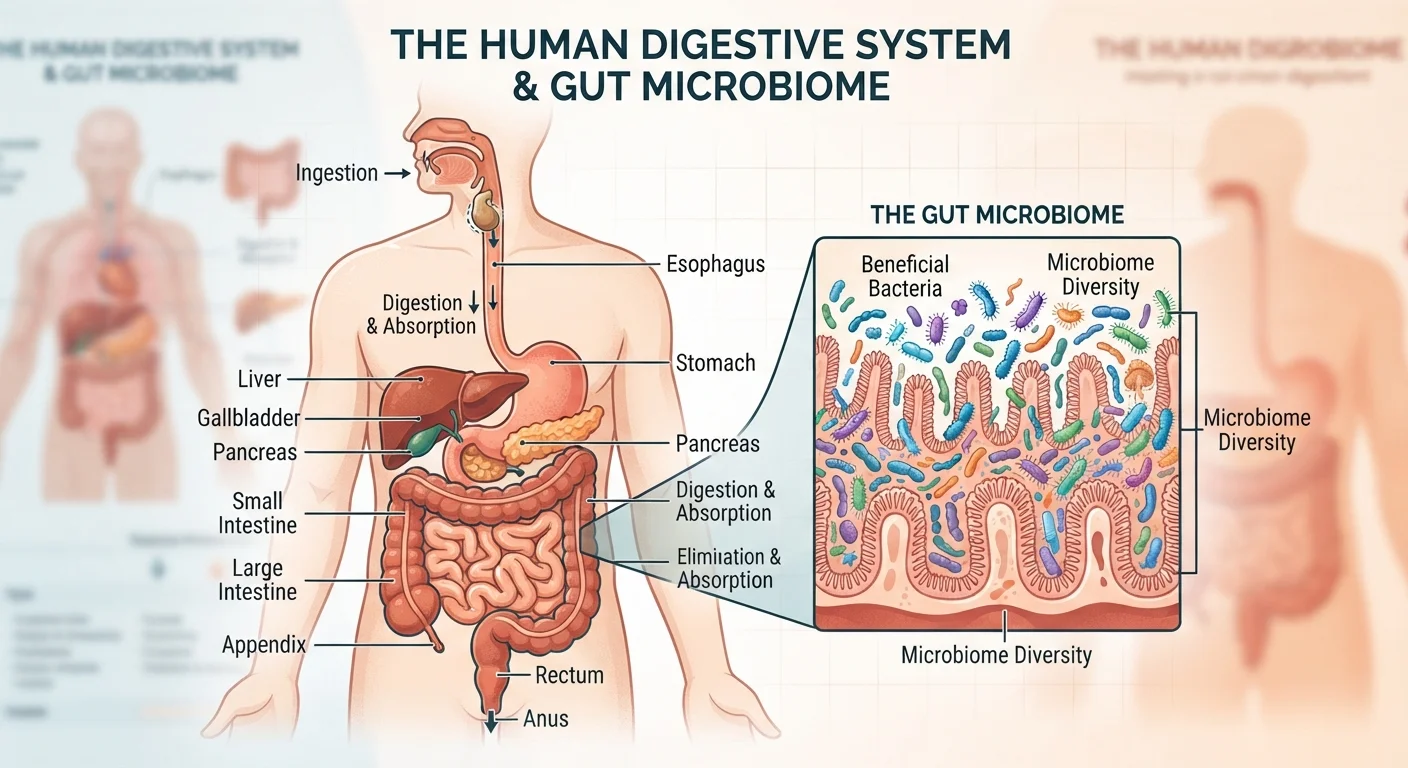
Your gastrointestinal tract is home to an estimated 38 trillion microbial cells - bacteria, fungi, and viruses - collectively known as the gut microbiome. Far from being passive passengers, these microorganisms play active roles in breaking down food, synthesizing vitamins, training the immune system, and even influencing mood.
Gut Microbiome
The community of trillions of microorganisms - including bacteria, fungi, and viruses - that live in the digestive tract and influence many body functions.
Microbiome Diversity
The range of different microbial species present in the gut; greater diversity is generally associated with better digestive resilience and overall health.
Gut-Brain Axis
The two-way communication network connecting the gut and the brain through nerves, hormones, and immune signals.
Prebiotics
Non-digestible food components, primarily dietary fiber, that feed and support the growth of beneficial gut bacteria.
Probiotics
Live microorganisms - found in certain fermented foods and supplements - that may benefit the gut microbiome when consumed in adequate amounts.
Vagus Nerve
A major nerve running from the brainstem to the abdomen that serves as a primary physical pathway for gut-brain communication.
Microbiome diversity - the range of different species present - is widely considered a marker of gut resilience. Diets dominated by highly processed foods, prolonged antibiotic use, and chronic stress are among the factors researchers have linked to reduced diversity. Conversely, a varied, plant-rich diet tends to support a broader microbial community. Our companion article on dietary fiber and why most Americans fall short explores one of the most practical ways to feed beneficial gut bacteria.
Signals Your Gut May Be Sending
The digestive system communicates through symptoms that are easy to dismiss as routine inconveniences. Understanding what they may indicate - without jumping to conclusions - is a useful first step.
- Bloating and gas: Often reflect how the microbiome ferments certain carbohydrates. Persistent bloating, however, can signal imbalances or intolerances worth investigating.
- Irregular bowel habits: Both constipation and frequent loose stools can reflect diet, hydration, stress, or underlying conditions.
- Fatigue after meals: Sometimes linked to blood sugar fluctuations or food sensitivities rather than simply overeating.
- Skin changes: Emerging research points to a gut-skin axis; conditions like eczema have been associated with gut microbiome patterns, though this area is still developing.
Persistent Symptoms Need Professional Evaluation
Digestive symptoms that are severe, frequent, or accompanied by blood in stool, unexplained weight loss, or significant pain should not be self-managed. These may indicate conditions requiring diagnosis and treatment by a licensed healthcare provider. Do not delay seeking care based on self-research alone.
It is worth noting that popular ideas about "food combining" - the notion that eating certain foods together harms digestion - are not well supported by evidence. Our article on food combining myths separates digestive physiology from popular misconceptions.
The Gut-Brain Connection
The relationship between the gut and the brain is one of the more compelling areas of contemporary digestive research. The two organs are linked through the gut-brain axis - a bidirectional communication network involving the vagus nerve, immune signaling, and neurotransmitters produced in the gut itself. Approximately 90% of the body's serotonin is manufactured in the gut, according to widely cited research in neurogastroenterology.
This means that gut disturbances can contribute to shifts in mood and cognitive clarity, and conversely, psychological stress can directly alter gut motility and microbiome composition. Anxiety before a stressful event producing stomach upset is a familiar example of this connection in everyday life.
Explore the Gut-Brain Science Further
If the gut-brain connection piques your curiosity, it is worth reading beyond surface-level summaries. The field of neurogastroenterology is advancing rapidly, and understanding the basics can help you ask better questions at your next healthcare appointment. Look for information from academic medical centers and peer-reviewed publications for the most reliable picture.
For a deeper look at this emerging science, see our article understanding the gut-brain axis which covers what researchers currently understand about this complex relationship.
Everyday Habits That Support Digestive Health
No single food or supplement is a guaranteed solution for gut health, but a consistent set of everyday habits is supported by a substantial body of evidence.
Prioritize Dietary Variety
Different gut bacteria thrive on different plant compounds. Eating a wide range of vegetables, legumes, whole grains, nuts, and fruits exposes the microbiome to diverse nutrients. Aim for variety across the week rather than relying on a narrow list of "superfoods."
Consider Fermented Foods
Yogurt, kefir, kimchi, sauerkraut, and miso contain live cultures that may contribute to microbiome diversity. Research is promising but nuanced - our article on fermented foods and gut health provides an honest assessment of what the evidence supports.
Manage Stress Actively
Because stress directly affects gut function, practices like regular physical activity, adequate sleep, and mindfulness-based techniques have downstream benefits for digestive health - not just mental wellbeing.
Stay Hydrated
Adequate fluid intake supports the mucosal lining of the intestines and helps maintain regular bowel function. Plain water remains the most reliable source.
This article is for general informational purposes only and is not a substitute for professional medical advice, diagnosis, or treatment. If you have concerns about your digestive health or any symptoms, please consult a qualified healthcare provider.