

Key Takeaways
- Staple foods like legumes, whole grains, and frozen vegetables offer strong nutrition at low cost.
- Planning meals before shopping significantly reduces food waste and impulse spending.
- Cooking at home consistently is one of the most effective ways to control both nutrition and cost.
- Unit price comparison and store-brand choices can meaningfully stretch a grocery budget.
- Eating nutritiously on a tight income is possible with practical strategies - not perfection.
Why Budget and Nutrition Don't Have to Conflict
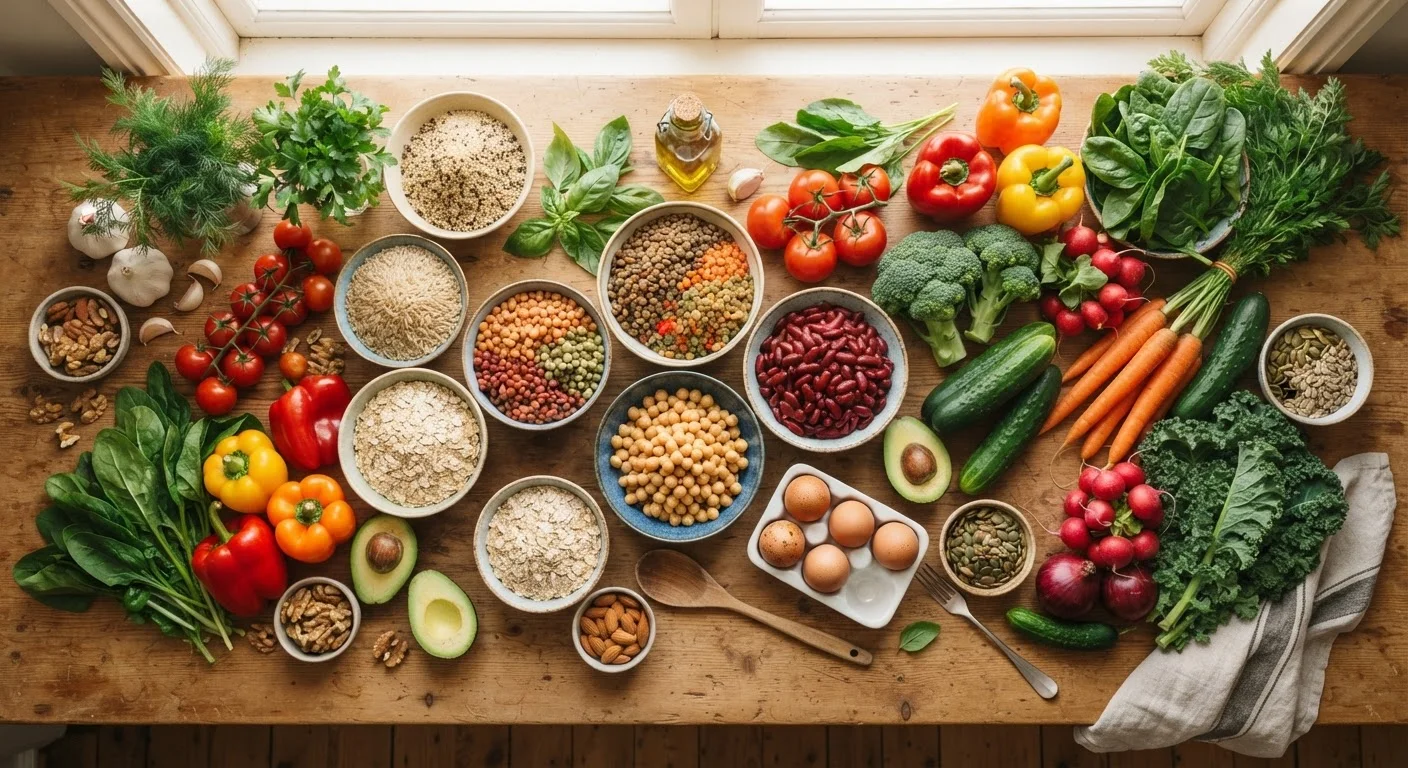
A common misconception is that eating healthfully requires spending significantly more. In reality, some of the most nutrient-dense foods - dried lentils, canned beans, oats, eggs, and frozen vegetables - are among the most affordable items in any grocery store. The challenge is less about money and more about strategy.
For households managing tight finances, food decisions carry real weight. If you're working within a strict income, the guide to budgeting on minimum wage offers practical context for prioritizing essentials. Nutrition fits into that picture - but it helps to know which food choices deliver the most value per dollar.
This article provides general nutrition and shopping guidance. For personalized dietary recommendations, consult a registered dietitian or qualified healthcare provider.
Best Practices for Nutritious, Low-Cost Eating
The following approaches reflect established guidance from nutrition educators and public health research on accessible, balanced eating.
Build meals around plant-based proteins and whole grains as your foundation.
Dried beans, lentils, chickpeas, oats, brown rice, and whole-wheat pasta provide substantial protein, fiber, and micronutrients at a fraction of the cost of meat. These staples also store well, reducing waste. Centering meals on these ingredients before adding other components naturally keeps costs low.
Plan your meals for the week before you shop, not after.
Shopping without a plan leads to impulse purchases and forgotten ingredients that spoil unused. A simple weekly plan lets you buy only what you need, batch ingredients across multiple meals, and avoid redundant trips. Research consistently links meal planning to reduced food waste and lower grocery spending.
Choose frozen and canned produce strategically.
Fresh produce spoils quickly, and for budget-conscious shoppers, spoilage is effectively money thrown away. Frozen vegetables and fruits retain most of their nutritional profile and cost significantly less per serving. Canned beans and tomatoes are similarly economical. Rinsing canned items can reduce sodium content.
Cook in bulk and use leftovers intentionally.
Cooking larger quantities at once reduces both time and per-serving cost. Planned leftovers prevent the need for last-minute takeout - one of the most significant budget drains in household food spending. Repurposing leftovers into new meals (roasted vegetables into a frittata, for instance) also reduces waste.
Limit processed and convenience foods even when they seem affordable.
Packaged snacks, flavored instant meals, and single-serve items often cost more per calorie and per nutrient than whole-food alternatives. They also tend to be higher in sodium, added sugar, and refined carbohydrates. Over time, relying on them can crowd out more nutritious - and often cheaper - whole food options.
Start Here: Quick Wins You Can Act On Today
You don't need to overhaul your entire routine to eat better on a budget. A few targeted actions can make a noticeable difference immediately.
For a more structured approach to weekly meals, the weekly meal planning framework walks through how to build a consistent routine that reduces both waste and decision fatigue.
Shopping Smarter Without Sacrificing Quality
The grocery store itself is where budgets are won or lost. A few reliable tactics help stretch dollars further without compromising nutritional quality.
Make a List - and Stick to It
Shoppers who use a written grocery list before entering a store consistently spend less and waste less than those who shop without one. Build your list from your meal plan rather than from memory or in-store promotions. If you're working on broader spending habits, the budgeting hub has foundational strategies that apply equally to food and other household expenses.
Comparing unit prices (cost per ounce or per serving) rather than sticker prices often reveals that larger packages or store-brand equivalents offer meaningfully better value. Frozen produce is nutritionally comparable to fresh in most cases - freezing locks in nutrients shortly after harvest - making it a reliable, affordable alternative year-round.
When dining outside the home, you can still stay on track. The article on eating out without losing track of your nutritional goals offers practical approaches for navigating restaurant menus mindfully. And if you want a framework for how much food should appear on your plate without obsessive tracking, building a balanced plate is a useful companion resource.
This article is for general informational purposes only and does not constitute medical or dietary advice. For guidance specific to your health needs, consult a qualified healthcare professional or registered dietitian.