

Key Takeaways
- Added sugars appear under more than 60 different names on ingredient labels.
- Ingredients are listed by weight - early placement of a sugar name signals higher content.
- The Nutrition Facts panel now requires a separate "Added Sugars" line in grams.
- Splitting sugars across multiple ingredient names can make total sugar content less obvious.
- Recognizing common sugar aliases helps you make more informed everyday food choices.
What you will need
Why Added Sugar Uses So Many Names
There is no single regulatory requirement that food manufacturers use the word "sugar" when listing sweetening ingredients. As a result, added sugars appear under more than 60 different names across packaged foods - from familiar terms like honey and molasses to technical-sounding ones like dextrose and maltodextrin. Understanding this variety isn't about mistrust of manufacturers - it's about becoming a more informed reader of the labels you encounter every day.
The FDA's updated Nutrition Facts label, which most manufacturers were required to adopt, introduced a dedicated Added Sugars line that gives consumers a clearer gram count. However, knowing which forms of sugar are present - and how prominently - requires a closer look at the ingredient list. Our broader article on what the Nutrition Facts label is actually telling you explains the full label structure in detail.
Use the Added Sugars Line as Your Starting Point
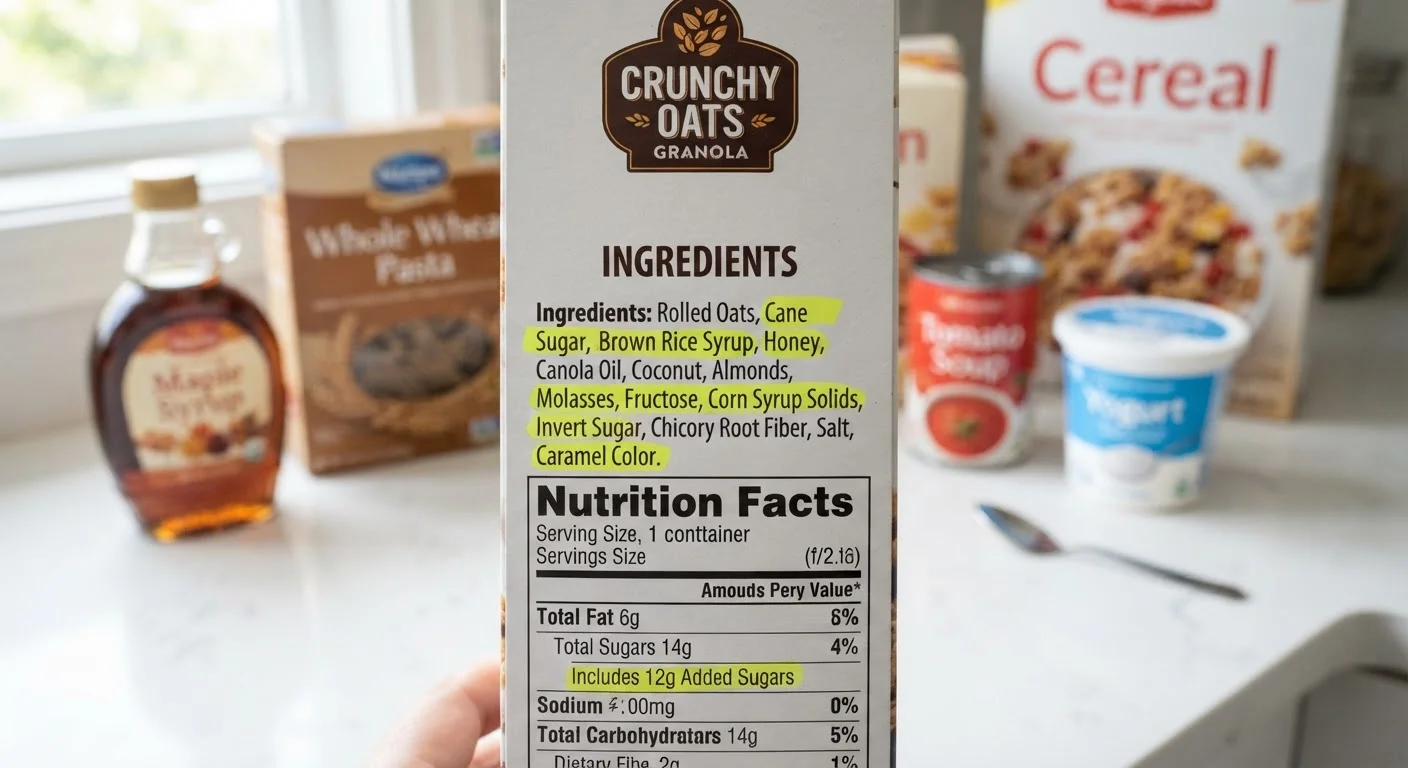
Before diving into the ingredient list, check the Nutrition Facts panel for the "Added Sugars" row, which the FDA now requires on most packaged foods. This figure gives you a quick gram count. Then scan the ingredient list to understand which forms of added sugar are present and how prominently they appear.
Tools You'll Need
Nutrition Facts Panel
Provides a mandatory 'Added Sugars' line in grams, giving a quick quantitative read before you scan the ingredient list.
Ingredient List
Reveals the specific forms of sugar present and their relative prominence based on position in the list.
Reference List of Sugar Aliases
A personal or printed cheat sheet of common sugar names helps you recognize them quickly while shopping.
No special equipment is required - just the package itself and a working knowledge of what to look for. The steps below walk you through a systematic process you can apply to any packaged food product.
What you will need
How to Spot Added Sugars Step by Step
Locate the Nutrition Facts Panel and Check the Added Sugars Line
Flip the package and find the Nutrition Facts panel. Look for the indented line that reads Added Sugars, expressed in grams and as a percentage of the Daily Value. The FDA's updated label format requires most manufacturers to display this separately from total sugars, making it easier to distinguish naturally occurring sugars (found in plain dairy or whole fruit) from sugars added during processing.
As a general reference, the Dietary Guidelines for Americans suggest limiting added sugars to less than 10% of total daily calories - though individual targets vary. Use this line as a quick benchmark before reading further.
Find the Ingredient List and Note the Order
Ingredients are required by the FDA to be listed in descending order by weight. This means the closer a sugar-named ingredient appears to the beginning of the list, the more of it is present by weight. If sugar is the first or second ingredient, it is a major component of that food.
For a broader understanding of how ingredient list structure works, see our guide to reading ingredient lists.
Scan for Syrups and Liquid Sweeteners
Syrups are among the most common added sugar forms in processed food. Watch for: high-fructose corn syrup, corn syrup, brown rice syrup, malt syrup, maple syrup, agave nectar, molasses, and cane syrup. Despite their different flavor profiles and sources, these all contribute added sugars to a product.
Identify "ose" Endings and Other Chemical Names
Many added sugars are listed using their chemical names, most of which end in -ose. Common examples include: sucrose, fructose, glucose, dextrose, maltose, lactose (when added, not naturally present in dairy), and galactose. You may also see dextrin and maltodextrin, which are derived from starch and can raise blood glucose, though their classification as an "added sugar" on labels can vary.
Spot Concentrated and Processed Sugar Forms
Some added sugars come from concentrated or refined sources: fruit juice concentrate, evaporated cane juice, cane crystals, raw sugar, turbinado sugar, coconut sugar, palm sugar, and date sugar. Despite their whole-food-sounding names, these are considered added sugars once extracted and used as sweetening agents in manufacturing.
Understanding what regulated terms like "natural" and "raw" actually mean on packaging can help you evaluate these claims more critically - our nutrition label claims explainer covers this in detail.
Count How Many Sugar Names Appear and Assess Their Positions
A key industry practice is sugar splitting - using several different forms of added sugar so that no single type appears high on the ingredient list. A product might list cane sugar, brown rice syrup, and dextrose separately, keeping each lower on the list individually, even if their combined contribution is substantial.
Count the total number of sugar aliases you've identified. If three or more appear - especially within the first half of the list - the product likely contains a meaningful amount of added sugar beyond what any single name suggests. Cross-reference this with the Added Sugars gram figure you noted in Step 1.
This Is General Information, Not Medical Advice
The guidance in this article is intended for general educational purposes only. Dietary needs vary widely by individual. If you have a health condition - such as diabetes, metabolic syndrome, or a history of disordered eating - consult a qualified healthcare provider before making significant changes to your diet.
Putting It Into Everyday Practice
With practice, scanning for added sugars becomes a quick habit rather than a time-consuming task. Focus first on foods where added sugar is less expected - bread, pasta sauce, salad dressing, and condiments are frequent sources. Products in the snack, breakfast cereal, and flavored beverage categories tend to draw more consumer attention, but the less-obvious categories are where label literacy often has the greatest practical impact.
It's also worth remembering that added sugar in small amounts, in an otherwise balanced diet, is not inherently harmful for most people. The goal of label reading is awareness and informed choice, not elimination. If you're looking to build a fuller picture of how to evaluate packaged foods overall, our nutrition labels demystified guide is a helpful next step.
"No Added Sugar" Doesn't Mean Sugar-Free
Foods labeled "no added sugar" can still contain significant amounts of naturally occurring sugars from ingredients like fruit, milk, or concentrated fruit juice. Always check the total sugars line on the Nutrition Facts panel alongside the ingredient list for a complete picture. See our guide to front-of-package label claims for more context on regulated labeling terms.
This article is for informational purposes only and does not constitute medical or dietary advice. Nutritional needs vary by individual. Consult a qualified healthcare professional for guidance tailored to your specific health circumstances.