

Key Takeaways
- Blue light from screens suppresses melatonin, the hormone that signals your brain it's time to sleep.
- Mental stimulation from content - not just light - is an independent disruptor of pre-sleep brain states.
- Even 30-60 minutes of screen exposure close to bedtime can delay sleep onset for some people.
- Reducing screen brightness and enabling warmer color modes at night may lessen - but not eliminate - the impact.
- Consistent wind-down routines that exclude screens are among the most evidence-supported sleep hygiene strategies.
Screen Time and Sleep Disruption
Screen time and sleep disruption refers to the ways that using digital devices - phones, tablets, computers, televisions - in the hours before bed interferes with your ability to fall asleep and stay asleep. Two primary mechanisms are at work: the physical effect of blue-wavelength light on your brain's hormone production, and the mental stimulation that keeps your nervous system in an alert state when it should be winding down.
Blue light, concentrated in the 460-480 nm wavelength range, has the strongest suppressive effect on melatonin secretion relative to other wavelengths, which is why display type and brightness both matter.
Why Your Brain Treats Screens Like Sunlight
Your body runs on a roughly 24-hour internal clock known as the circadian rhythm. Light is the primary signal this clock uses to distinguish day from night, and it is remarkably sensitive to the wavelengths that digital screens produce in abundance.
The retina contains specialized photoreceptor cells - called intrinsically photosensitive retinal ganglion cells (ipRGCs) - that are particularly responsive to short-wavelength blue light. When these cells detect blue light, they send signals to the brain's suprachiasmatic nucleus, the central circadian pacemaker, which in turn suppresses the release of melatonin from the pineal gland. Melatonin is not a sedative; it is a timing hormone. Its job is to tell your brain that darkness has arrived and that sleep preparation should begin.
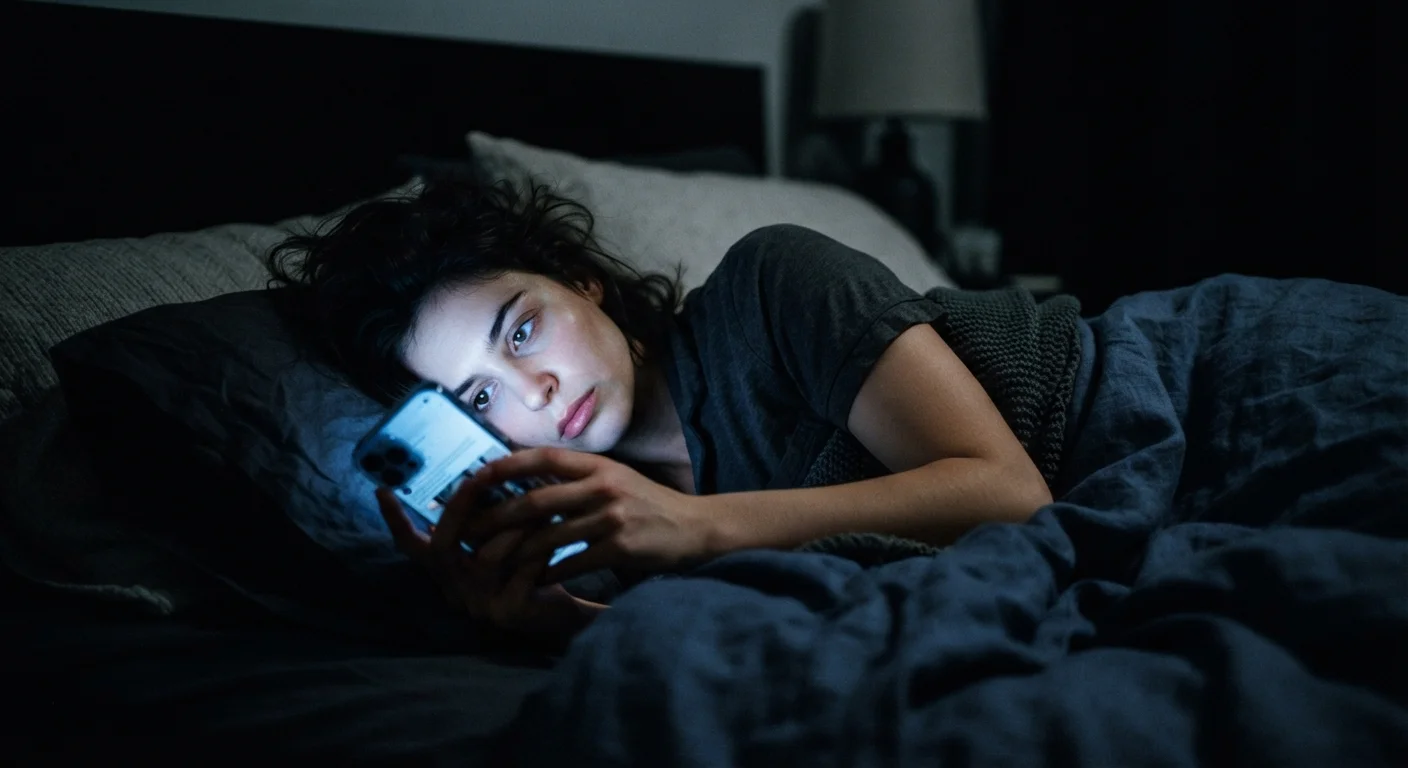
When you spend the hour before bed scrolling a bright phone screen, you are effectively sending the opposite signal - one your brain interprets as daylight. The result is a delayed sleep phase: your body simply isn't ready to sleep when you expect it to be. For a deeper look at how these mechanisms fit into your broader sleep architecture, see the complete picture of sleep.
~90%
US adults who use a device in the hour before bed
According to National Sleep Foundation surveys, the vast majority of American adults report using some form of electronic device in the 60 minutes before sleep.
1.5 hrs
Average delay in melatonin onset from evening light exposure
Research published in the Journal of Clinical Endocrinology & Metabolism found that exposure to room-level electric light before bedtime can suppress and delay melatonin onset by approximately 90 minutes.
6.8 hrs
Average nightly sleep among US adults
CDC data indicate that a substantial share of US adults fall short of the 7-hour minimum recommended by the American Academy of Sleep Medicine.
Cognitive Stimulation: The Overlooked Half of the Problem
Blue light gets most of the attention, but mental arousal from screen content is an equally important - and often underestimated - disruptor. Checking email, reading news, watching emotionally engaging content, or navigating social media all activate attention, decision-making, and emotional processing networks in the brain. These systems do not switch off the moment you close an app.
The pre-sleep period ideally involves a gradual reduction in cortisol and sympathetic nervous system activity - what researchers sometimes call "cognitive deactivation." Compelling screen content works against this process directly, regardless of what wavelength of light the display emits.
Content Type Matters as Much as Brightness
If you use screens in the evening, choosing low-stakes, calm content - such as reading a non-urgent article or watching something familiar and undemanding - can reduce cognitive stimulation even if light exposure remains. Emotionally intense, interactive, or work-related content is the most activating regardless of display settings.
This is why studies comparing different pre-bed activities often find that the type of content matters alongside screen brightness. Passive, low-stakes content tends to be less disruptive than interactive or emotionally loaded material. Evening wind-down habits that support better sleep explores how to structure this transition more intentionally.
What the Evidence Actually Supports
Research in this area is real and growing, but it comes with important nuance. Laboratory studies - where light exposure is precisely controlled - consistently demonstrate melatonin suppression from blue-enriched light. Real-world studies, where people use devices in varied conditions and for varied durations, show more mixed results. Individual sensitivity differs meaningfully: some people show strong melatonin responses to even dim screen light; others show little measurable effect at normal usage levels.
“Light is the most powerful synchronizer of the human circadian clock. Even moderate amounts of light exposure in the evening can shift the timing of melatonin release in ways that affect sleep quality.”
— Charles Czeisler, Sleep researcher and professor at Harvard Medical School
What this means practically is that screen-related sleep disruption is genuine and worth taking seriously, but it is not identically severe for every person or every situation. Factors such as room lighting, device brightness, viewing distance, and duration of use all influence the magnitude of the effect. Night-shift modes and warm color filters can reduce blue light output, though they do not eliminate it - and they do nothing to address cognitive stimulation.
Understanding the quality dimension of this is important. Even if you fall asleep at a normal time, evening screen use may affect how much time you spend in restorative deep sleep and REM sleep - the stages most associated with memory consolidation and emotional regulation. Sleep hygiene vs. sleep quantity explores why these distinctions matter beyond simple hour counts.
Practical Approaches Worth Considering
The most consistently supported strategy is straightforward: create a buffer between screens and sleep. A wind-down period of 30 to 60 minutes without bright devices gives melatonin time to rise and allows the nervous system to begin deactivating. This doesn't require eliminating all technology use in the evening - it means being deliberate about how and when devices are used.
If complete screen avoidance before bed isn't realistic, lower brightness settings and warmer color temperatures (available on most modern devices as night mode or similar) are reasonable, partial mitigations. Reading on an e-ink device rather than a backlit LCD screen is another option some people find helpful - e-ink vs. LCD screens compared covers the practical differences. For those who want to explore structured approaches to managing device habits more broadly, digital detox vs. intentional tech use outlines two distinct strategies.
Built-in screen time tools can also support these goals, though they have real limitations - screen time settings and what they can't control explains where they help and where they fall short.
This article is for general informational and educational purposes only and does not constitute medical advice. If you have concerns about sleep quality or a sleep disorder, please consult a qualified healthcare professional.