

Key Takeaways
- Dead lawn patches are usually symptoms of underlying soil problems, not just surface-level grass failure.
- Compaction, pH imbalance, grub damage, and poor drainage are the most common and diagnosable causes.
- A simple soil probe or screwdriver test can reveal compaction before you waste money on reseeding.
- Treating the wrong problem - such as watering more on a drainage-impaired lawn - makes conditions worse.
- Overseeding into undiagnosed soil is one of the most common and avoidable lawn repair mistakes.
What Dead Patches Are Actually Telling You
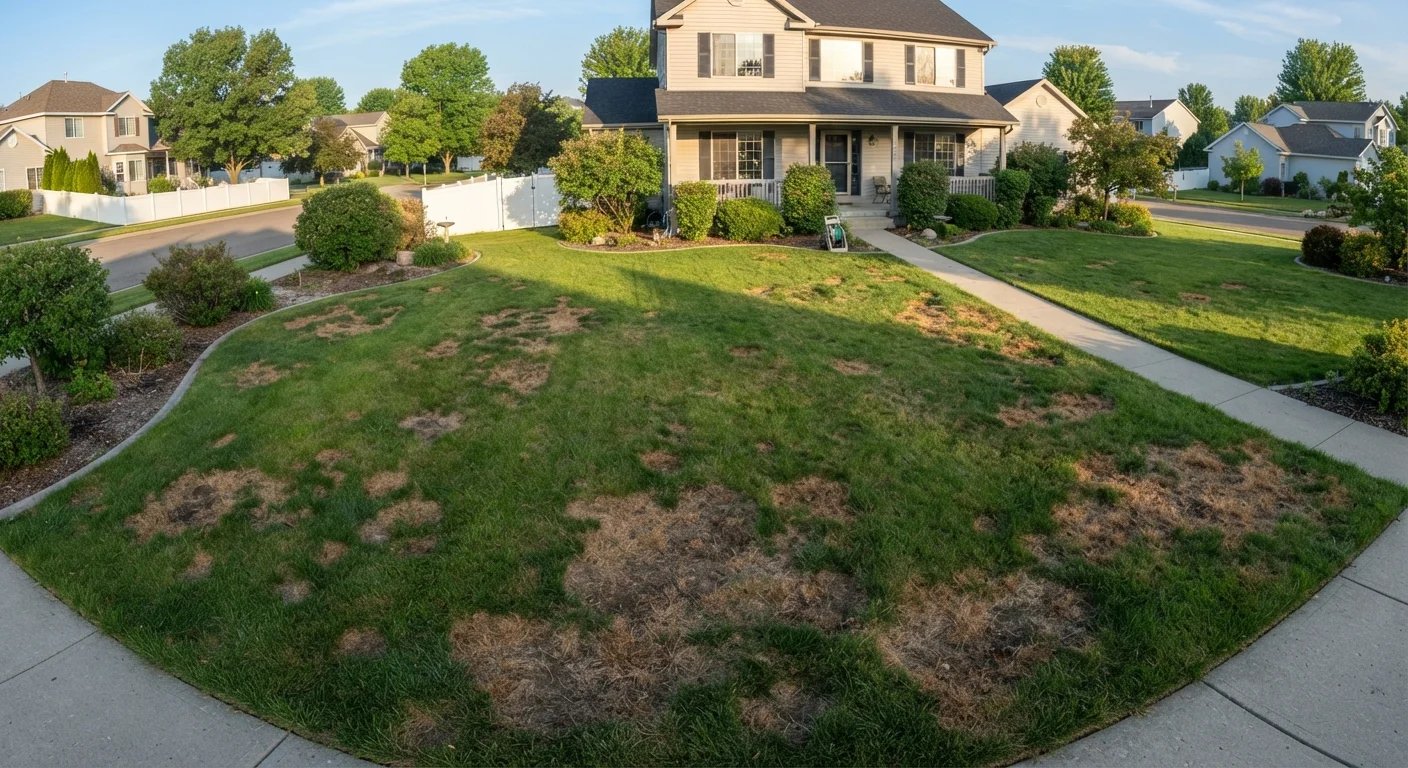
A dead patch in an otherwise healthy lawn is a signal, not a random event. Grass doesn't die in isolated spots without a reason rooted - quite literally - in the soil beneath it. Understanding what that signal means before taking action is the difference between a lawn that recovers and one that keeps failing in the same spots year after year.
The most common culprits fall into a handful of categories: soil compaction, pH imbalance, poor drainage, pest activity, and fungal disease. Each one produces slightly different symptoms. Compaction often creates patches near high-traffic areas. Grub damage produces sections of turf that lift cleanly like loose carpet. Fungal disease tends to show irregular rings or discoloration rather than clean dead zones. Learning to read these differences saves time, money, and the frustration of repeated failed repairs.
Before reaching for fertilizer, grass seed, or a hose, do a quick physical inspection. Push a screwdriver into the dead zone - if it resists penetration in dry soil, compaction is a likely contributor. Pull back a small section of dead turf and look at the root zone for white, C-shaped larvae (a sign of grubs). Note whether the patch sits in a low spot where water collects, or a high ridge where it drains away quickly. These observations cost nothing and guide every decision that follows.
Common Mistakes That Make Dead Patches Worse
Most homeowners mean well when they respond to dead patches - but without a diagnosis, well-meaning actions often deepen the problem. Here are the mistakes that most commonly derail lawn recovery.
Reseeding dead patches without addressing the underlying soil problem.
Why it happens: Grass seed is an intuitive fix - the grass is gone, so you replace it. But seed planted into compacted, pH-imbalanced, or pest-damaged soil almost always fails in the same spot.
Overwatering a lawn that already has drainage problems.
Why it happens: Dead or yellowing grass often looks like drought stress, and the instinct is to add more water. In poorly draining soils, this creates saturated conditions that suffocate roots and invite fungal disease.
Applying fertilizer to stressed or dormant grass in dead zones.
Why it happens: Fertilizer feels like a corrective action, and it's easy to assume dead grass just needs nutrients. But applying nitrogen-heavy fertilizer to heat-stressed, drought-stressed, or diseased turf can burn and further damage weakened root systems.
Ignoring grub activity until turf damage is extensive.
Why it happens: Grub damage often begins beneath the surface and isn't visible until the turf is already detaching from the soil. By then, the infestation may have spread well beyond the visible dead patch.
Assuming all dead patches share the same cause across a single lawn.
Why it happens: It's tempting to apply one diagnosis and one fix to the whole yard when patches appear simultaneously. But compaction near a walkway, a fungal ring near a tree, and grub damage in an open sunny area can all show up at the same time.
If your lawn sits in an area prone to pooling water or slow drainage, the underlying grade or soil structure may be driving repeated failures. Our guide on diagnosing backyard drainage problems walks through how to identify whether the issue is grade, hardpan soil, or downspout placement before you attempt any fix.
Reading the Soil: Simple Tests Worth Doing First
You don't need a laboratory to gather useful soil data. A few simple tests give you a clearer picture of what's happening underground.
6.0-7.0
Ideal soil pH range for most lawn grasses
According to university cooperative extension services across the US, most common turf grasses perform best within this pH window.
~40%
Of US lawns affected by soil compaction issues
Soil compaction is widely cited by turf management professionals as one of the most prevalent and underdiagnosed causes of poor lawn health.
Compaction test: Push a standard screwdriver into moist soil. It should sink 6 inches without significant force. Resistance before that depth suggests compaction, especially common in clay-heavy soils or areas with heavy foot traffic.
pH test: Inexpensive soil pH test kits are widely available at garden centers. Most grasses prefer a pH between 6.0 and 7.0. Results outside that range often explain poor growth even when irrigation and fertilization appear adequate. Lime raises pH in acidic soil; sulfur lowers it in alkaline conditions. Adjust gradually and retest before overseeding.
Drainage observation: After a standard rainfall or 30 minutes of irrigation, observe where water pools and where it drains quickly. Persistent pooling points to compaction, hardpan layers, or grade issues - all of which require different solutions than drought stress.
Root and grub inspection: In a dead patch, cut a 1-square-foot section of turf and fold it back. Healthy grass roots should be white and several inches deep. Brown, shallow roots suggest drought stress or disease. More than five to ten white grubs per square foot is generally considered a threshold warranting treatment, though local extension services can provide guidance specific to your region and grass type.
Once you've identified the actual cause, you're ready to repair. Our article on lawn overseeding preparation and timing covers the next steps - including how to ensure seed-to-soil contact so new growth actually takes hold.
Pesticide Use Requires Care and Local Knowledge
If grub activity is confirmed, treatment options vary by region, grass type, and the grub species present. Application timing matters - many treatments are most effective at specific larval stages. Consult your local cooperative extension service for guidance appropriate to your area before applying any pesticide to your lawn.