

Key Takeaways
- Grout is cement-based and rigid; caulk is flexible and designed to absorb movement.
- Use caulk wherever two surfaces meet at an angle - corners, tub ledges, and floor-to-wall transitions.
- Mixing up the two is a common cause of cracked joints and water infiltration behind tile.
- Sanded grout suits wider joints; unsanded grout is used for gaps under one-eighth of an inch.
- Caulk must be applied over a clean, dry, grout-free surface to bond and seal correctly.
Option A
Grout
The rigid, structural filler for tile-to-tile joints.
Best for: Filling uniform joints between tiles on flat, stable surfaces where no movement is expected.
Option B
Caulk
The flexible sealant for movement-prone joints and transitions.
Best for: Sealing corners, changes in plane, and tile-to-fixture edges where surfaces shift slightly over time.
If you're filling joints between tiles on a flat wall or floor
Grout
Flat, tile-to-tile joints on stable surfaces need a hard, wear-resistant filler. Grout is formulated for exactly this role and matches the tile system structurally.
If you're sealing the joint where a tub meets the tile wall
Caulk
Tubs flex under weight and thermal changes. Only a flexible sealant like silicone or siliconized latex caulk can move with the joint without cracking.
If you're finishing an inside corner in a shower or tub surround
Caulk
Inside corners experience constant micro-movement. Grout in these spots almost always cracks within months; caulk accommodates the flex without failing.
If you're repairing a crumbling joint between floor tiles in a high-traffic area
Grout
Floor tile joints need the compression strength of grout. Caulk would compress and deform under foot traffic, collecting dirt and looking worn quickly.
What Each Material Is Actually Made To Do
Grout and caulk look similar in a finished bathroom, but they serve fundamentally different engineering purposes. Understanding the distinction helps you make the right call before you start - not after a joint cracks open six months later.
Grout is a cement-based compound (sometimes with epoxy formulations for demanding environments) designed to fill the gaps between tiles. Once it cures, it's rigid and hard. That hardness is a feature, not a flaw - it resists foot traffic, wear, and compression. However, that rigidity also means grout cannot flex. When the surface beneath it moves, grout cracks.
Caulk is a flexible sealant, typically silicone or latex-based, designed to bridge joints that experience movement. It cures into a rubbery material that stretches and compresses slightly as structures shift with temperature changes, settling, or load. Where grout would crack, caulk absorbs the stress. For a deeper look at why even correctly placed caulk sometimes fails, see why caulk cracks and peels.
| Criterion | Grout | Caulk |
|---|---|---|
| Composition | Cement- or epoxy-based | Silicone or latex-based |
| Flexibility when cured | Rigid | Flexible, rubbery |
| Best joint type | Tile-to-tile on flat surfaces | Corners, transitions, fixtures |
| Handles movement | No - cracks under stress | Yes - absorbs flex |
| Waterproofing | Porous unless sealed | Waterproof when fully cured |
| Typical lifespan | 10-20+ years if installed correctly | 5-10 years; periodic replacement needed |
| Color matching | Wide range to match tile | Limited but matchable in common colors |
Where Each One Belongs in a Tile Installation
The location of a joint - not just its size - determines the right filler. Here's how to think through the common scenarios you'll encounter:
Tile-to-tile joints on flat surfaces
Use grout. Whether you're grouting a backsplash, a shower wall field, or a floor, these joints sit between tiles on a stable substrate. The key choice here is grout type: unsanded grout for joints smaller than one-eighth of an inch, and sanded grout for wider joints. The sand adds body that prevents shrinkage cracking in larger gaps.
Inside corners and changes in plane
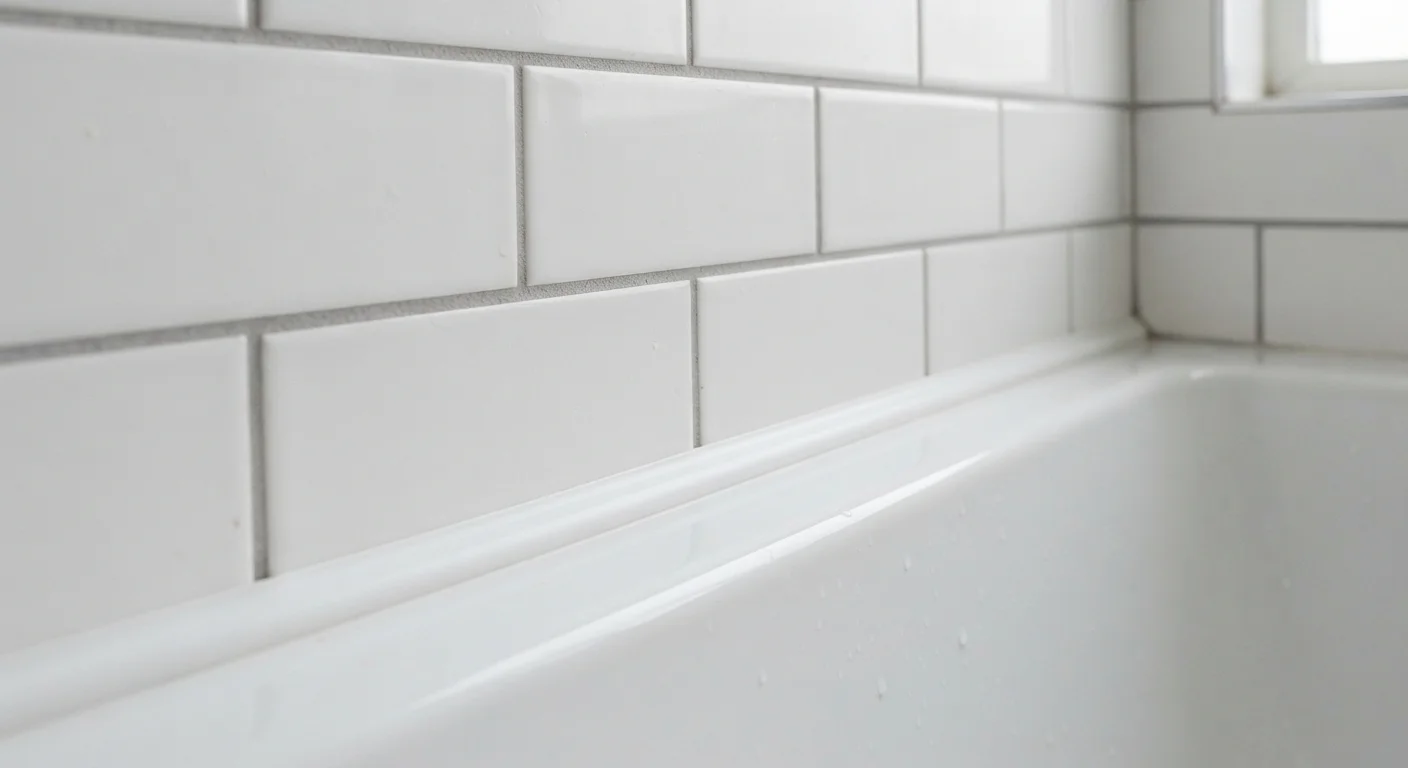
Use caulk. Any joint where a horizontal surface meets a vertical one - the floor meeting the wall, a tub deck meeting a wall, or two walls meeting in a shower corner - is a change-of-plane joint. These spots move. Grout placed in them will crack. The Tile Council of North America (TCNA), which publishes widely referenced tile installation guidelines, specifically designates these joints for flexible sealant.
Tile-to-fixture transitions
Use caulk. Where tile meets a bathtub rim, a shower base, a sink, or a toilet base, caulk creates a waterproof seal that also accommodates the slight movement of each fixture. Recaulking a bathtub properly requires more prep work than most people realize - the old material must be fully removed before a new bead is applied.
~80%
Of shower leaks traced to failed corner joints
Industry estimates from tile installation professionals suggest the majority of water intrusion behind shower walls originates at corners and tub edges - precisely where caulk should replace grout.
5-10 years
Typical caulk replacement interval in wet areas
Even properly installed caulk degrades over time in high-moisture environments and generally needs replacement within a decade to maintain a watertight seal.
Common Mistakes and How to Avoid Them
Most tile joint failures come down to a handful of repeated errors. Knowing what goes wrong helps you avoid the rework.
Using grout in a corner that moves
This is the single most common mistake in amateur tile work. The grout looks fine for a few weeks, then a crack appears along the corner line. Water infiltrates behind the tile, and mold follows. The fix is to chip out the grout, clean the joint thoroughly, and apply appropriate caulk.
Using caulk where grout is needed
Caulk in a floor field joint compresses underfoot, becomes discolored, and eventually detaches. Floors need the structural rigidity grout provides.
Applying caulk over existing grout
Caulk doesn't bond reliably to grout. If a corner has crumbling grout in it, the grout must be removed before caulk is applied - otherwise the new caulk will peel away with the old grout beneath it.
Choosing the wrong caulk type
In wet areas, silicone or siliconized latex caulk is standard. Pure latex caulk is paintable but not reliably waterproof in a shower. Silicone and paintable caulk are not the same product, and using the wrong one in a wet zone leads to mold and seal failure.
Matching Caulk Color to Your Grout
Most grout manufacturers offer a coordinating caulk in the same color line, which makes blending the two materials much easier. When selecting caulk for a tiled surface, look for a product specifically labeled for tile use in wet areas. Apply it only after grout has fully cured - typically 24 to 72 hours depending on the product - so moisture from the grout doesn't interfere with the caulk bond.