

Key Takeaways
- Silicone caulk creates a superior waterproof seal but cannot be painted over reliably.
- Paintable latex or acrylic-latex caulk accepts paint but offers less long-term water resistance than silicone.
- Using silicone where paint is expected leads to peeling; using paintable caulk in wet zones leads to mold and seal failure.
- The location and finish requirements of a joint should determine which caulk you choose.
- Some hybrid products exist, but they involve trade-offs - read labels carefully.
Silicone vs. Paintable Caulk
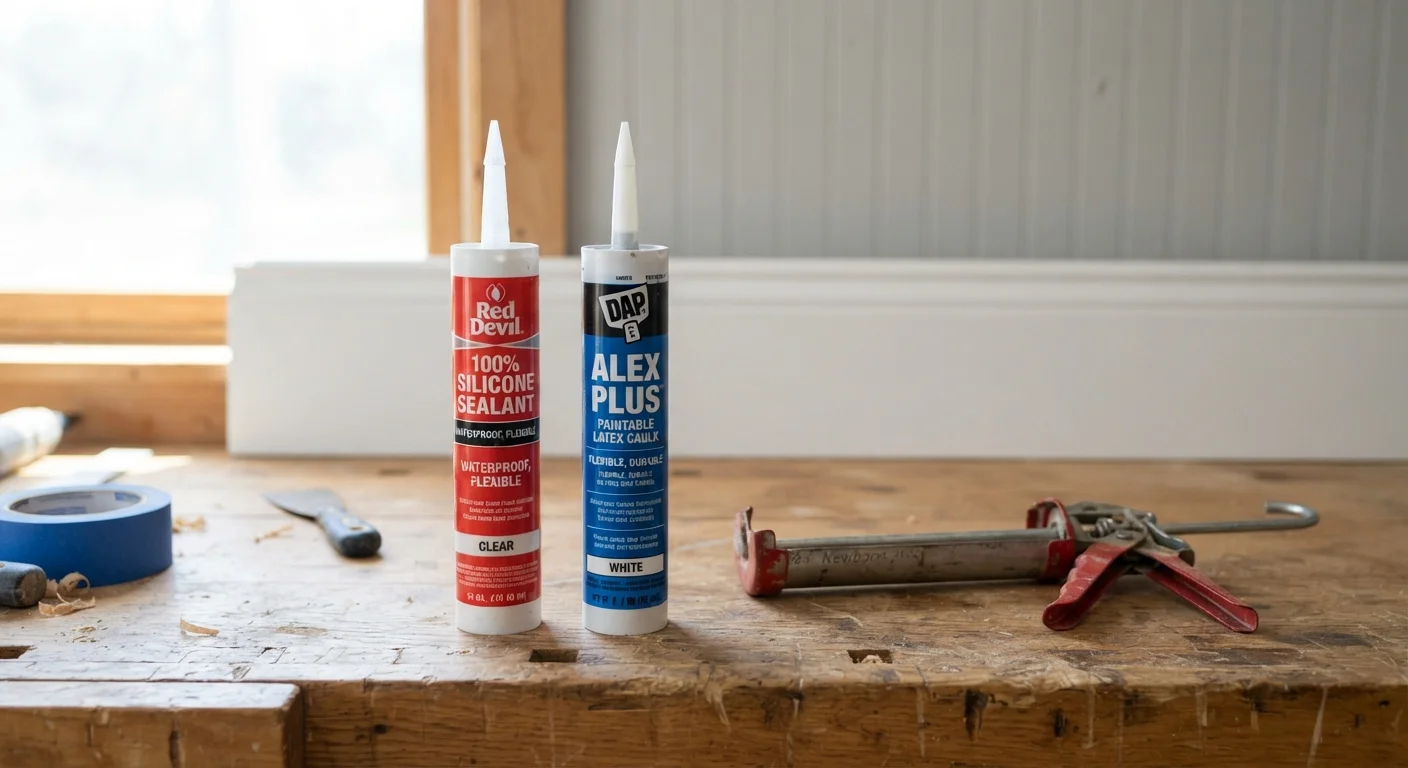
Silicone caulk is a flexible, waterproof sealant made from silicone polymers that bonds strongly to non-porous surfaces like glass, metal, and tile. Paintable caulk - most commonly a latex or acrylic-latex formula - is designed to accept paint on top after it cures. The two products share a similar appearance in the tube but serve different purposes and fail when used in the wrong application.
Pure silicone repels paint due to its non-porous surface chemistry; paint beads up and peels rather than adhering. Some hybrid formulas marketed as "paintable silicone" exist, but their paint adhesion and flexibility vary significantly by brand and formulation.
What Makes These Two Products Fundamentally Different
Walk down the caulk aisle and you'll find dozens of tubes that look nearly identical. The critical difference isn't the packaging - it's the base chemistry. Silicone caulk is built from silicone polymers, giving it exceptional elasticity, heat resistance, and the ability to shed water almost completely. Paintable caulk - almost always an acrylic-latex formula - is water-based and designed to bond with porous materials like wood and drywall, then accept a coat of paint on top.
That chemical difference has real consequences at the job site. Silicone's non-porous, slick surface is exactly what makes it so water-resistant - and exactly what causes paint to slide right off it. Acrylic-latex, on the other hand, has a slightly porous surface that grips paint well but absorbs moisture over time, making it a poor choice for continuously wet environments.
Understanding where each sealing material belongs is a useful starting point before choosing a specific caulk type.
~$300+
Average cost of water damage from a failed tub seal
According to home repair estimates, a failed caulk seal around a bathtub can lead to subfloor and tile removal costs that far exceed the original caulking job.
24-48 hrs
Typical cure time before painting acrylic-latex caulk
Most acrylic-latex caulk manufacturers recommend waiting at least 24 hours before applying paint, though fast-cure products can reduce this window.
20+ years
Potential lifespan of properly applied silicone caulk
In low-movement joints with good surface prep, silicone caulk can outlast multiple paint jobs and require far less frequent reapplication than latex alternatives.
Where Each Type Belongs - and Where It Fails
The most common mistake homeowners make is applying silicone caulk along interior trim, baseboards, or window casings - areas that will later be painted. The silicone seals the gap well initially, but when paint is applied, it won't bond. Within weeks, the paint over the caulk peels back in strips. This is one of the leading causes of the problem described in fixing peeling paint on exterior trim.
The reverse mistake is equally costly. Using paintable caulk around a bathtub or inside a shower means the seal is exposed to daily soaking. Latex caulk is not designed for this. It softens, cracks, and eventually allows water infiltration - leading to mold growth behind tile and water damage to the substrate underneath. Caulk failure in wet areas often traces back to using the wrong product in the first place.
A simple guide:
- Silicone caulk: Bathtubs, showers, sinks, glass-to-metal joints, exterior seams on non-painted surfaces
- Paintable acrylic-latex caulk: Interior trim, baseboards, door and window casings, crown molding, drywall gaps
- Acrylic-latex with silicone additive: Exterior window trim, siding seams, areas exposed to weather that will be painted
Quick Location Test Before You Buy
Before purchasing any caulk, ask yourself two questions: Will this joint get wet regularly? And will this joint be painted? If the answer to the first is yes, lean toward silicone. If the answer to the second is yes, you need an acrylic-latex or siliconized acrylic formula. If both answers are yes, you're likely working on an exterior trim joint - a siliconized acrylic labeled for exterior use is usually the right call.
Reading a Caulk Label Before You Buy
Manufacturers don't always make labeling straightforward. A tube might say "flexible," "waterproof," or "interior/exterior" without clearly stating whether it's paintable. Here's what to look for:
- "100% Silicone": Waterproof and flexible, but not paintable. Use in wet zones only.
- "Acrylic Latex" or "Painter's Caulk": Paintable, bonds to wood and drywall, but limited moisture resistance.
- "Acrylic Latex with Silicone" or "Siliconized Acrylic": Paintable and more water-resistant than plain latex - a good choice for exterior trim. Not as waterproof as 100% silicone.
- "Paintable Silicone": A hybrid category - read the fine print. Some accept paint well; others do not. Verify with manufacturer data before relying on it.
If you're working on a surface similar to what's discussed in choosing the right joint filler for tile work, the wet-versus-dry environment question applies here too.
"Paintable Silicone" Labels Vary Widely
Products sold as paintable silicone vary considerably in how well they actually accept paint. Some formulations include enough acrylic content to hold a coat of latex paint reliably; others still repel it. If you plan to use a hybrid product, check whether the manufacturer provides specific guidance on which paint types are compatible, and consider testing on a small area first.
Surface Prep and Application Differences
Beyond product selection, each type has specific preparation needs. Silicone caulk requires a completely clean, dry, and grease-free surface to bond properly - even a thin film of soap residue in a shower joint can cause adhesion failure. Acrylic-latex caulk is more forgiving on textured or slightly dusty surfaces and cleans up with water before it cures.
Removal also differs. Old silicone must be cut and scraped off carefully - it won't respond to solvents readily and requires a silicone remover product for full cleanup. Old acrylic-latex peels or softens more easily. Mixing the two - applying new silicone over an old latex bead, or vice versa - typically leads to adhesion failure at the interface. Always remove old caulk completely before reapplying.
For anyone navigating decisions about what goes on painted exterior surfaces, the concepts behind outdoor versus indoor paint formulations apply to caulk as well - exterior environments demand materials that can handle UV, temperature swings, and moisture simultaneously.
“The right sealant in the wrong place is still the wrong sealant. Material selection has to follow the environment, not just the gap.”
— Building Science Corporation, Research organization focused on building enclosure performance and moisture management