

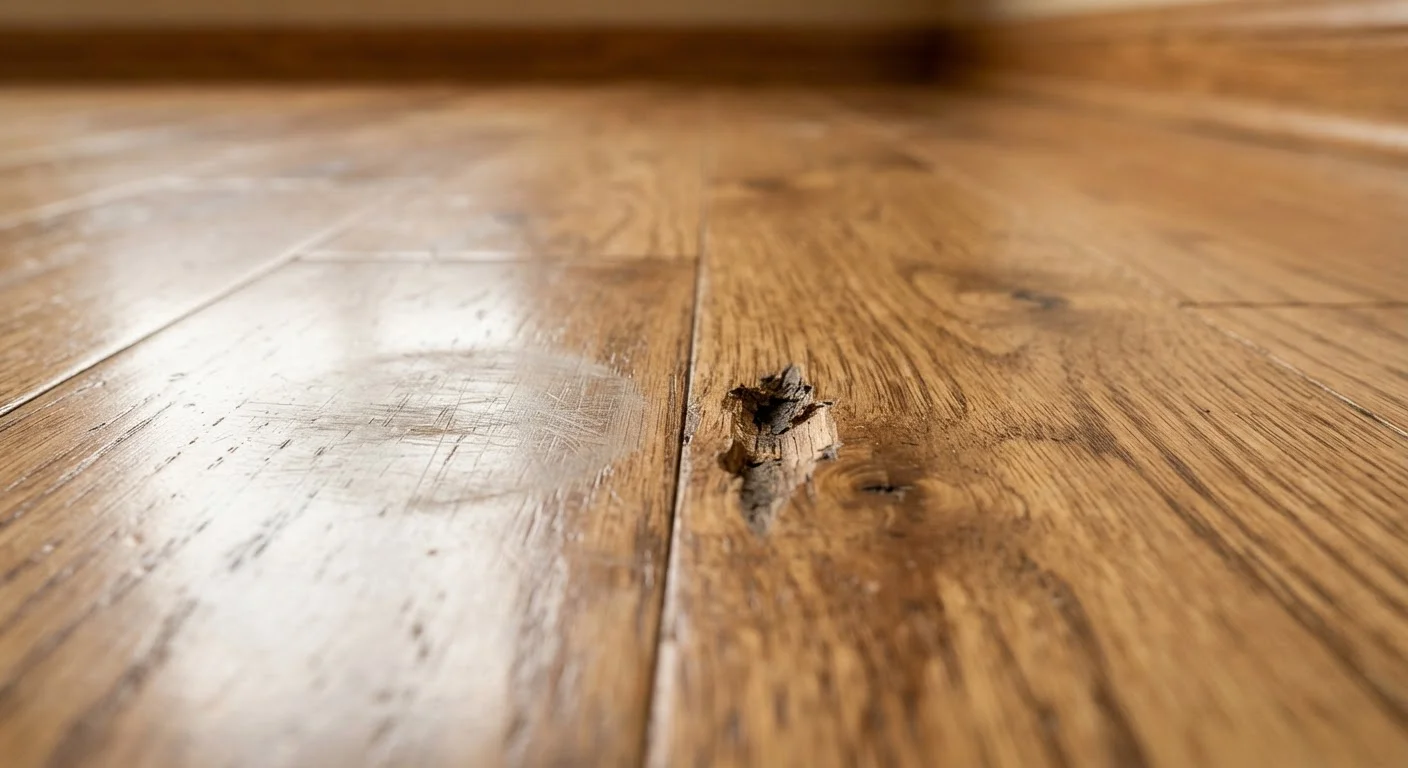
Key Takeaways
- Surface scuffs affect only the finish layer and can often be buffed or touched up without tools.
- Deep gouges penetrate the wood itself and require filler, blending, or in severe cases, board replacement.
- Correctly identifying damage depth before starting any repair saves time and prevents making the problem worse.
- Wood filler, wax sticks, and finish markers each suit different damage levels - using the wrong one shows.
- Sanding and refinishing is effective but should be reserved for widespread damage, not isolated scratches.
Our Verdict
Surface scuffs and deep gouges are fundamentally different problems that call for different materials and techniques. Attempting a deep-gouge fix on a surface scuff - or vice versa - typically makes the damage more visible, not less. Match the repair method to the actual damage depth, and you'll get results that hold up.
| Best for | Recommended |
|---|---|
| Light surface scuffs and finish-only marks | Hardwood floor markers or paste wax buffing |
| Moderate scratches that catch a fingernail | Blended wood filler with color-matched stain |
| Deep gouges with raised edges or missing wood | Layered wood filler application and spot refinishing |
| Widespread or severe damage across multiple boards | Professional sanding and full refinishing |
How to Tell a Scuff from a Gouge
Before buying any product or picking up a tool, run a fingernail across the damaged area. If your nail glides over it without catching, you're dealing with a surface scuff - damage confined to the protective finish coat on top of the wood. If your nail drops into the mark, the scratch has broken through the finish and into the wood fiber itself. That's a deep scratch or gouge, and it requires a different approach entirely.
Natural lighting helps too. Hold a flashlight at a low angle across the floor. Surface scuffs often appear as dull or cloudy patches where the sheen is disrupted. Gouges cast small shadows because wood material is actually displaced or missing.
Getting this diagnosis right matters. Using a wax-based marker on a deep gouge leaves a color smear that doesn't fill the cavity. Sanding a surface scuff when buffing would have worked removes finish unnecessarily. See our guide to temporary vs. permanent repairs for more on matching repair scale to actual damage.
Fixing Surface Scuffs: Finish-Layer Repairs
Surface scuffs are the most forgiving type of hardwood damage. In many cases, the finish isn't even broken - it's just dulled or compressed from foot traffic, furniture dragging, or grit underfoot.
Buffing with paste wax or polish
For very light marks, applying a small amount of paste wax or hardwood floor polish to a soft cloth and rubbing in a circular motion can restore sheen and camouflage the scuff entirely. This works best on older floors with a wax or oil finish. Avoid wax on polyurethane-finished floors - it can interfere with future refinishing.
Hardwood floor markers and touch-up kits
These felt-tip or brush-on products deposit a tinted coating that blends with the surrounding finish. They work well on minor finish chips and surface scratches where color is disrupted. Apply lightly and blend immediately - letting it dry before blending creates a noticeable edge.
Prevention Beats Repeated Patching
If scuffs keep returning in the same area, address the root cause: add felt pads to furniture legs, place an area rug near high-traffic entry points, and sweep grit regularly rather than letting it act as sandpaper underfoot. Prevention is more effective than any repair product.
If scuffs keep returning in the same area, address the root cause: add felt pads to furniture legs, place an area rug near high-traffic entry points, and sweep grit regularly rather than letting it act as sandpaper underfoot.
Repairing Deep Gouges: Filler and Spot Refinishing
When wood fiber is actually damaged, you need a material that fills volume - not just deposits color on top. Two main options exist: wood filler (also called wood putty) and wax fill sticks. They serve different purposes.
Wax fill sticks
Wax sticks are easy to use and widely available. You rub the stick into the gouge, press flush with a plastic card, and buff. They're best for narrower scratches with moderate depth. The tradeoff is durability - wax can soften in warm rooms and doesn't accept stain, so color-matching requires choosing the right stick upfront. Our overview of wood filler products explains the material differences in more depth.
Latex or solvent-based wood filler
For wider or deeper gouges, a latex wood filler offers better adhesion and can be sanded smooth once cured. Apply in thin layers - thick single applications shrink as they dry, leaving a depression. Once fully cured and sanded, the repaired area can be stained to match, then sealed with a compatible finish coat.
| Surface Scuffs | Deep Gouges | |
|---|---|---|
| Damage depth | Finish layer only | Into wood fiber |
| Fingernail test | Nail glides over | Nail catches in mark |
| Primary repair material | Wax, marker, or polish | Wood filler or wax stick |
| Sanding needed? | Rarely | Often, after filler cures |
| Finish reapplication | Usually not required | Spot coat typically needed |
| DIY difficulty | Low | Moderate |
Spot refinishing - applying a thin coat of polyurethane or finish just over the repaired zone - can blend the repair visually, but sheen differences between old and new finish are common. Feathering the edges of the finish coat helps minimize the transition line.
When DIY Isn't Enough: Knowing the Limits
Some hardwood damage genuinely exceeds what surface repairs can fix. Boards that are cupped, cracked through their full thickness, or have structural movement underneath need professional assessment rather than topical fixes. Similarly, if large sections of the floor are scratched - especially from a pet or a furniture move gone wrong - full sanding and refinishing by a flooring professional may be more cost-effective than treating dozens of individual spots.
Solid hardwood floors can typically be sanded and refinished multiple times over their lifespan; engineered hardwood has a thinner wear layer and fewer opportunities. Before planning any sanding, know which type of floor you have. If you're weighing a full floor replacement against continued repairs, the flooring upgrade checklist can help you think through that decision systematically.
Don't Patch Over Unstable Boards
If the damaged board flexes, bounces, or squeaks when walked on, a surface repair won't hold. Movement beneath the board will crack or dislodge any filler or finish patch. Address the structural issue - whether that's a fastening problem or subfloor moisture - before attempting cosmetic repairs.
Also keep the squeaky floor guide in mind: if boards near the damage are loose or flexing, fixing the scratch without addressing the underlying movement means your repair will crack or separate over time.