

Key Takeaways
- Temporary repairs are appropriate when safety, timing, or budget make immediate permanent fixes impractical.
- Leaving a temporary fix in place too long can cause compounding damage that costs far more to correct.
- Permanent repairs are typically required for structural, electrical, plumbing, and moisture-related issues.
- Some repairs require permits regardless of how long the fix is meant to last - always verify local requirements.
- Knowing the difference between a holding measure and a lasting solution is a core homeowner skill.
Our Verdict
Temporary repairs have a legitimate place in home maintenance - they buy time, contain damage, and bridge gaps when permanent work isn't yet possible. But they only work well when treated as exactly that: temporary. Permanent repairs are the standard for anything structural, safety-related, or moisture-affected, and delaying them almost always makes the eventual job harder and more expensive.
| Best for | Recommended |
|---|---|
| Homeowners managing a sudden, active problem before a contractor can arrive | Temporary Repair |
| Repairs involving structure, electrical systems, plumbing, or persistent moisture | Permanent Repair |
| Situations where budget or scheduling delays a full fix for a defined, short period | Temporary Repair with a firm follow-up plan |
| Any repair affecting home safety, habitability, or resale readiness | Permanent Repair |
The Core Distinction: Holding vs. Fixing
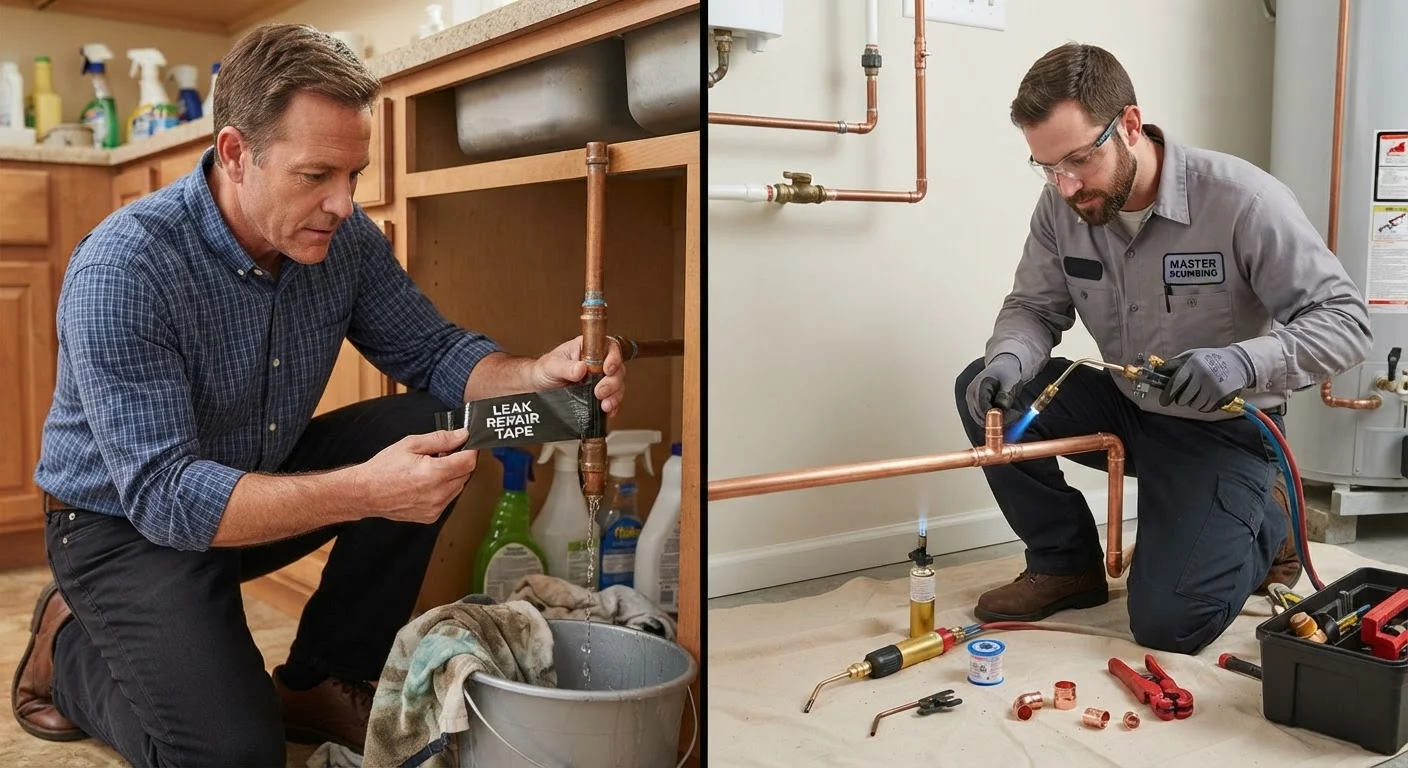
A temporary repair is designed to stop active harm - a dripping pipe, a broken window latch, a cracked step - until a complete solution is in place. A permanent repair addresses the underlying cause and is built to last the life of the home or component. The problem isn't choosing one over the other; it's misidentifying which situation you're actually in.
Many homeowners apply a temporary patch, get comfortable when the immediate symptom disappears, and never follow through. That gap is where small issues become expensive ones. As detailed in our look at what drives up repair costs, delays and wrong materials are among the most reliable ways to inflate what should have been a straightforward fix.
Set a Follow-Up Date When You Patch
Any time you apply a temporary fix, immediately schedule the permanent repair - even if it's weeks away. Add it to your calendar and treat it as a firm commitment. Temporary repairs that drift past their intended window are one of the most common drivers of inflated home maintenance costs.
When a Temporary Repair Is the Right Call
Temporary fixes make sense in three clear scenarios: an emergency that needs immediate containment, a situation where the permanent repair requires a professional or parts not yet available, or a minor cosmetic issue with no structural consequence.
- Emergency containment: A burst pipe, a damaged roof during a storm, or a broken exterior lock all benefit from an immediate temporary measure. Stopping active water intrusion with roofing tape, for example, is far better than waiting for a contractor while water damages framing and insulation.
- Waiting on materials or professionals: If a tile cracks and the original is discontinued, a temporary sealant protects the subfloor while you work through options - an issue explored thoroughly in our guide on repairing tile when the original is discontinued.
- Low-stakes cosmetic issues: A surface scuff on a hardwood floor rarely requires the same urgency as a deep gouge reaching the subfloor. Understanding severity matters - see repairing hardwood floor scratches.
The key discipline: set a firm timeline when you apply a temporary fix. Write it down. Don't let "for now" become "forever."
When Only a Permanent Repair Will Do
Certain categories of home repair should never remain in a temporary state. These include anything touching structural integrity, electrical systems, load-bearing elements, active water intrusion into walls or floors, and gas lines. In these situations, a patch that appears to work can mask ongoing damage - or create genuine safety hazards.
| Temporary Repair | Permanent Repair | |
|---|---|---|
| Primary purpose | Contain damage, buy time | Resolve the underlying cause |
| Appropriate duration | Days to a few weeks | Long-term or lifespan of component |
| Skill level typically required | Basic DIY in most cases | Varies; often professional |
| Permit likely required? | Rarely | Often for structural/electrical/plumbing |
| Risk if left too long | Compounding damage, higher final cost | Generally stable if done correctly |
| Best suited for | Emergencies, cosmetic issues | Safety, structural, moisture-related issues |
Plumbing offers a clear illustration. A toilet with an improperly addressed flange may seem stable until persistent leaking causes subfloor rot - a problem covered in depth in our piece on toilet flange repair. Similarly, a sagging gutter patched with wire rather than properly rehung will fail again, typically during the next heavy rain. Our article on repairing a sagging gutter walks through when a targeted repair is sufficient versus when full replacement is warranted.
It's also worth noting that some permanent repairs require permits - and applying a "permanent" fix without one can create legal and financial complications when you sell. Our overview of permit-required repairs explains which projects commonly trigger that requirement.
Temporary Fixes Can Void Insurance Claims
Some homeowner's insurance policies require prompt, adequate repairs following damage. Leaving a documented temporary fix in place for an extended period may complicate a future claim if the problem worsens. Review your policy language and consult your insurer if you're uncertain how a temporary repair affects your coverage.
Making the Decision in Practice
The decision framework is straightforward once you identify two things: what is actively at risk if the problem continues, and how long the temporary fix will realistically hold. If the answer to the first question involves water, structural load, electrical current, or safety, move to a permanent repair as quickly as possible - even if it means addressing repairs that seem minor.
If the temporary fix is sound and the risk is genuinely low, a short holding period is reasonable - but "short" means weeks, not months. Treat every temporary repair as a task with a due date, not a resolved item crossed off your list. That mindset is what separates confident, cost-effective homeownership from chronic deferred maintenance.