

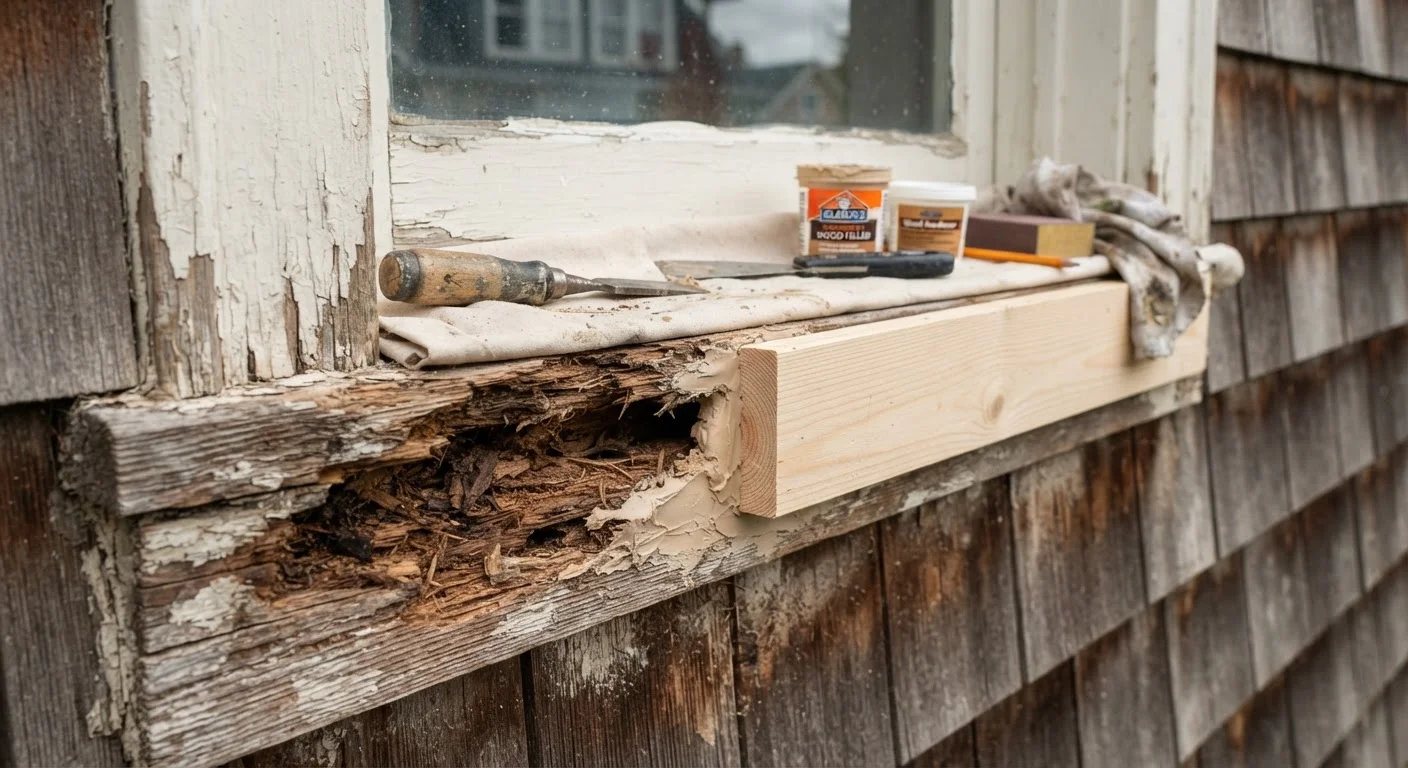
Key Takeaways
- Wood filler works best on shallow voids in dry, stable wood - not on soft or actively rotted sections.
- Epoxy consolidant soaks into degraded wood fibers and hardens them from the inside out before any filler is applied.
- Two-part epoxy systems are generally more durable outdoors, while standard wood fillers are better suited for interior repairs.
- Neither product is a substitute for removing the source of moisture that caused the rot in the first place.
- Matching the repair method to the depth and location of damage is the single most important decision you'll make.
Option A
Wood Filler
The surface-level, cosmetic repair solution.
Best for: Best for small, shallow voids in dry, structurally sound wood where a smooth paintable surface is the goal.
Option B
Epoxy Wood Consolidant
The deep-penetrating, structural restoration system.
Best for: Best for soft, deeply rotted wood that has lost structural integrity and needs to bear load or resist weather long-term.
If the damage is a shallow divot or crack in otherwise firm, dry wood
Wood Filler
Wood filler is easy to apply, sands smoothly, and takes paint well - ideal when the surrounding wood is stable and the void is minor.
If the wood feels spongy, crumbles under pressure, or has deep soft spots
Epoxy Wood Consolidant
Consolidant saturates weakened fibers and restores a hard base before filling - skipping this step causes surface repairs to fail quickly.
If you're repairing exterior trim, window sills, or deck framing exposed to weather
Epoxy Wood Consolidant
Epoxy systems resist moisture and temperature cycling far better than standard fillers, making them the more durable outdoor choice.
If you're doing a quick interior patch before repainting a baseboard or door casing
Wood Filler
For interior repairs on structurally sound wood, wood filler is simpler, faster, and perfectly adequate for a clean painted finish.
Why Rot Repair Products Are Not Interchangeable
Rotted wood isn't a single condition - it exists on a spectrum from surface staining to complete fiber breakdown. Using the wrong repair product for the severity of the damage is one of the most common reasons rot repairs fail within a season or two. As our guide on common exterior rot repair mistakes explains, the repair material is only part of the equation - but picking the right one still matters enormously.
Wood filler and epoxy consolidant are built around completely different principles. Wood filler fills a void. Epoxy consolidant rebuilds compromised wood fiber before anything is filled. Understanding that distinction will save you from repeating the same repair next year.
| Criterion | Wood Filler | Epoxy Wood Consolidant |
|---|---|---|
| Primary function | Fills surface voids | Hardens degraded wood fiber |
| Best damage depth | Shallow (surface to ~½ inch) | Deep or structurally compromised |
| Wood condition required | Firm, dry surrounding wood | Works on soft, spongy rot |
| Best location | Interior, protected surfaces | Exterior, weather-exposed surfaces |
| Ease of application | Simple - press, smooth, sand | Two-step mix and timing required |
| Typical durability outdoors | Limited - susceptible to cracking | High - moisture and flex resistant |
| Paintable finish | Yes, sands smoothly | Yes, after full cure |
How Wood Filler Works - and Where It Falls Short
Wood filler is a paste-like compound - often latex or solvent-based - that you press into a void, let cure, then sand and paint. It bonds to the surface of the surrounding wood, which means it depends entirely on that surrounding wood being firm and dry. If the wood beneath is still soft or retains moisture, the filler has nothing solid to grip, and it will eventually crack, shrink, or pop out.
For interior repairs - a scuffed baseboard, a small gouge in a door casing, minor damage to a window stool - wood filler is a genuinely practical choice. It dries quickly, sands to a smooth finish, and accepts paint cleanly. It's also significantly more forgiving for beginners. The same approach to matching repair depth to method applies when working with other materials; see our overview of repairing hardwood floor scratches for a parallel example.
Where wood filler consistently underperforms is on exterior wood with active or deep rot. Outdoor temperature swings cause filler to expand and contract at a different rate than the surrounding wood, opening gaps that let moisture back in.
~90%
Of exterior rot repairs that fail prematurely
Industry contractors commonly cite moisture re-entry and incorrect product selection as the leading causes of premature rot repair failure.
40°F
Minimum temperature for epoxy cure
Most two-part epoxy systems specify a minimum application temperature of 40°F (4°C) to achieve a complete, reliable cure.
How Epoxy Consolidant Works - and When You Need It
Epoxy consolidant is a low-viscosity liquid system - usually sold as a two-part mix - that you brush or pour directly onto softened, rotted wood. It wicks into the degraded fibers by capillary action and, once cured, hardens the wood from the inside out. The result is a rigid, moisture-resistant substrate that can then be built up with a compatible epoxy filler if the void needs to be shaped.
This two-step process (consolidant first, then filler) is what makes epoxy systems the right call for exterior structural repairs: window sills, porch columns, deck ledger boards, door frames at grade level. Once cured, epoxy-repaired wood can be drilled, nailed, and painted like sound wood.
The tradeoff is complexity. Two-part systems have working-time limits (called pot life), require careful mixing ratios, and cost considerably more than standard wood fillers. They're also less forgiving in cold temperatures - most require application above 40°F (4°C) for a full cure. For ongoing prevention on surfaces like decking, regular deck maintenance is what keeps you from needing either product repeatedly.
When to Replace Rather Than Repair
If more than 50% of a board's cross-section has rotted through, or if the member carries structural load (like a joist or beam), repair products are generally not sufficient. Replacement is the safer and more reliable path. Always consult a licensed contractor when structural integrity is in question - permits may be required depending on your local building code.
Making the Right Call for Your Repair
The fastest diagnostic is a simple probe test: press a screwdriver or awl firmly into the damaged area. If it meets resistance and the wood holds its shape, a standard wood filler may be all you need. If the tool sinks in with little effort, or if you can crumble the wood with your fingers, the fiber structure is compromised - consolidant comes first.
Location matters just as much as severity. Interior repairs on protected wood tolerate filler well. Anything exposed to rain, sprinkler spray, or ground contact warrants an epoxy approach. After any rot repair outdoors, sealing and protecting the surface properly completes the job; our article on weatherproofing a wood deck covers the right sequence for surface protection.
Finally, no repair product - regardless of how well it's applied - will last if the moisture source that caused the rot isn't addressed first. Improve drainage, fix the flashing, clear the debris, or trim the vegetation. The repair is only as permanent as the conditions allow.