

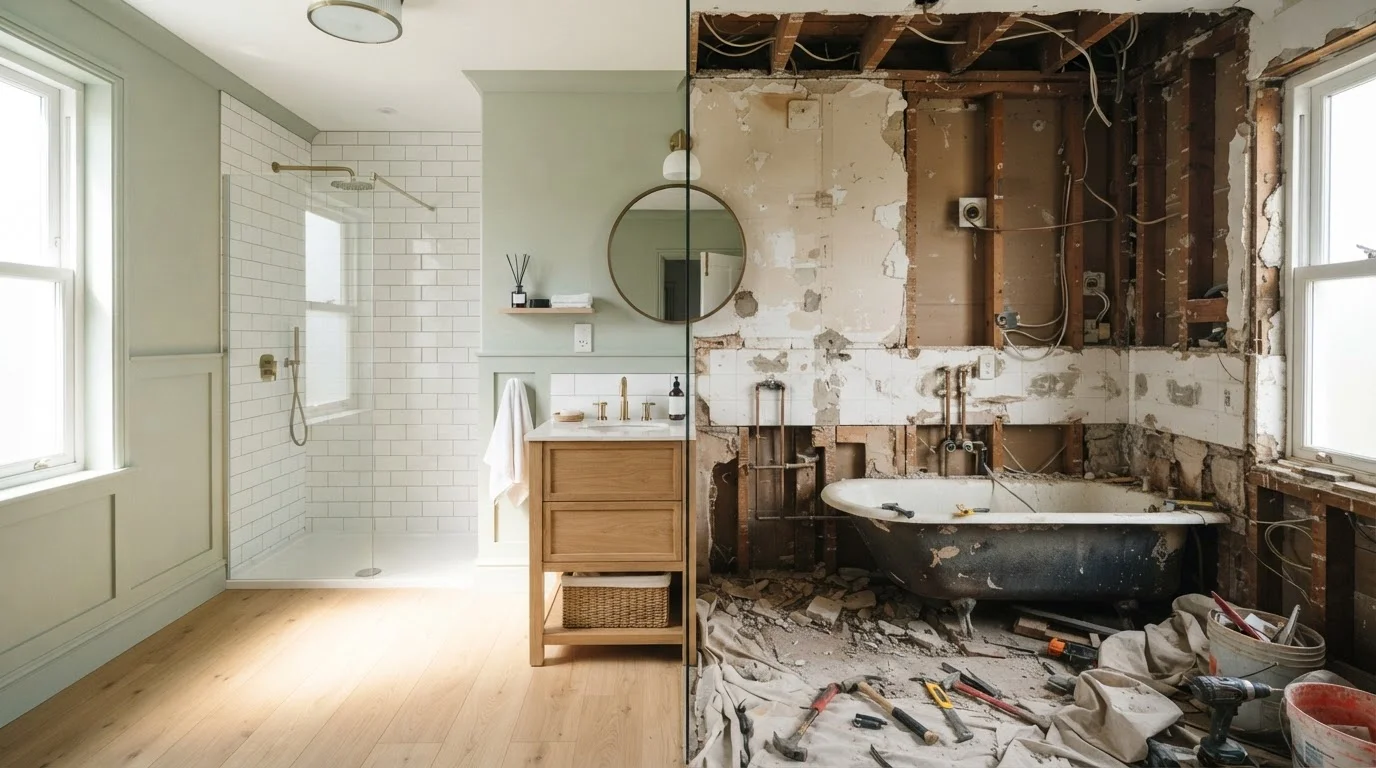
Key Takeaways
- A refresh updates surfaces and accessories; a renovation changes layout, plumbing, or structural elements.
- Refreshes are significantly less expensive and faster to complete than full renovations.
- Full renovations typically require permits and licensed contractors for plumbing and electrical work.
- The condition of your existing plumbing and tile substrate often determines which path makes sense.
- A phased strategy can spread renovation costs over time if a full overhaul isn't immediately feasible.
Option A
Bathroom Refresh
The surface-level upgrade that delivers fast visual impact.
Best for: Homeowners who want noticeable improvements without disrupting plumbing, layout, or structural elements.
Option B
Full Bathroom Renovation
The comprehensive overhaul that resets a bathroom from the ground up.
Best for: Homeowners dealing with aging systems, layout problems, water damage, or a bathroom that no longer meets their needs.
If your bathroom looks dated but functions well
Bathroom Refresh
New paint, updated lighting, a vanity mirror, and fresh hardware can dramatically modernize a space without touching a single pipe.
If you have water damage, mold behind walls, or failing plumbing
Full Bathroom Renovation
Surface fixes won't address structural or systems-level problems - attempting them risks trapping damage behind new finishes.
If you're preparing to sell within one to two years
Bathroom Refresh
A cosmetic refresh typically offers a strong return relative to its cost and avoids the disruption of a full overhaul before listing.
If your layout is impractical or your fixtures are past their useful life
Full Bathroom Renovation
Moving a toilet, relocating a shower, or replacing a cast-iron tub requires opening walls and floors - work that a refresh simply cannot accomplish.
If your budget is limited but improvement is urgent
Bathroom Refresh
Targeted cosmetic updates deliver the highest visual impact per dollar and can be staged over time as your budget allows.
What Each Approach Actually Involves
A bathroom refresh is a cosmetic intervention. It works within the existing layout and leaves plumbing, electrical panels, and structural walls untouched. Common refresh tasks include repainting walls, swapping out a vanity mirror, replacing faucet hardware, installing a new light fixture, regrouting tile, or adding open shelving. Most of these are DIY-friendly for homeowners with basic skills, and even professionally executed refreshes rarely take more than a few days.
A full bathroom renovation is a different undertaking entirely. It typically involves removing and replacing tile down to the substrate (the backing material beneath tile), moving or replacing plumbing fixtures, updating electrical wiring to meet current code, and sometimes reconfiguring the room's layout. Work of this scope almost always requires building permits and licensed professionals for the plumbing and electrical portions. Timelines commonly run two to six weeks depending on scope and contractor scheduling.
The distinction matters because homeowners sometimes begin what they think is a refresh - say, retiling a shower - and discover crumbling substrate or active moisture intrusion behind the walls. At that point, what started as a surface project escalates into renovation territory. Knowing the difference upfront helps you budget honestly and avoid surprises mid-project. For ideas on managing scope across multiple spaces, see our phased home upgrade guide.
Scope, Cost, and Disruption Compared
Cost ranges for both approaches vary significantly by region, materials, and labor market - but the gap between a refresh and a renovation is consistently wide. A well-executed cosmetic refresh might involve a few hundred to a couple of thousand dollars in materials. A full renovation, by contrast, typically runs into the tens of thousands when labor, permits, fixtures, and finishing materials are factored together.
| Criterion | Bathroom Refresh | Full Renovation |
|---|---|---|
| Scope | Surface finishes, accessories, hardware | Layout, plumbing, electrical, structure |
| Typical timeline | 1-3 days | 2-6 weeks |
| Permit required | Rarely | Almost always |
| Licensed trades needed | Usually not | Plumber, electrician typically required |
| DIY potential | High for most tasks | Low for regulated work |
| Relative cost | Lower | Significantly higher |
| Addresses structural issues | No | Yes |
Disruption is another meaningful dimension. A refresh rarely takes a bathroom out of service for more than a day or two. A full renovation can sideline a bathroom for weeks, which matters considerably more if it's your only full bath. If you're navigating a small space with limited options, our article on upgrading a small bathroom covers layout and fixture decisions worth reviewing before committing to a scope.
How to Decide Which One You Need
Start with an honest condition assessment rather than a wishlist. Ask yourself three questions:
- Is the existing tile substrate sound? If grout is crumbling and water has been seeping behind tiles for years, the underlying cement board or drywall is likely compromised. No surface fix will hold.
- Are the plumbing fixtures functional and code-compliant? An older bathroom may have galvanized pipes, inadequate ventilation, or GFCI outlets (ground-fault circuit interrupter - a safety device required near water) that don't meet current standards. These aren't cosmetic issues.
- Does the layout serve your actual needs? If the toilet placement is awkward or there's no storage, no amount of fresh paint resolves the underlying friction.
If all three answers point to "functioning fine," a refresh is likely the right tool. If any answer raises a red flag, bring in a licensed plumber or contractor for a professional assessment before budgeting. This mirrors the logic of evaluating any significant purchase: condition matters as much as appearance, a principle explored broadly in our piece on weighing new vs. refurbished tradeoffs.
Permits and Local Code: Don't Skip This Step
In most US jurisdictions, work that moves or replaces plumbing fixtures, alters electrical wiring, or changes a bathroom's ventilation requires a building permit and inspection. Requirements vary by municipality, so verify with your local building department before any work begins. Unpermitted renovations can create complications when selling a home and may require costly remediation to bring into compliance.
Regardless of scope, any renovation work touching plumbing or electrical in a bathroom will typically require a permit in most US jurisdictions. Check with your local building department before starting - unpermitted work can complicate a home sale and may not pass inspection later.