

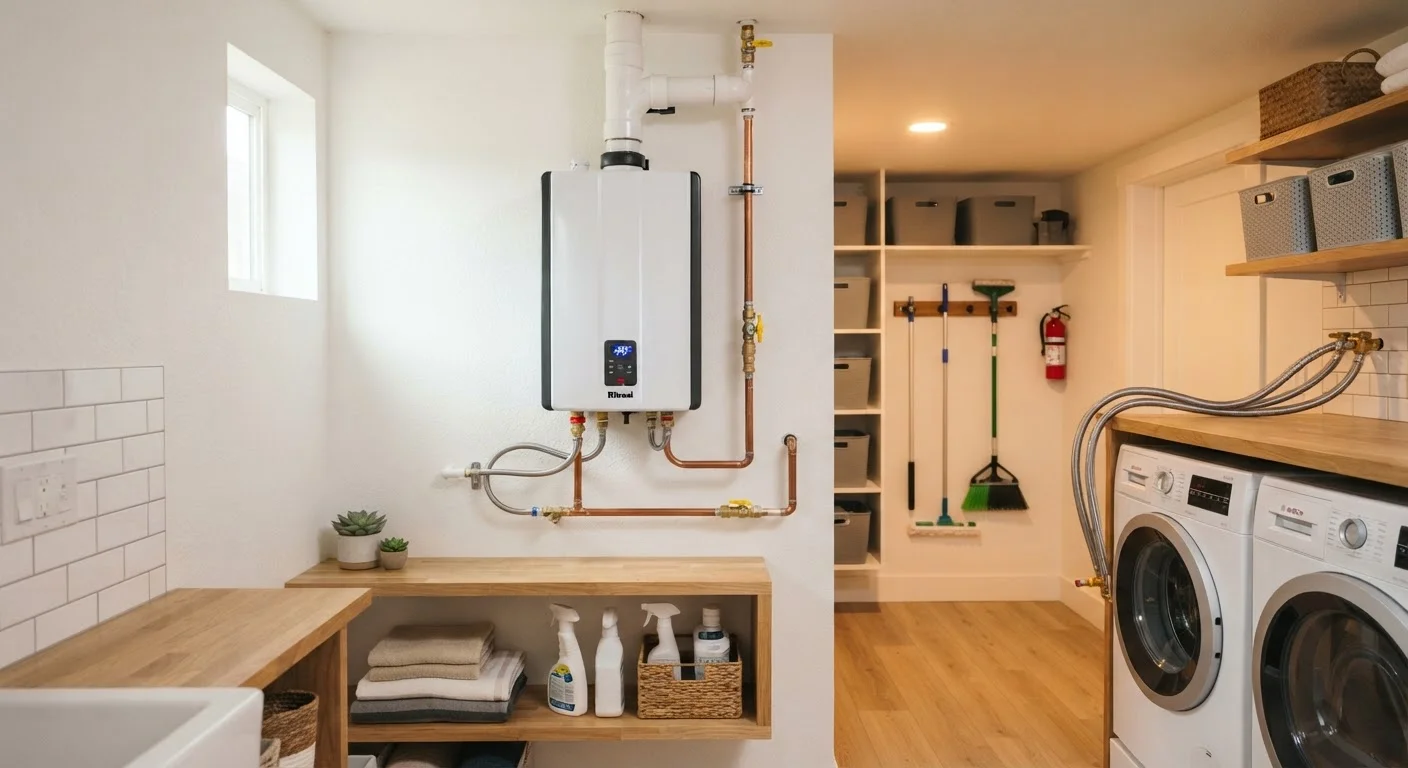
Key Takeaways
- Tankless water heaters do not deliver instant hot water - there is still a brief delay at the tap.
- Upfront costs are higher, but energy savings can offset the difference over time.
- Most tankless units require professional installation and may need gas line or electrical upgrades.
- A single unit may not meet simultaneous hot water demands in larger households.
- Tankless heaters require periodic maintenance, including descaling in hard-water areas.
Why Tankless Water Heater Myths Persist
Tankless water heaters have attracted significant attention as homeowners look for ways to reduce energy use and modernize aging systems. That interest has also generated a wave of oversimplified marketing claims - and genuine misunderstandings about what these units actually do. Before committing to an upgrade, it helps to separate realistic expectations from wishful thinking.
The myths below come up repeatedly in home improvement conversations, and each one can lead to either a poor purchasing decision or a disappointing installation. Understanding the facts won't dampen enthusiasm for tankless technology - it will help you decide whether it's actually the right fit for your home.
Myth
Tankless water heaters deliver hot water instantly, the moment you turn on the tap.
Fact
Hot water still travels through pipes from the heater to the fixture, causing a short but real delay.
The "instant" label refers to how tankless units heat water on demand rather than storing it - not how fast it reaches your faucet. The distance between the heater and the fixture determines your wait. In larger homes, that delay can feel comparable to a traditional tank system. A recirculation pump can reduce waiting time, but adds cost and energy use.
Myth
Switching to tankless means you'll never run out of hot water, no matter how many people are showering.
Fact
Tankless units have a maximum flow rate; running multiple fixtures simultaneously can exceed it.
Every tankless heater is rated in gallons per minute (GPM). If demand exceeds that rating - say, two showers and a dishwasher running at once - the unit may deliver lukewarm water rather than hot. Households with high simultaneous demand may need a larger-capacity unit or multiple heaters working in tandem. Sizing the unit correctly for your household is critical.
Myth
Tankless water heaters pay for themselves almost immediately through energy savings.
Fact
Energy savings are real but modest, and the payback period typically spans several years.
According to the U.S. Department of Energy, tankless water heaters can be 8-34% more energy-efficient than conventional storage tank models, depending on household usage. However, their higher upfront purchase and installation costs mean the break-even point often falls between 6 and 12 years. Actual savings vary by fuel type, local utility rates, and household hot water consumption.
Myth
Tankless water heaters are essentially plug-and-play replacements for tank heaters.
Fact
Most installations require professional work and potentially significant home upgrades.
Gas-powered tankless units often demand a larger gas supply line and different venting than a traditional tank. Electric models may require a panel upgrade to handle the higher amperage load. These are not do-it-yourself swaps - licensed plumbers and electricians are typically involved, and permits are commonly required. Skipping proper installation can create safety hazards and void warranties. If you're curious about related home system upgrades, see our comparison of heat pump and traditional HVAC systems for a similar breakdown.
Myth
Tankless water heaters are maintenance-free once installed.
Fact
They require periodic flushing and descaling, especially in areas with hard water.
Mineral buildup - primarily calcium and magnesium from hard water - accumulates inside the heat exchanger over time, reducing efficiency and potentially shortening the unit's lifespan. Most manufacturers recommend flushing the system annually. Inline water filters and water softeners can reduce this burden but add complexity and cost. Neglecting maintenance is one of the more common reasons tankless heaters underperform over time.
Making a Well-Informed Decision
Tankless water heaters are a legitimate upgrade for many households - but they work best when matched to the right conditions. Key questions to ask before moving forward include: How many fixtures might run simultaneously? How far is the heater from your most-used fixtures? What is the hardness of your local water supply? Does your gas line or electrical panel have capacity for the upgrade?
Don't Skip the Permit and Professional Check
Tankless water heater installations frequently require building permits and inspections, depending on local code. Installing without proper permits can create problems during home sales and may void manufacturer warranties. Always verify local requirements with your municipality and hire licensed tradespeople for gas, electrical, and plumbing connections.
Getting a professional assessment before purchasing is strongly advisable. A licensed plumber or HVAC contractor can evaluate your current setup, calculate the GPM you'll realistically need, and flag any infrastructure changes required. This avoids the common frustration of buying a unit that underperforms for your household's actual demand.
For homeowners thinking holistically about whole-home water quality alongside heating, our guide to whole-house vs. point-of-use water filtration covers another frequently misunderstood upgrade decision. And if you've noticed a pattern in how home improvement myths create costly assumptions, the same applies across other categories - from DIY electrical misconceptions to broader warranty myths that follow consumers into every major purchase.