

Key Takeaways
- Kitchen upgrades that improve workflow and storage have more daily impact than cosmetic changes alone.
- Lighting layers - task, ambient, and accent - dramatically affect how usable a kitchen feels.
- Drawer and cabinet organization systems can reclaim significant storage without expanding the footprint.
- Ventilation is a frequently overlooked upgrade that affects air quality, comfort, and long-term maintenance.
- Small structural changes like adding an island or peninsula can transform traffic flow in many kitchens.
Why Functional Upgrades Outlast Aesthetic Ones
Most kitchen renovation conversations start with countertop materials or cabinet door styles - and those choices matter. But homeowners who have lived through a full kitchen remodel often report the same thing: the upgrades they appreciate most every single day are the ones that changed how the space actually works. A pull-out trash drawer used a hundred times a week delivers more satisfaction than a subway tile backsplash that looked great in the showroom.
That's not an argument against aesthetics. It's a case for prioritizing function first, then building visual decisions around it. If you're trying to figure out where to channel your improvement energy, the room-by-room upgrade guide offers a helpful starting framework. For the kitchen specifically, the list below focuses on changes that shift how you cook, store, and move through the space - not just what it looks like standing still.
Add layered lighting instead of relying on a single overhead fixture
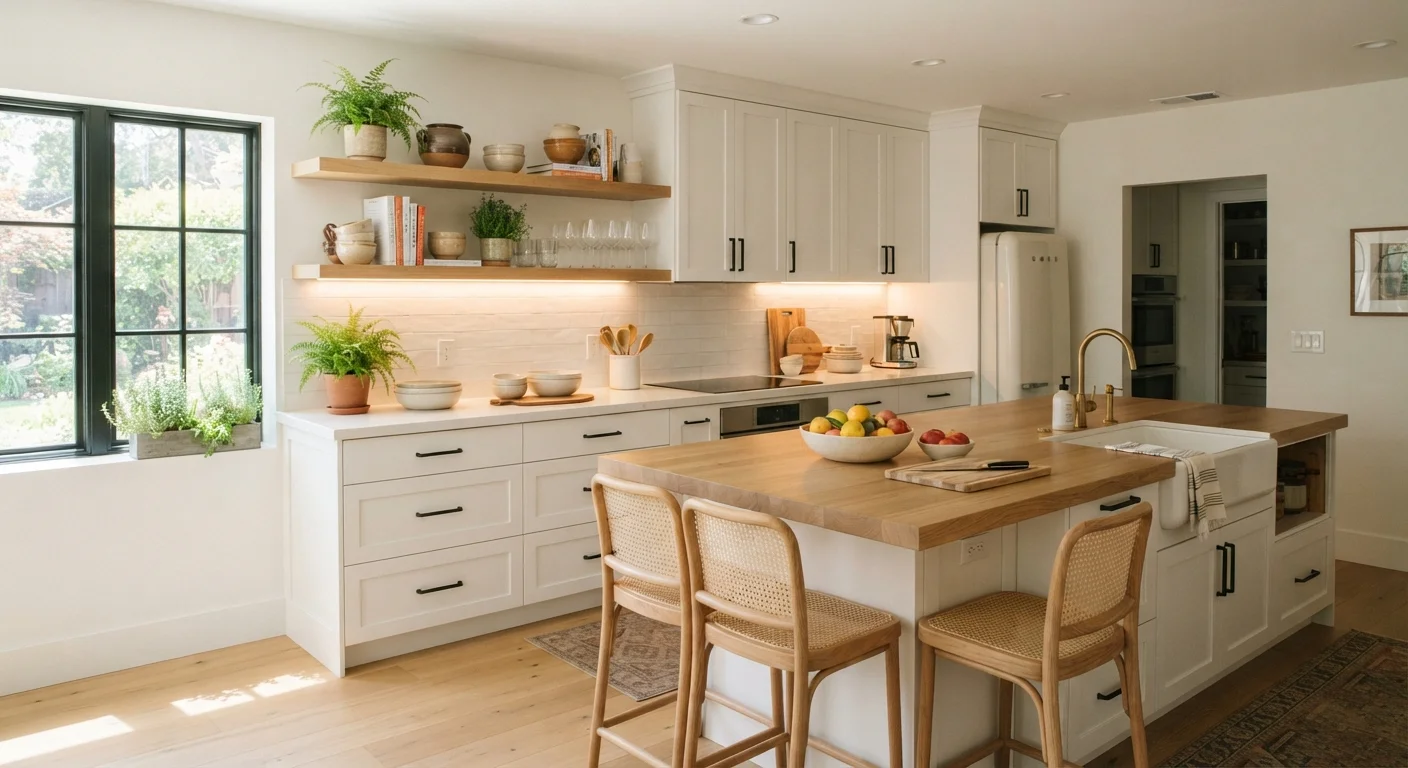
A single ceiling light leaves prep surfaces shadowed and makes the kitchen feel flat. Layered lighting - combining overhead ambient light, under-cabinet task lighting aimed at countertops, and accent lighting inside glass cabinets or toe kicks - changes how the room functions after dark and during overcast days.
Under-cabinet lighting is particularly high-impact. It eliminates the shadow your own body casts while chopping or reading a recipe. LED strip lighting or puck lights are common approaches; hardwired installations are more permanent and cleaner-looking, while plug-in versions require less disruption. Either way, this is one of the most cost-effective functional improvements in any kitchen.
Under-cabinet lighting eliminates the shadow your own body casts while prepping food.
Replace fixed cabinet shelves with pull-out drawer inserts
Deep base cabinets with fixed shelves are notorious for swallowing pots, lids, and pantry items that become invisible once pushed to the back. Pull-out drawer inserts - either retrofitted into existing cabinets or specified in new cabinetry - bring the entire contents of a cabinet to eye level and hand reach.
This upgrade requires no structural changes and often fits within existing cabinet boxes. It's especially valuable in corner cabinets, where lazy susans or blind-corner pull-outs make previously wasted space genuinely usable. Measured correctly, these systems can roughly double the accessible storage in a base cabinet run.
Pull-out inserts can roughly double the accessible storage in a base cabinet run.
Upgrade ventilation to match your actual cooking habits
Range hoods are frequently undersized or vented inadequately - a problem that compounds over time through grease buildup, persistent cooking odors, and excess humidity. A properly sized range hood, vented to the exterior rather than recirculated through a charcoal filter, removes steam, smoke, and airborne grease at the source.
Sizing is expressed in cubic feet per minute (CFM) and should correspond to your cooktop's BTU output and the hood's distance from the cooking surface. Ducting path and exterior termination also affect performance significantly. This is one of the more involved kitchen upgrades and commonly benefits from professional installation - the ventilation planning guide covers the key decisions in detail.
A properly sized, exterior-vented range hood removes grease and moisture at the source.
Create a dedicated prep zone with intentional counter space
Kitchen workflow research consistently identifies the area between the sink and cooktop as the most-used prep zone. If that stretch is cluttered with small appliances, lacking an outlet, or too narrow to work comfortably, every cooking session feels more effortful than it should.
Clearing this zone - relocating countertop appliances to a garage area, an appliance cabinet with a dedicated outlet, or open shelving elsewhere - can transform how the kitchen feels to use. If counter space is genuinely insufficient, a butcher-block rolling cart or a modest peninsula addition may provide the surface area the layout currently lacks.
The stretch between sink and cooktop is the most-used prep zone in most kitchens.
Improve drawer organization with dividers and inserts
Utensil drawers that hold everything hold nothing well. Drawer dividers - adjustable or fitted - separate cooking tools, measuring equipment, and cutlery so each item has a home and can be retrieved without digging. Deep drawers fitted with peg systems can store stacked plates, bowls, and cookware lids vertically rather than in unstable piles.
This is among the lower-cost, higher-return changes available in any kitchen. It doesn't require permits, contractors, or significant disruption, but it meaningfully reduces the daily friction of finding what you need while something is on the stove.
Fitted drawer dividers reduce the daily friction of finding tools while something is on the stove.
Install a deeper or higher-capacity sink
Standard kitchen sinks are often 7 to 8 inches deep - workable for rinsing vegetables but awkward for washing large pots, sheet pans, or tall stockpots. A deeper single-basin sink (10 inches or more) or a large apron-front style can meaningfully change how comfortable cleanup feels, especially in households that cook frequently.
Sink replacement is a plumbing task that typically involves disconnecting and reconnecting drain lines and supply connections. Depending on the existing countertop cutout and cabinet base configuration, cabinet modifications may also be needed. Most homeowners find this project best handled by a licensed plumber, particularly when supply lines or drain configurations need adjustment.
A deeper single-basin sink makes washing large pots and sheet pans considerably less awkward.
Making These Upgrades Work for Your Kitchen
Not every upgrade on this list suits every kitchen. A galley kitchen benefits most from vertical storage and lighting improvements. An open-plan kitchen may gain more from better organization systems and ventilation. Before committing to any significant change, sketch your current workflow - where you prep, where you plate, where traffic jams happen - and let that map guide your priorities.
Map Your Workflow Before Spending
Spend a week noting where you set things down, where you run out of counter space, and where you bump into others while cooking. This simple observation exercise often reveals which upgrade will have the highest day-to-day impact in your specific kitchen layout. Prioritizing based on your actual patterns tends to deliver better results than following a generic renovation checklist.
If your household includes people at different life stages or with different physical needs, some of these upgrades overlap with accessibility planning. Pull-out shelves, lever-style faucets, and better task lighting benefit everyone - a point worth exploring further in our aging-in-place upgrades guide. For kitchens that share a wall with an outdoor living area, the principles of functional layout also apply outside - the outdoor kitchen planning guide covers utility and clearance decisions worth understanding before you expand.