

Key Takeaways
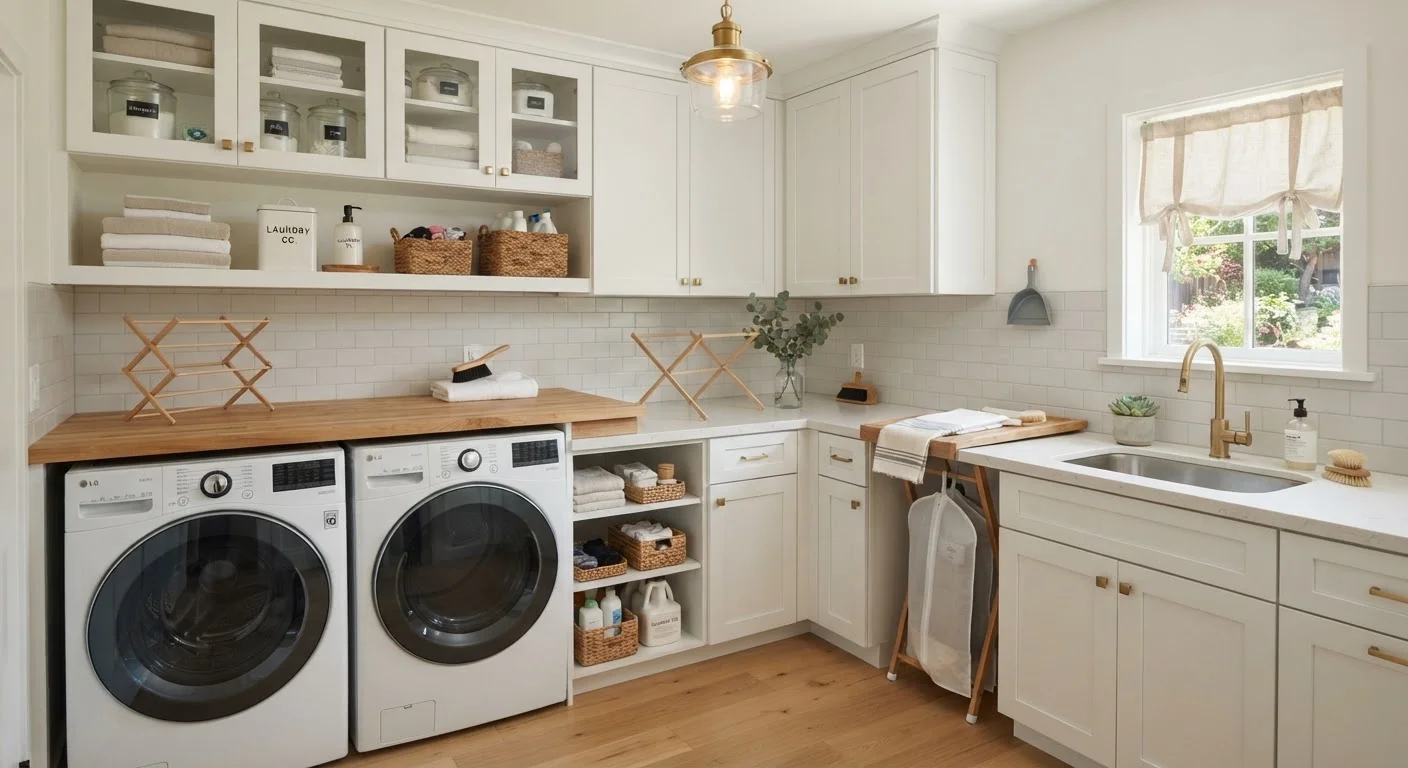
- A dedicated folding surface is one of the highest-impact additions to any laundry room.
- Proper task lighting dramatically reduces eye strain and missed stains during sorting.
- Vertical storage makes small laundry rooms far more efficient without expanding the footprint.
- Upgrading to a utility sink adds versatility for hand-washing, soaking, and cleaning tasks.
- Simple organizational systems-like labeled bins and hanging rods-reduce daily sorting friction.
Why the Laundry Room Deserves a Closer Look
The laundry room is one of the most frequently visited spaces in any home, yet it's routinely the last to receive any design attention. For a room that most households use multiple times per week, that's a missed opportunity. A poorly laid out laundry room doesn't just feel frustrating-it actively slows down a chore that's already low on most people's list of favorites.
The good news is that meaningful improvements don't require a full gut renovation. Many of the upgrades that make the biggest difference are relatively modest in scope. If you're still deciding where to begin with home improvements more broadly, our room-by-room upgrade guide can help you prioritize. For the laundry room specifically, the list below focuses on changes that reduce daily friction-not just ones that look good in photos.
Add a Dedicated Folding Surface
Folding laundry on top of the washer or dryer is workable, but a proper counter-whether wall-mounted, over the machines, or on a freestanding table-changes how the whole room functions. A full-width counter above a front-loading washer and dryer pair is a common solution that makes use of otherwise dead space. If square footage is limited, a wall-mounted drop-leaf surface folds flat when not in use. The key is having a surface at a comfortable working height so laundry doesn't pile up simply because there's nowhere logical to address it.
A proper folding surface at the right height turns a stacking problem into a manageable workflow.
Improve Task Lighting
Many laundry rooms rely on a single overhead bulb-often not even centered over the work area. Poor lighting makes it harder to sort colors, spot stains before washing, and read care labels accurately. Replacing an outdated fixture with a flush-mount LED panel or adding under-cabinet lighting above the folding surface can make an immediate difference. Look for fixtures rated at 2,700-3,000 Kelvin for a warm but clear light that doesn't feel clinical. This is an upgrade that costs relatively little and pays off every time you use the space.
Good task lighting helps you catch stains and read labels accurately-poor lighting quietly increases errors.
Install Vertical Storage
Floor space in most laundry rooms is limited by the machines themselves. The walls, however, are often underused. Open shelving above the washer and dryer can hold detergent, fabric softener, dryer sheets, and other supplies without taking up any floor footprint. If the room has enough height, a second shelf above the first can store less-frequently used items like bulk supplies or seasonal items. Closed cabinets serve the same purpose while keeping the room looking tidier-a useful consideration if the laundry room opens onto a visible area of the home.
Vertical shelving above machines reclaims wall space that almost every laundry room has available.
Add a Hanging Rod for Air-Dry Items
A wall-mounted or ceiling-mounted rod gives you a dedicated spot for clothes that shouldn't go in the dryer. Without one, these items often end up draped over doorframes, furniture, or piled on surfaces until someone deals with them. A rod doesn't need to be elaborate-a simple tension rod in a recessed area or a wall bracket with a dowel works fine. Position it where air can circulate and where dripping items won't damage flooring or cabinetry below. A small drip tray can protect the floor underneath.
A hanging rod keeps delicate air-dry items off furniture and out of the general chaos of the room.
Upgrade or Add a Utility Sink
A utility sink - sometimes called a laundry tub or slop sink - adds genuine versatility to the laundry room. It's useful for hand-washing delicates, pre-soaking stained clothing, rinsing mop heads, and a dozen other tasks that are awkward to do in a bathroom or kitchen sink. If your laundry room already has plumbing rough-in for a sink but you've never connected one, this is worth revisiting. Installing a utility sink involves plumbing work and may require a permit depending on your local jurisdiction; consult a licensed plumber to assess what's involved in your specific setup.
A utility sink expands what the laundry room can handle, from soaking delicates to rinsing cleaning tools.
Set Up a Sorting System
Laundry rooms that lack a clear sorting system often become staging areas for clean and dirty clothes alike. A simple multi-compartment hamper or a row of labeled bins - darks, lights, delicates - lets household members sort as they go rather than creating a single undifferentiated pile. Wall-mounted hamper frames that hold bags are a space-efficient option for smaller rooms. The goal isn't perfection; it's reducing the friction between generating laundry and actually doing it. Even a two-bin system is meaningfully better than none.
A sorting system at the point of deposit removes one friction point from a chore that already has plenty.
Upgrade the Flooring for Durability and Comfort
Laundry rooms frequently have outdated or mismatched flooring-sometimes the same sheet vinyl from the original construction. Since this is a utility space that sees water exposure (from machine leaks, drips, and humidity), flooring should be chosen for durability and moisture resistance first. Luxury vinyl plank and ceramic tile are both practical options. If you spend any time standing at a folding counter, an anti-fatigue mat on top of hard flooring can reduce leg and back strain noticeably. Flooring replacement is relatively straightforward in a small room and can change how the space feels substantially.
Moisture-resistant flooring protects against leaks while a simple anti-fatigue mat improves standing comfort.
Making It Work for Your Household
No two laundry rooms are laid out the same way, and the upgrades that matter most will depend on your household size, how your machines are configured, and what tasks are currently causing the most friction. A family of five has different needs than a couple in a two-bedroom apartment.
Start With What Causes the Most Friction
Rather than upgrading everything at once, identify the single step in your laundry routine that slows you down most. Is it the lack of a folding surface? Insufficient storage causing clutter? Poor lighting making sorting harder? Targeting that specific pain point first tends to produce the clearest return on effort and helps you build momentum for additional improvements over time.
The laundry room also shares a useful kinship with adjacent utility spaces. If your laundry room connects to or is near an entryway, folding in some of the principles behind a well-designed mudroom conversion - like built-in hooks, boot storage, and durable flooring - can make both areas more functional at once. Think of these improvements not as isolated projects, but as part of a broader effort to make your home work better room by room, the same way a thoughtful kitchen upgrade rethinks workflow rather than just appearance.