

Key Takeaways
- Constant promotions erode the perceived value of discounts over time.
- Deal fatigue can cause shoppers to distrust sale prices and delay purchases indefinitely.
- Retailers who over-promote may train their customers to only buy at discounted prices.
- Recognizing deal fatigue in yourself helps you evaluate prices more objectively.
- Tracking a product's actual price history is more reliable than reacting to promotional framing.
Deal Fatigue
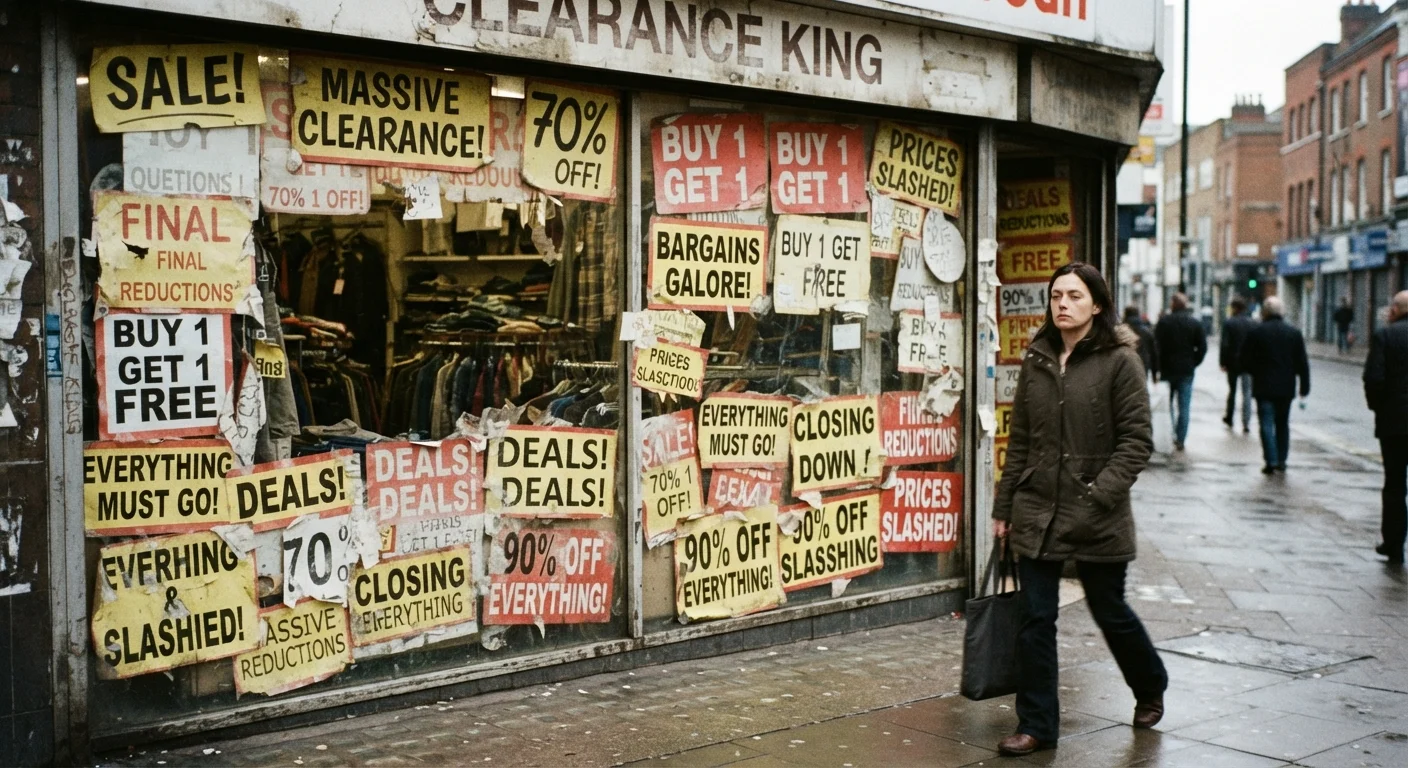
Deal fatigue is a state where shoppers become desensitized to promotions because they encounter them so frequently that discounts no longer feel meaningful or motivating. When sales are perpetual, the reference price - the original price a discount is measured against - loses credibility. Shoppers stop responding with urgency or excitement and may disengage from purchasing altogether.
In behavioral economics, this relates to the concept of adaptation-level theory: people calibrate their expectations to a baseline, so a stimulus (like a 20% discount) only registers as significant when it deviates meaningfully from that baseline.
What Happens When Discounts Never Stop
Retail promotions used to punctuate the calendar - a holiday sale, an end-of-season clearance, a genuine limited event. For many shoppers today, that rhythm has collapsed into a continuous stream of "sale" badges, countdown timers, and percentage-off banners that never seem to expire. The practical result: the word sale has become largely decorative.
This is the core mechanics of deal fatigue. When shoppers are exposed to constant promotional framing, their brains adjust to it as a baseline. The cognitive shortcut that once signaled act now, this is unusual stops firing. Promotions that were designed to create urgency instead create indifference - or outright skepticism.
It's worth distinguishing this from simply being a savvy, skeptical shopper. Deal fatigue isn't careful evaluation; it's a kind of exhausted numbness. And ironically, it can produce worse outcomes - including ignoring a price that genuinely is the lowest it's been, simply because the promotional framing no longer registers as credible. See how this compares with the deliberate pressure tactics retailers use in time-pressure selling environments.
~40%
Shoppers who distrust most sale prices
Consumer surveys conducted by retail research organizations have consistently found that a substantial minority of shoppers believe most advertised discounts are not genuine.
365 days
Duration some online retailers run active promotions
Analysis of major e-commerce platforms has found that many product listings display some form of promotional label on virtually every day of the year.
3x
Frequency with which some retailers mark up before discounting
Regulatory investigations in multiple countries have found instances of reference prices being inflated before a promotional period to make the discount appear larger.
How Retailers Arrive at This Problem
The pattern often starts with competitive pressure. One retailer extends a sale event by a few days; another matches it. Promotional periods stretch, then overlap, then merge into a permanent state. Over time, retailers can find themselves in a position where their customers have been trained - unintentionally - to treat the sale price as the real price and the original price as fiction.
This creates a structural problem. If shoppers only buy at 30% off, then the margin at which the business actually operates shifts. Raising prices or pulling back on promotions becomes difficult because it feels like a price increase to a customer whose reference point has drifted. The result is a retail environment where both sides lose calibration.
“When everything is on sale, nothing is on sale. Retailers who promote incessantly teach their customers that the regular price is a fiction - and that lesson is very hard to unteach.”
— Kit Yarrow, Consumer psychologist and author on retail behavior
This dynamic is also visible in how shoppers respond to major retail events. Deal fatigue contributes to some of the most common missteps during large sales events - rushed purchases, ignoring genuinely good prices, or buying things simply because a discount is attached.
What Shoppers Can Do to Stay Calibrated
The most practical antidote to deal fatigue is price history data. Before responding to any promotional claim, check what the item has actually sold for over the past several months. Browser extensions and retailer-agnostic pricing tools can surface this data quickly. If the "sale" price is the price the item has sat at for six months, that context changes the decision significantly.
Set Your Price Before You Browse
Decide what you'd reasonably pay for an item - based on research, not promotional cues - before you open a retailer's site or app. Write it down if it helps. When you encounter a promotional price, compare it against your target rather than against the crossed-out "original" price the retailer displays. That crossed-out number may not reflect what the item actually sold for recently.
A second strategy is to set a target price before you encounter promotional framing. Decide what you'd be willing to pay for an item based on your own research, then wait for that threshold to be met - rather than reacting to whatever percentage is currently displayed. This approach is detailed further in deal-hunting habits worth building into your routine.
It also helps to understand how urgency mechanics work independently of whether a discount is real. Flash sales and limited-time offers apply time pressure that can override careful judgment - knowing this in advance makes the pressure easier to recognize and resist. Similarly, recognizing high-pressure retail environments can help you pause before committing.
Deal fatigue is part of a broader shift in how shoppers and retailers interact - one that's tracked in evolving consumer and retail trends. Understanding it as a structural phenomenon, not a personal failing, puts you in a better position to shop with a clear head regardless of what the promotional calendar looks like.