

| Standardization | No universal grading standard exists (Each retailer sets its own criteria) |
| Common grade tiers | Like New, Good, Acceptable (or A/B/C) (Terminology varies by platform) |
| Warranty coverage | Varies from none to limited manufacturer warranty (Depends on seller and refurbishment source) |
| Return wave timing | Peak refurbished listings: 4-8 weeks post-holiday (Based on typical retail return processing cycles) |
| Key risk factor | Missing accessories or shortened return windows (Common disclosure in condition fine print) |
Why Condition Labels Aren't Standardized
If you've ever compared an "open-box" listing on one retailer's site to a "Grade A refurbished" item on another, you may have noticed the descriptions sound similar but mean very different things. That's because no single governing body defines these terms for consumer electronics, appliances, or most other product categories. Each retailer, marketplace, and manufacturer sets its own grading criteria.
The practical consequence: a product labeled "like new" at one store may have been lightly used and fully retested, while the same phrase at another means only that the box was opened. Before putting any stock in a condition label, it helps to know the general conventions the industry has gravitated toward - and where those conventions break down.
| Standardization | No universal grading standard exists (Each retailer sets its own criteria) |
| Common grade tiers | Like New, Good, Acceptable (or A/B/C) (Terminology varies by platform) |
| Warranty coverage | Varies from none to limited manufacturer warranty (Depends on seller and refurbishment source) |
| Return wave timing | Peak refurbished listings: 4-8 weeks post-holiday (Based on typical retail return processing cycles) |
| Key risk factor | Missing accessories or shortened return windows (Common disclosure in condition fine print) |
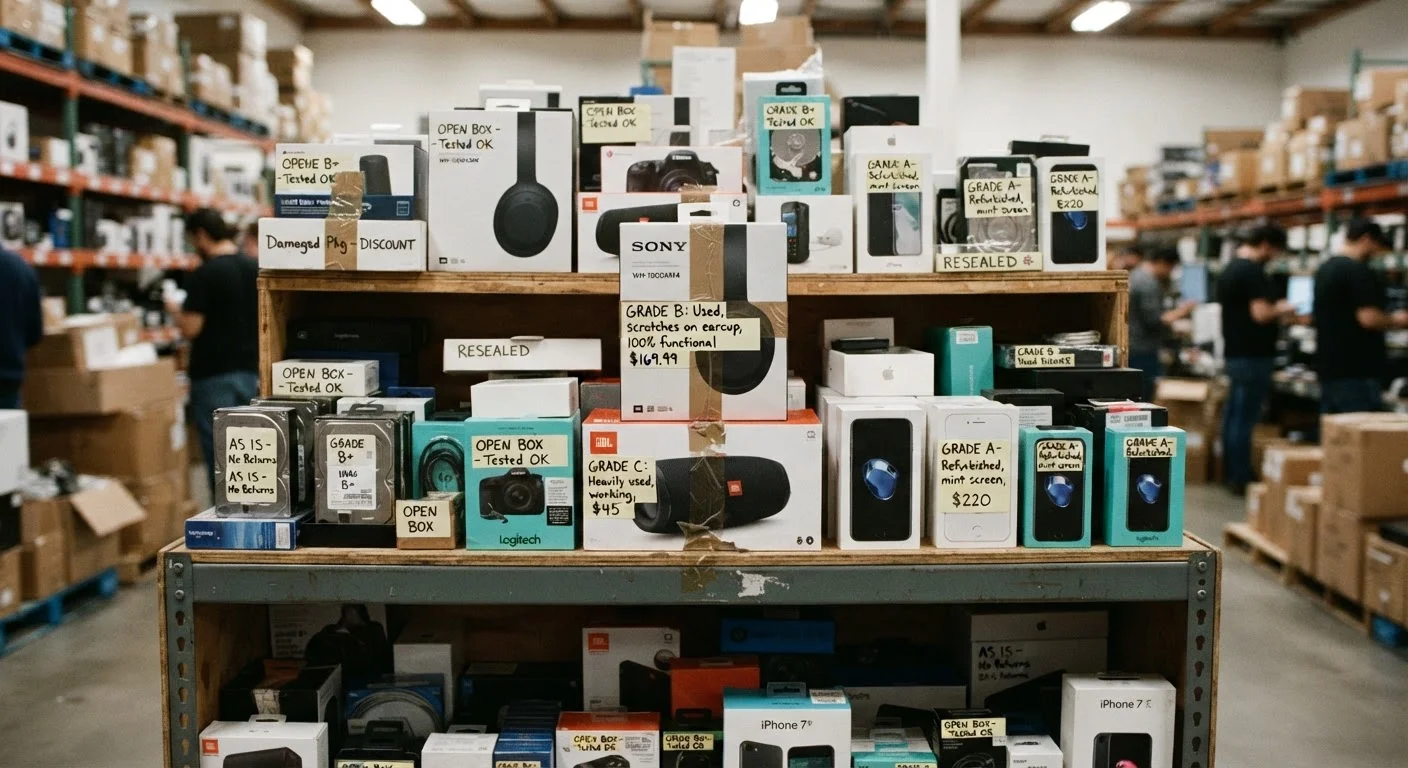
Common Condition Grades Explained
Most sellers cluster their grading around a handful of recurring labels. Here's what they typically - though not universally - indicate:
New / Sealed
The product has never been opened and is in original factory condition. Typically carries a full manufacturer warranty.
Open Box
The original packaging was opened - often by a customer who returned it - but the product itself may be unused or lightly used. Condition can vary significantly within this label.
Like New / Grade A
The item shows no meaningful signs of use and has typically been inspected and cleaned. Cosmetic condition is expected to be near-indistinguishable from new.
Good / Grade B
The item functions correctly but shows minor cosmetic wear such as light scratching. All core features should work as intended.
Acceptable / Grade C
The item is fully functional but has visible wear - scratches, scuffs, or fading - that is apparent during normal use. Often the lowest grade a reputable seller will list.
Manufacturer Refurbished
Returned or defective units restored to working condition by the original manufacturer or an authorized service center, usually with a new or limited warranty.
Seller Refurbished
Restoration performed by a third-party seller rather than the manufacturer. Quality standards vary and depend entirely on that seller's process.
As-Is
Sold without warranty or guarantee of full functionality. The buyer accepts the product in its current state with no recourse for defects.
Beyond these labels, some sellers use letter grades (A, B, C) or numeric scores (1-5). Letter grade A usually maps to "like new" or "excellent," Grade B to "good" with minor cosmetic wear, and Grade C to "acceptable" with visible use marks. Always cross-reference the seller's own grade definition page, which reputable platforms publish.
What Refurbishment Actually Involves
"Refurbished" is the label with the widest variance. At its most rigorous, manufacturer-certified refurbishment means the unit was returned to the factory or an authorized service center, inspected against original build specifications, fitted with any failing components, and retested before repackaging. At its loosest, a third-party seller may label any returned item "refurbished" after a basic wipe-down and power-on check.
The key question to ask: who performed the refurbishment? Manufacturer-refurbished products generally carry the strongest quality assurance and may include a limited warranty comparable to new-product coverage. Seller-refurbished items rely entirely on that seller's internal standards and whatever warranty they attach.
Manufacturer vs. Third-Party Refurbishment
When a listing says "refurbished," the single most important distinction is whether the work was done by the original manufacturer or a third party. Manufacturer-refurbished items are generally held to the same functional standards as new units, with documented testing. Third-party refurbishment has no minimum standard unless the seller publishes one. If the listing doesn't specify, ask or assume the lower standard applies.
For context on how condition requirements interact with return windows, see our guide on decoding return policies - particularly the sections covering restocking fees and condition disputes.
Seasonal Patterns and When These Listings Surge
Open-box and refurbished inventory isn't evenly distributed across the calendar year. Returns spike predictably after major gifting windows - post-holiday returns typically flood retailer systems in January, and post-back-to-school returns create a smaller wave in September. Processing those returns takes weeks, so refurbished and open-box listings tend to peak roughly four to eight weeks after those windows close.
Similarly, model-year transitions - common in electronics, appliances, and tools - push prior-generation units into refurbished channels as retailers clear floor inventory. Understanding these cycles helps frame why a grade-B item you see in February likely originated from holiday-season returns rather than long-term use.
4-8 weeks
Post-holiday refurbished inventory surge lag
Retailers typically require this window to inspect, grade, and relist returned holiday purchases.
Varies widely
Warranty length on refurbished items
Manufacturer-refurbished units may carry 90 days to one year; seller-refurbished items may carry no warranty at all.
If you're evaluating certified pre-owned programs specifically, our article on what CPO labels actually cover covers how certification standards vary by category.
What to Verify Before You Commit
Regardless of the grade label, a few checks apply universally:
- Warranty terms: Confirm whether any warranty is included, its duration, and who honors it - the manufacturer or the seller.
- Return window: Many open-box and refurbished items carry shorter return periods or are sold as-is. Read this carefully. Our open-box verification guide walks through exactly what to check.
- Included accessories: Grade definitions often say "may be missing original accessories." Verify what's actually in the box before purchase.
- Seller reputation: On open marketplaces, the grading is only as reliable as the individual seller applying it. Check feedback volume and return dispute history.
Condition grades are a useful starting point, not a guarantee. Treat them as a prompt to ask more specific questions rather than a final answer about what you're actually receiving.
Return Policies Decoded
Understand restocking fees, exchange-only windows, and condition requirements before committing to any open-box or refurbished purchase.
What 'Open Box' Really Means
A practical checklist of what to verify - warranty, accessories, seller history - before treating an open-box listing as a straightforward deal.
Certified Pre-Owned vs. Used
CPO programs vary significantly across product categories. This guide explains what certification actually covers and where it falls short.