

Key Takeaways
- CPO is not a universal standard - each manufacturer or retailer defines what their program covers.
- Standard used listings carry no mandated inspection or warranty unless the seller adds one voluntarily.
- CPO vehicles typically cost more upfront; whether that premium is worthwhile depends on what the program actually includes.
- Always request the full inspection checklist and warranty terms in writing before committing to a CPO purchase.
- Neither label guarantees a problem-free vehicle - independent inspections remain valuable in both cases.
Option A
Certified Pre-Owned (CPO)
The structured, program-backed used option.
Best for: Buyers who want documented inspection history, a warranty extension, and some post-sale protection baked into the purchase.
Option B
Standard Used
The flexible, no-frills pre-owned route.
Best for: Buyers comfortable doing their own due diligence and who prioritize lower upfront cost over formal program guarantees.
If you want post-sale coverage without purchasing a separate extended warranty
Certified Pre-Owned (CPO)
CPO programs bundle inspection documentation and a limited warranty, reducing the immediate risk of unexpected repair costs - provided you read what the warranty actually covers.
If keeping purchase price as low as possible is your primary goal
Standard Used
Standard used vehicles skip the CPO premium and give you room to negotiate. Pair this route with an independent inspection to manage risk.
If you are buying from a private seller
Standard Used
CPO programs are administered by manufacturers or authorized dealers and cannot be applied to private-party sales - so private listings are always standard used regardless of how they're marketed.
If long-term ownership and resale value matter to you
Certified Pre-Owned (CPO)
A documented CPO history can support resale value and makes the vehicle's maintenance record easier to verify for future buyers.
What 'Certified Pre-Owned' Actually Means
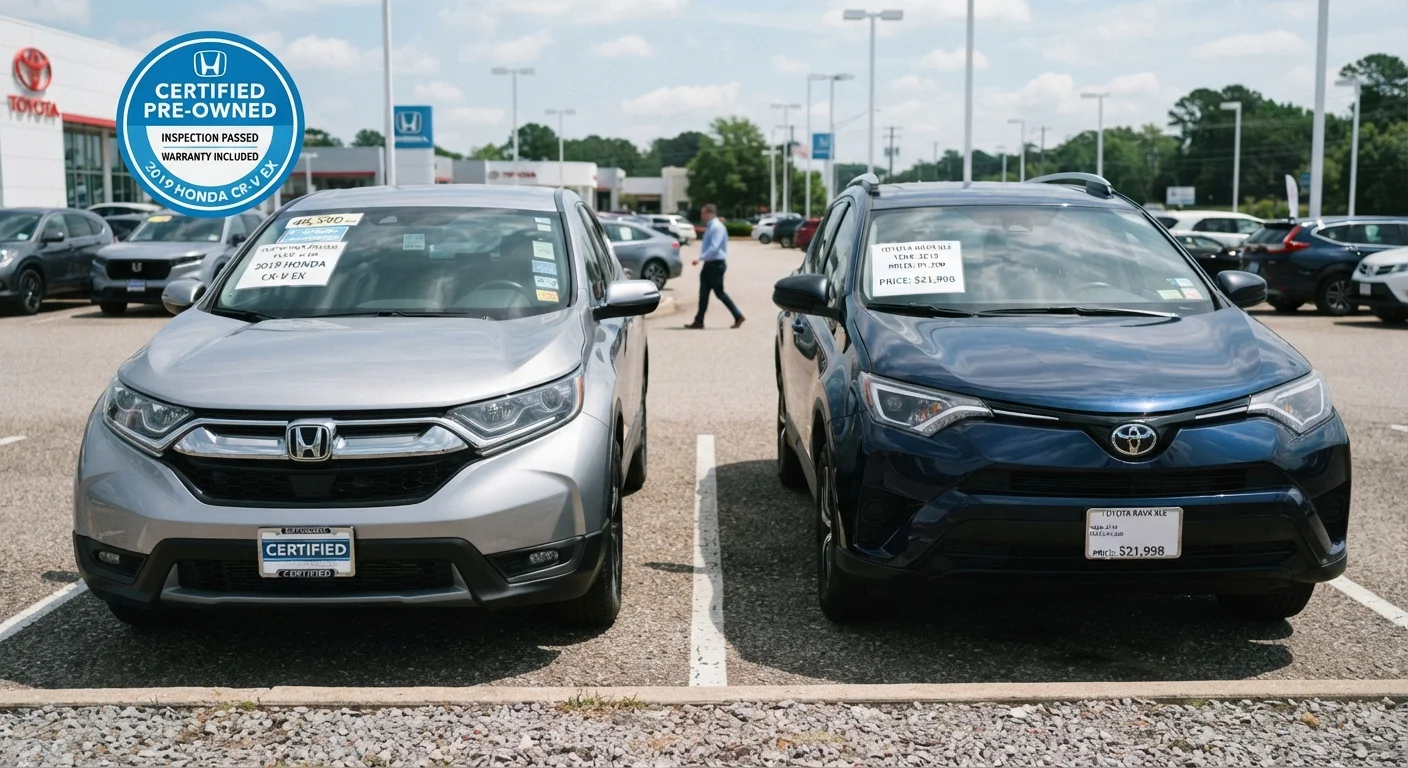
The phrase Certified Pre-Owned sounds official, but it is a marketing designation, not a government-regulated standard. Each manufacturer or retailer sets its own criteria for what earns a vehicle - or any product - the CPO label. That means two items both called "certified" can carry very different protections.
For vehicles, most manufacturer CPO programs require the item to pass a multi-point inspection (commonly 100-200 checkpoints), meet age and mileage limits, and come with an extended limited warranty backed by the manufacturer. Dealer-certified programs exist too, but these are typically less rigorous and the warranty is backed by the dealer rather than the manufacturer - a meaningful distinction if the dealership changes ownership or closes.
For electronics and appliances, CPO programs are rarer and even less standardized. A manufacturer-refurbished or manufacturer-certified label generally means the item was returned, tested, repaired if needed, and repackaged. A seller-certified label may mean little more than a visual inspection. See our guide to decoding product certifications for a broader look at what these claims do and don't verify.
What 'Standard Used' Actually Means
Standard used is simply a pre-owned item sold without a formal certification program attached. There is no mandated inspection checklist, no minimum condition threshold, and no warranty unless the seller explicitly includes one. That does not make it a bad option - it makes it a more variable one.
In the auto context, a standard used vehicle could be in excellent condition with full service records, or it could have undisclosed issues. The burden of verification falls almost entirely on the buyer. This is why an independent pre-purchase inspection by a qualified mechanic is generally advisable for any used vehicle purchase, regardless of what the seller claims. For context on how title status interacts with used vehicle value, see what salvage, rebuilt, and clean titles mean for owners.
Standard used items sold through private parties cannot carry CPO status - that designation only applies when an authorized manufacturer or dealer administers the program. If a private seller uses the word "certified," ask specifically who certified it and what that certification entails.
| Criterion | Certified Pre-Owned (CPO) | Standard Used |
|---|---|---|
| Inspection requirement | Defined checklist (varies by program) | None required |
| Warranty included | Yes - limited, terms vary | Not typically; seller's discretion |
| Who backs the program | Manufacturer or authorized dealer | No program - buyer assumes risk |
| Price vs. comparable item | Higher (CPO premium applies) | Lower; more room to negotiate |
| Available from private sellers | No | Yes |
| Buyer verification needed | Still recommended | Essential |
The Real Cost Difference - and Where It Can Go Either Way
CPO vehicles and products carry a price premium over comparable standard used items. Whether that premium is worthwhile depends on three factors: what the warranty actually covers, how long it lasts, and what out-of-pocket repair costs you would face without it.
~$1,000-$3,000
Typical CPO price premium over standard used (vehicles)
Consumer automotive research consistently shows CPO vehicles command a meaningful price premium over comparable non-certified used vehicles at the same mileage.
Varies widely
CPO warranty length across programs
Manufacturer CPO warranty terms range from 12 months to several years of additional coverage depending on the program - always confirm the specific term in writing.
100-200+
Inspection checkpoints in typical auto CPO programs
Most major manufacturer CPO programs publish the number of inspection points, though the depth of each check and pass/fail criteria differ between programs.
A CPO warranty that excludes wear-and-tear items, requires use of specific service centers, or has low coverage caps may provide less protection than the upfront premium suggests. Conversely, a comprehensive manufacturer-backed CPO warranty on a vehicle known for expensive repairs could save money over the ownership period.
When comparing costs, factor in: the CPO price premium, deductible amounts on the warranty, which repairs are excluded, and whether you could buy a separate third-party service contract on a standard used item for less. Third-party extended warranties vary considerably in quality - understanding trade-in and buyback program terms offers a useful parallel framework for scrutinizing the fine print of any seller-offered program.
What to Verify Before You Buy - Either Label
Neither label eliminates the need for buyer diligence. Here is what to verify regardless of which route you take:
- Request the inspection report in writing. For CPO, this should list every checkpoint and the result. If the seller cannot produce it, the certification claim has little substance.
- Read the warranty document, not the summary. Look for exclusions, mileage caps, transferability, and where repairs must be performed.
- Run a vehicle history report (for autos) from a recognized provider to check for accidents, title changes, and odometer discrepancies.
- Consider an independent inspection. A qualified third party has no stake in the sale and can identify issues a seller's inspector may overlook or not disclose.
- Understand return and dispute options. Some CPO programs include a short return window; standard used sales typically have none unless contractually specified.
The CPO label can provide genuine value when backed by a rigorous, well-documented program. Standard used can be a smart financial decision when paired with thorough due diligence. The difference is not which label you see - it is what you can verify behind it. For related context on condition grading and what pre-owned product labels typically mean outside of vehicles, see open-box and refurbished condition grades explained.