

Key Takeaways
- Black Friday discounts are often matched or exceeded during other sale periods throughout the year.
- Some retailers raise reference prices before Black Friday to make percentage-off deals appear more dramatic.
- Category matters: electronics, toys, and apparel each have different seasonal pricing cycles.
- Price tracking tools can help shoppers verify whether a Black Friday deal is genuinely the lowest price.
- Post-holiday clearance and mid-year sales frequently produce lower prices on specific product categories.
The Gap Between Black Friday's Reputation and Its Reality
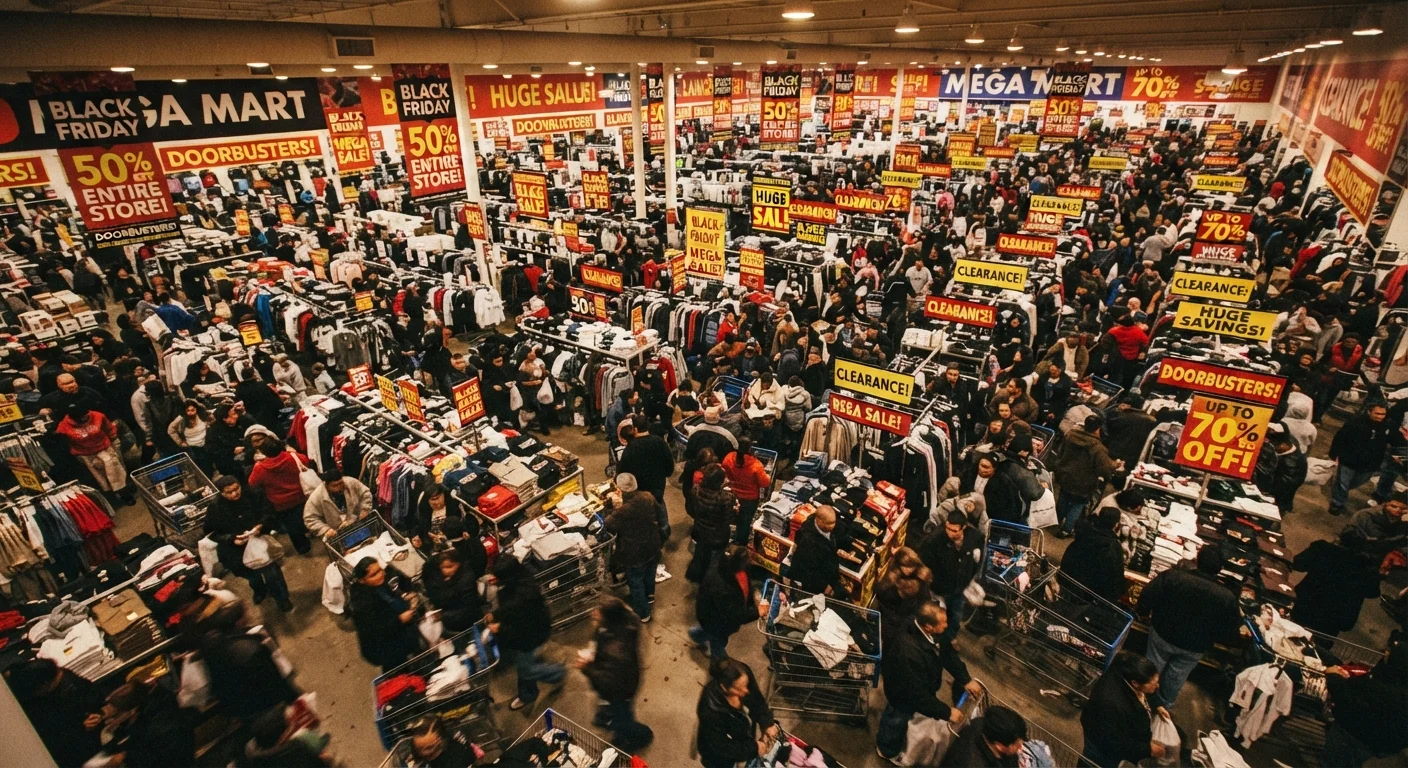
Black Friday has been marketed as the ultimate shopping event for decades, and that reputation has real staying power. But sustained consumer interest has also made it one of the most studied retail events in the U.S. - and that scrutiny has revealed a consistent gap between the mythology and the pricing data.
The core issue is that "lowest prices of the year" is a claim that sounds specific but isn't. Lowest across which categories? Compared to which reference price? Relative to what baseline? When those questions get answered with actual data, the picture becomes more complicated - and more useful for shoppers who want to make genuinely informed decisions.
Myth
Black Friday offers the lowest prices of the entire year across all product categories.
Fact
Studies of retail pricing data consistently show that Black Friday is one of several low-price windows, not a universal annual floor.
Consumer pricing research, including analyses by organizations like NerdWallet and independent price-tracking platforms, has repeatedly found that many Black Friday "deals" are available at the same price - or lower - at other points in the year. The idea that one Friday in November represents the singular pricing nadir is a marketing construct as much as a retail reality. Depending on the product category, you may find comparable or better prices during post-holiday clearance in January, Presidents' Day weekend, Memorial Day, or Amazon Prime Day-adjacent windows.
Myth
The percentage-off figures advertised on Black Friday reflect discounts from the product's normal selling price.
Fact
Reference prices used to calculate discounts are sometimes inflated in the weeks before Black Friday, making the advertised percentage misleading.
This practice - sometimes called "pre-inflation" of reference prices - has been documented by consumer advocacy groups and investigated by regulators in several U.S. states. A product listed at a fictitious "original price" of $200 marked down to $140 may have sold routinely at $150 for months prior. The Federal Trade Commission has guidance on deceptive pricing, but enforcement is uneven. Understanding the difference between a sale price and actual savings is essential before trusting any percentage-off banner.
Myth
Waiting until Black Friday to buy electronics guarantees you'll pay the least possible.
Fact
Electronics pricing follows category-specific cycles; some of the steepest discounts occur when new model generations launch, not during Black Friday.
TVs do tend to see meaningful price drops around Black Friday and the Super Bowl window, but laptops, smartphones, and gaming hardware often drop in price when successor models are announced - which can happen at any point in the year. Buying a prior-generation device shortly after a new launch can yield a lower price than any Black Friday offer on the same unit. Tracking a product's price history over 90 to 180 days gives a far more accurate picture than assuming November is always optimal.
Myth
If you miss Black Friday, you've missed the best shopping window until next year.
Fact
The period from late November through early January includes multiple additional discount events, and post-holiday clearance often outperforms Black Friday pricing on select categories.
Cyber Monday, pre-Christmas promotional pushes, and especially post-Christmas clearance all generate meaningful price reductions. Retailers with excess seasonal inventory frequently discount deeply in late December and January to clear stock before new shipments arrive. Apparel, home goods, and seasonal décor in particular tend to reach their annual lows in clearance windows rather than on Black Friday itself. A full shopping calendar makes it easier to anticipate these windows rather than react to them.
Myth
All retailers participate in Black Friday with genuine, across-the-board discounts.
Fact
Participation and discount depth vary widely by retailer type; some categories and store formats see minimal or no meaningful price movement on Black Friday.
Luxury goods, independent retailers, and certain specialty categories - musical instruments, professional tools, fine jewelry - often hold their pricing through November. Even among large-format retailers, not every department participates equally. Groceries, for instance, rarely see the kind of discounting associated with Black Friday. Assuming uniform participation leads shoppers to spend time and energy in categories where the pricing hasn't actually shifted.
It's worth noting that Black Friday can still represent a legitimate opportunity in certain narrow categories, particularly large-screen televisions and some major appliances. The point isn't that Black Friday is a bad time to shop - it's that assuming it's categorically the best time leads to blind spots. Sale season pricing practices deserve scrutiny year-round, not just in November.
How to Evaluate Any Sale Claim, Year-Round
The same skepticism that applies to Black Friday should apply to every promotional window. A few practical frameworks help:
~27%
Black Friday items cheaper before the sale
An analysis by consumer research firm Which? found that roughly a quarter of Black Friday deals had been available at a lower or equal price in the six months prior.
January
Month with lowest apparel prices historically
Retail pricing analyses have consistently shown post-holiday clearance in January produces the steepest year-over-year discounts in clothing and seasonal home goods.
- Check price history before the sale period begins. Browser extensions and retail tracking tools can show what a product actually sold for over the past 90 to 180 days. Price history tools have real limitations, but even imperfect data is more reliable than a retailer's stated "original price."
- Identify the category's natural pricing cycle. Knowing when a product category historically sees its lowest prices - back-to-school for laptops, post-Super Bowl for TVs, spring for outdoor furniture - lets you plan rather than react.
- Separate the urgency from the value. Time-limited framing creates pressure that can override rational evaluation. If a deal is genuinely compelling, the numbers will hold up under scrutiny - there's no need to act before you can verify them.
The broader principle applies beyond just Black Friday. Lowest price and best value aren't the same thing, and the same logic that applies to cheap products applies to sales events: the framing can obscure as much as it reveals.
Urgency Messaging Can Override Careful Evaluation
"Limited time," "while supplies last," and countdown timers are standard retail tools designed to compress your decision window. Research on consumer behavior consistently shows that artificial urgency increases purchase likelihood independent of whether the deal is genuinely favorable. Build in a pause - even 24 hours - before acting on any high-stakes promotional offer.
This article is for general informational purposes only. Retail pricing practices vary by retailer and region, and individual results may differ. Consult current price data and your own financial circumstances before making purchasing decisions.