

Key Takeaways
- An 'original price' on a sale tag does not always reflect what consumers actually paid for an item.
- Federal and state regulations govern reference pricing, but enforcement and definitions vary significantly.
- Percentage-off claims are only meaningful when the baseline price is accurate and consistently applied.
- Comparing prices across time and across retailers is more reliable than trusting a single strikethrough figure.
Why Reference Pricing Deserves Scrutiny
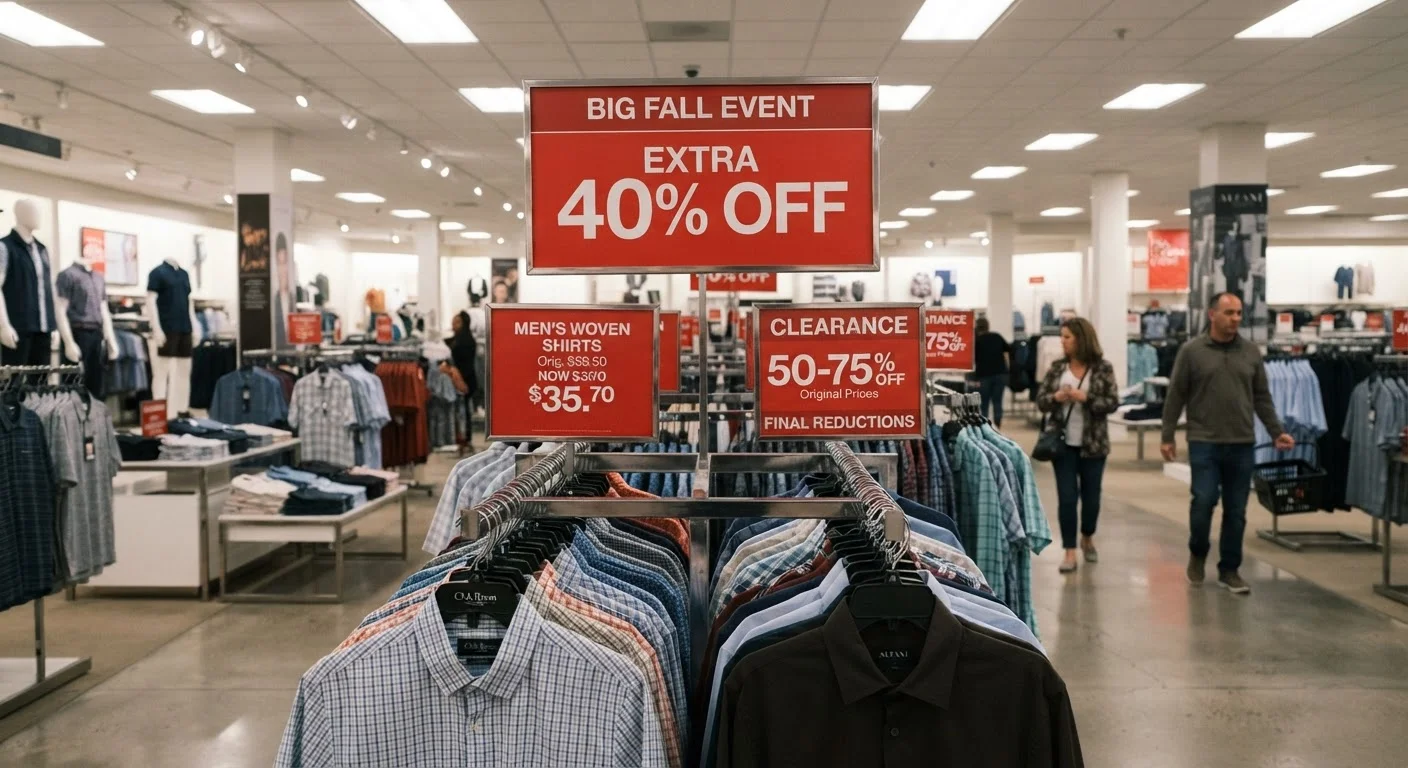
Walk through any retailer during a promotional event and you'll encounter the same visual shorthand: a crossed-out number beside a lower, highlighted price. That strikethrough does real psychological work - it frames the current price as a bargain relative to some established norm. But that norm, the so-called "original price," doesn't always mean what shoppers assume.
Reference pricing is a broadly legal and widely used retail practice. The issue isn't that it exists - it's that consumers often interpret these labels more literally than the evidence supports. Understanding what these figures actually represent helps you evaluate whether a stated discount reflects genuine value or simply reflects how a price was set in the first place. For a broader look at how markdowns are planned from the start, see how retailers plan and price markdowns.
Myth
The crossed-out 'original price' is what the item normally sold for before the sale.
Fact
Original prices are often set specifically to establish a higher reference point, and the item may have spent little or no time at that price.
Retailers sometimes set an elevated "regular" price before a promotional period, then mark it down to what was always the intended selling price. This practice, sometimes called artificial inflation of reference prices, is constrained by FTC guidance but not uniformly prohibited. The item may have been listed at the higher price only briefly - technically satisfying a "former price" requirement - before the sale began.
Myth
A '50% off' banner means you're paying half of what other shoppers paid.
Fact
The percentage discount is calculated against the reference price, not necessarily against what most consumers actually paid.
If the reference price was rarely or never the transaction price - because it was always undercut by coupons, promotions, or bundled offers - then "50% off" describes a mathematical relationship to a figure that may have little connection to real market behavior. The discount percentage is accurate in the narrow sense; the baseline it's calculated from is the variable to examine. See common retail misconceptions for more widely held beliefs that don't hold up under scrutiny.
Myth
MSRP (Manufacturer's Suggested Retail Price) represents what an item is actually worth.
Fact
MSRP is a pricing recommendation from the manufacturer, not a reflection of market value or typical transaction price.
Manufacturers set MSRP for a range of business reasons, including channel management and brand positioning. Many product categories routinely transact well below MSRP, meaning a "discount" from MSRP may simply reflect standard market pricing rather than a special deal. In some categories - consumer electronics, appliances - MSRP is so routinely discounted that it functions more as a marketing ceiling than a real price point.
Myth
Regulatory oversight ensures that posted sale prices reflect real discounts.
Fact
FTC guidelines and state laws create a framework, but enforcement is complaint-driven and documentation requirements vary widely.
The FTC's guidance on deceptive pricing is real and retailers can face legal action for clear violations. However, the burden of proving a reference price was fictitious often requires pricing history data that regulators - let alone individual consumers - may not easily access. Enforcement actions tend to follow patterns of egregious or systematic abuse rather than policing every individual tag. This makes consumer awareness the more reliable front line of protection.
What Regulations Actually Require
Consumer protection agencies in the United States - including the Federal Trade Commission - have published guidelines on reference pricing that prohibit outright fictitious pricing. The core requirement is that a "former price" used as a comparison must have been offered to the public for a reasonable period of time. However, what counts as "reasonable" is not uniformly defined across all states, and enforcement varies.
Reference Prices Are Not Independently Verified
No third party confirms that a posted 'original price' reflects actual prior sales before it appears on a tag. The retailer sets both the reference price and the sale price. While outright fictitious pricing violates FTC guidance, the threshold for what qualifies as a legitimate former price is not the same as what most shoppers assume. Treat posted reference prices as one data point, not as a verified historical record.
Some states have stricter rules. California and New York, for example, have specific statutes requiring that a reference price reflect the actual prevailing price charged during a defined recent period. Even so, proving a violation typically requires documented pricing history that most consumers don't have access to.
Over 40
US states with reference pricing statutes
According to legal analyses of state consumer protection laws, more than 40 states have some form of regulation addressing deceptive reference pricing, though definitions and enforcement strength differ considerably.
~87%
Shoppers influenced by strikethrough pricing
Consumer behavior research published in the Journal of Marketing has found that a large majority of shoppers use a posted reference price as an anchor when evaluating deal quality, regardless of how that price was set.
The regulatory picture is patchwork, which means shoppers cannot assume that a posted "original price" has been independently verified. MSRP and 'original price' labels serve specific purposes in retail and are not always the neutral benchmarks they appear to be.
Building a More Reliable Comparison
The most practical response to reference pricing ambiguity is to shift your comparison baseline. Instead of accepting the strikethrough figure as the anchor, look at what the item has sold for across multiple retailers over time. Price-tracking tools and browser extensions can show historical pricing data, which often reveals that an item's "sale" price is actually its most common selling price.
It's also worth distinguishing between types of discounts. A clearance price and a promotional sale price signal very different things about why the price changed - clearance and sale pricing work very differently and shouldn't be evaluated the same way. Similarly, outlet pricing carries its own context: many outlet items are manufactured specifically for outlet channels, not marked down from a full-price store.
If you want a structured way to think about whether a discount represents real savings, discounts from inflated reference prices aren't always real savings - and there are concrete ways to identify genuine value. The same skepticism applies to major sale events: Black Friday doesn't always offer the deepest discounts, despite widespread belief to the contrary.
This article is for general informational and educational purposes. Pricing practices and regulations vary by state and retailer; consumers with specific concerns about deceptive pricing should consult their state's consumer protection office.