

Key Takeaways
- Dark stores are fulfillment-only facilities with no public access - they exist entirely to process online orders.
- Their urban placement is deliberate: proximity to customers is what makes ultrafast delivery (under 30 minutes) operationally possible.
- The rise of dark stores reflects broader shifts away from traditional brick-and-mortar retail toward on-demand fulfillment.
- Dark stores carry real-world tradeoffs, including neighborhood concerns about traffic, noise, and displaced retail space.
- Consumers benefit from faster delivery but have less visibility into how and where their orders are fulfilled.
Dark Store
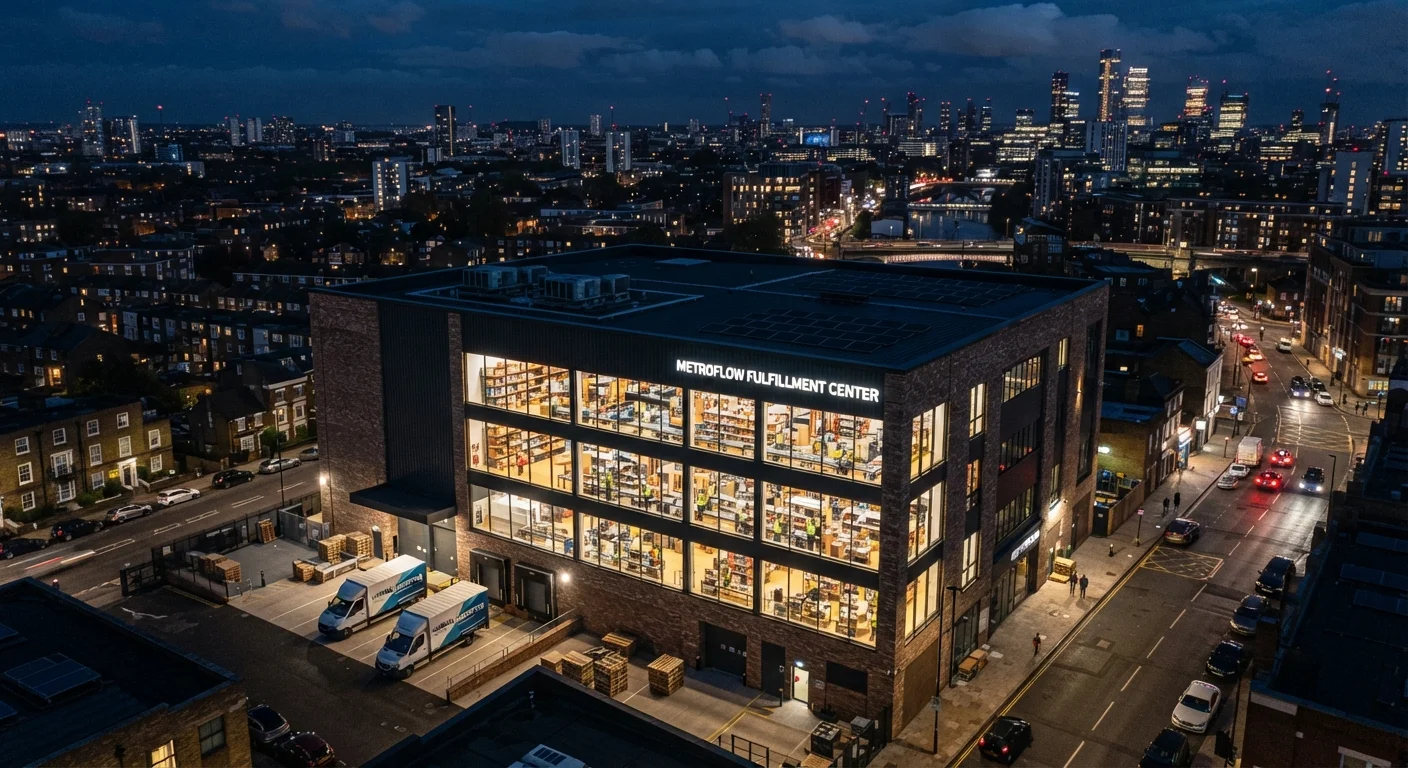
A dark store is a retail facility that looks like a warehouse or closed storefront from the outside but functions exclusively as a local fulfillment center for online orders. Unlike a traditional grocery store or retailer, it has no public entrance - customers cannot walk in and shop. Workers inside pick, pack, and hand off orders to delivery couriers, often within minutes of an order being placed.
Dark stores are strategically positioned within dense urban or suburban areas to minimize the last-mile delivery distance - the final leg between a fulfillment point and a customer's door, which is typically the most expensive and time-consuming part of the logistics chain.
What 'Ghost Retail' Actually Means
When you order groceries for delivery and they arrive in under an hour, you probably assume they came from a nearby supermarket. In many cases, they didn't. They came from a facility you've never seen and can't enter - a dark store.
Ghost retail is an umbrella term for this broader pattern: fulfillment infrastructure that operates invisibly from a consumer's perspective. No storefronts. No parking lots full of shoppers. Just a dense, efficiently organized warehouse running orders in and out, often around the clock.
This shift is a direct response to consumer demand for faster delivery, a trend explored in depth in how consumer preferences have shifted between in-store and online shopping. As more purchases moved online, retailers needed fulfillment infrastructure that could keep pace - and traditional stores weren't built for it.
Ghost Retail Is Broader Than Grocery
While grocery and convenience delivery gets the most attention, the dark store model is being applied across categories including pharmacy items, pet supplies, and electronics accessories. Any product category with frequent, time-sensitive demand is a candidate for this fulfillment approach. The common thread is consumer willingness to pay for speed on routine purchases.
Why Location Is the Whole Point
A dark store located in a suburban industrial park is not much of an advantage. The model only works when facilities are embedded within or immediately adjacent to the population they serve. That's why dark stores tend to cluster in dense urban neighborhoods, often in former retail spaces, light industrial buildings, or repurposed storefronts.
The underlying logic is straightforward: the closer a fulfillment point is to the end customer, the shorter the last-mile delivery route. Shorten that route enough, and 15-to-30-minute delivery windows become logistically realistic rather than just marketing copy.
This geography-first approach stands in contrast to traditional e-commerce fulfillment, which typically relies on large regional warehouses located outside city centers. Those warehouses handle scale efficiently but can't match the delivery speed of a hyperlocal dark store. For more context on how fulfillment fits into the broader order journey, see the full lifecycle of an online order.
~10-30 min
Typical dark store delivery promise window
Operators of quick-commerce services frequently advertise delivery windows in this range for urban customers served by nearby dark stores.
53%
U.S. consumers who want same-day delivery options
According to a McKinsey consumer survey, more than half of U.S. shoppers express interest in same-day delivery, driving investment in last-mile fulfillment infrastructure.
~3,000 sq ft
Typical footprint of an urban dark store
Urban dark stores are often significantly smaller than conventional supermarkets, which average 40,000+ square feet, allowing them to occupy standard commercial storefronts.
The Operational Mechanics Inside a Dark Store
Inside, a dark store resembles a small, highly organized warehouse rather than a retail floor. Products are arranged for picking efficiency - not for customer browsing. Shelf placement is determined by order frequency and route optimization, not visual merchandising.
Workers, often called pickers, move through the space with handheld devices that generate optimized pick lists. Orders are assembled, quality-checked, and staged for couriers - typically within a few minutes. Delivery riders or drivers are often stationed on-site or nearby to minimize handoff time.
The inventory mix tends to skew toward high-frequency household essentials: produce, dairy, beverages, snacks, cleaning supplies, and over-the-counter items. These are the categories where on-demand delivery carries the most consumer appeal. Grocery delivery apps and click-and-collect services both draw on similar fulfillment logic, though with different customer touchpoints.
Tradeoffs and Community Considerations
Dark stores offer real consumer benefits - speed and convenience that traditional retail can't match. But they also carry tradeoffs worth understanding.
Neighborhoods where dark stores operate sometimes see increased delivery vehicle traffic, particularly from electric bikes and scooters running frequent short routes. Operating hours are often 24/7, which can generate noise complaints. And when a dark store occupies a former retail space, it removes a location where community members might have shopped in person.
Urban planners and local governments in several cities have begun examining how to classify and zone dark stores, since many existing retail zoning codes don't account for fulfillment-only facilities. Outcomes vary considerably by jurisdiction.
From a consumer standpoint, faster delivery can also create misaligned expectations. Shipping expectations and reality often diverge - and ultrafast delivery windows from dark stores are no exception. Actual delivery times depend on factors beyond facility proximity, including courier availability and order volume at a given moment.
Check What You're Actually Ordering From
Many delivery apps don't clearly communicate whether your order is being fulfilled from a dark store, a partner retailer, or a traditional store with delivery. If origin matters to you - for freshness, return policies, or other reasons - check the app's help section or order confirmation for fulfillment details. Some platforms disclose fulfillment partner information at checkout.