

Key Takeaways
- Structured warm-up programs can meaningfully reduce soft tissue injury rates in team sports.
- Workload monitoring is one of the most evidence-backed tools in elite injury prevention today.
- Sleep quality and recovery time are increasingly recognized as frontline injury risk factors.
- Injury prevention is a team effort - athletes, coaches, and medical staff all play defined roles.
- Mental health and psychological stress have measurable links to physical injury risk in athletes.
Injury Prevention in Elite Sport
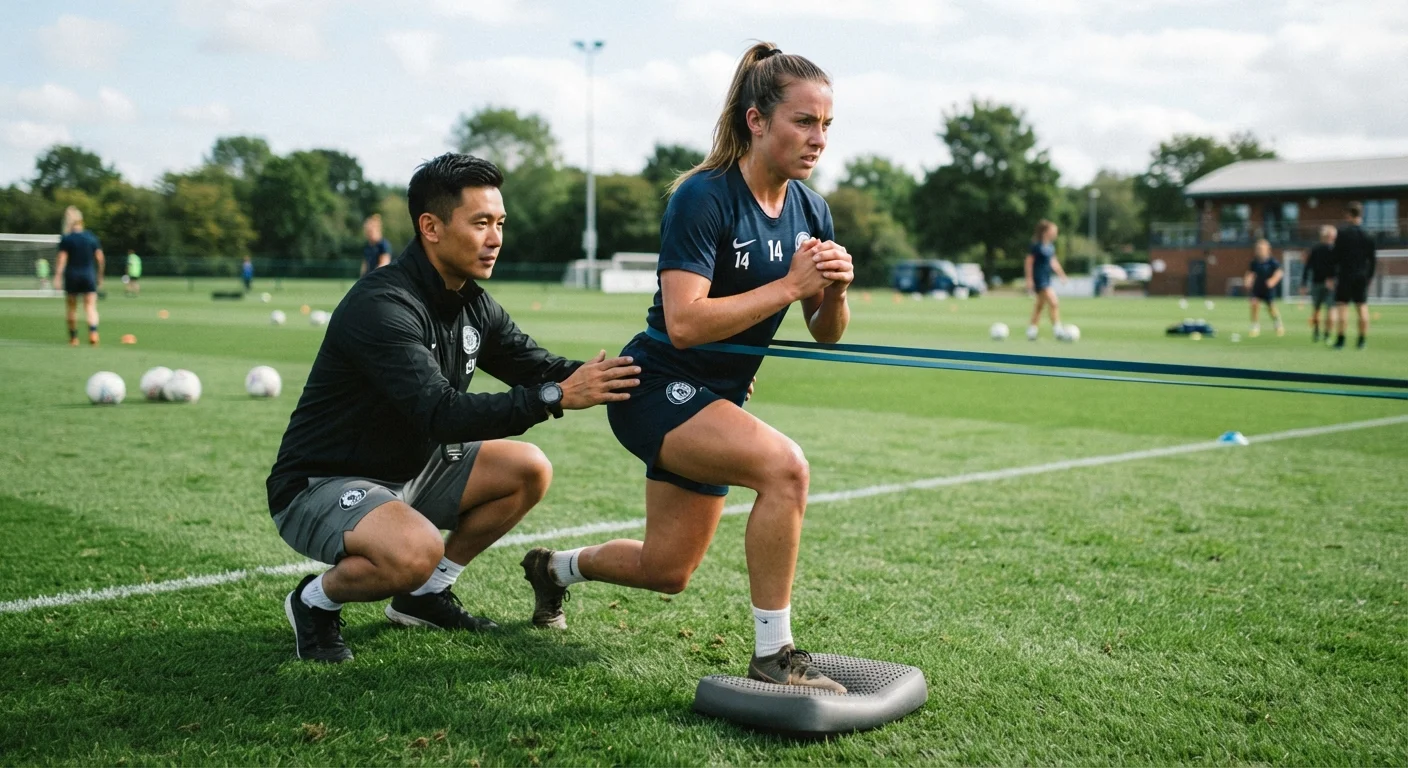
Injury prevention in elite sport refers to the systematic use of training protocols, medical monitoring, load management, and movement screening to reduce the likelihood of athletes sustaining injuries. It draws on sports science, biomechanics, and clinical research to identify risk factors before harm occurs. The goal is not just avoiding time on the sidelines - it's helping athletes sustain high performance across long careers.
In research settings, injury prevention programs are often evaluated using incidence rate ratios (IRR) and measured against control populations across full competitive seasons.
Why Injury Prevention Has Become a Science
For most of sports history, injuries were treated as an unavoidable part of the game. You got hurt, you healed, you came back - or you didn't. That philosophy has fundamentally changed. Today, elite sports organizations invest heavily in preventing injuries before they happen, and a robust body of research is guiding that shift.
The financial and competitive stakes are enormous. A single anterior cruciate ligament (ACL) tear can sideline a player for a full season, costing clubs millions in lost performance and medical costs. Studies published in journals like the British Journal of Sports Medicine have documented the scope of the problem, finding that professional soccer clubs lose an average of dozens of days per player per season to injury. Those numbers have driven demand for science-based solutions.
Understanding what separates long careers from short ones is inseparable from understanding injury prevention - the two topics share most of the same evidence base.
~50%
Reduction in injury rate with consistent warm-up programs
Multiple studies on structured warm-up programs like FIFA 11+ have reported injury rate reductions of roughly 30-50% in controlled implementations.
8+ hours
Sleep linked to lower athlete injury risk
A study involving Stanford University athletes found that those sleeping eight or more hours per night experienced fewer injuries and improved overall performance metrics.
2:1
Acute-to-chronic ratio threshold for elevated injury risk
Sports science research suggests that when an athlete's recent workload exceeds twice their chronic baseline, injury risk rises substantially.
The Evidence Behind Structured Warm-Up and Movement Screening
One of the most consistently supported interventions in sports injury research is the structured warm-up. FIFA's 11+ program - a 20-minute pre-training warm-up protocol designed for soccer - has been studied across large player populations and shown to reduce the rate of injuries, particularly in recreational and semi-professional settings. Evidence for elite professional cohorts is more mixed, largely because implementation consistency varies, but the underlying principles are well-supported.
Movement screening tools, such as the Functional Movement Screen (FMS), aim to identify mobility deficits or asymmetries that may predispose an athlete to injury. Critics note that screening alone predicts injury with limited precision, but when combined with targeted corrective exercise, it forms part of a broader risk-reduction strategy used by many professional teams.
Consistency Is the Critical Variable
Research consistently shows that injury prevention programs only deliver results when applied regularly and correctly. A warm-up protocol done three days a week delivers far less benefit than one completed before every session. Coaches and medical staff play a key role in building compliance into team culture, not leaving it to individual discretion.
Biomechanical analysis - including motion capture and force plate testing - adds another layer, helping coaches and physiotherapists spot problematic movement patterns before they lead to soft tissue damage.
Load Management: The Data-Driven Frontier
Perhaps the most talked-about innovation in modern injury prevention is workload monitoring. The core idea is straightforward: too much physical stress, delivered too quickly after a period of lower activity, dramatically raises injury risk. Researchers call this the acute-to-chronic workload ratio - comparing recent training load to the load an athlete has been conditioned to tolerate over time.
GPS vests, heart rate monitors, and player-reported wellness scores are now routine across NFL, NBA, Premier League, and other elite settings. Data science teams analyze this information daily to flag athletes at elevated risk. Resting a player one day to protect them across a season - once considered a controversial call - is now supported by hard numbers.
What athletes do during the off-season matters enormously here: how load is managed during recovery periods directly shapes readiness and resilience heading into a new campaign.
Recovery, Sleep, and the Role of Psychology
Injury prevention doesn't end when practice does. Sleep research has shown that athletes who average fewer than eight hours of sleep per night face meaningfully higher injury rates, with one Stanford-linked study finding that sleep extension improved performance and reduced injury-related missed time in young collegiate athletes. Recovery modalities - including soft tissue work, nutrition timing, and hydrotherapy - are now standard parts of elite training programs.
The psychological dimension is also gaining serious attention. Research published in the Journal of Sport and Exercise Psychology and elsewhere has documented links between high life stress and increased injury rates, supporting the idea that mental strain affects physical vulnerability. Many elite clubs now employ sports psychologists not only for performance but as part of their medical risk-reduction infrastructure.
The mental skills that define elite performance are increasingly recognized as part of the physical safety picture as well. And for those who do sustain setbacks, comeback stories of athletes who returned from career-threatening injuries show how integrated physical and psychological care shapes successful recovery.
Research Limitations Worth Knowing
Much of the injury prevention research base is drawn from semi-professional or recreational populations, where implementation control is easier to achieve. Translating findings to elite professional environments - where schedules, travel, and competitive pressure are far more intense - remains an ongoing challenge. Teams and researchers are working to close this gap with more real-world data collection.
This article is for general informational purposes only and does not constitute medical or professional sports health advice. Consult a qualified healthcare or sports medicine professional for guidance specific to your situation.