

Key Takeaways
- Mental skills like focus and resilience are trainable, not innate personality traits.
- Elite athletes regularly work with mental performance coaches alongside physical trainers.
- Pressure management, self-talk, and visualization are core tools used at the highest levels.
- The mental demands differ significantly between individual and team sport athletes.
- Psychological preparation contributes to injury recovery and career longevity.
Sports Psychology / Mental Performance
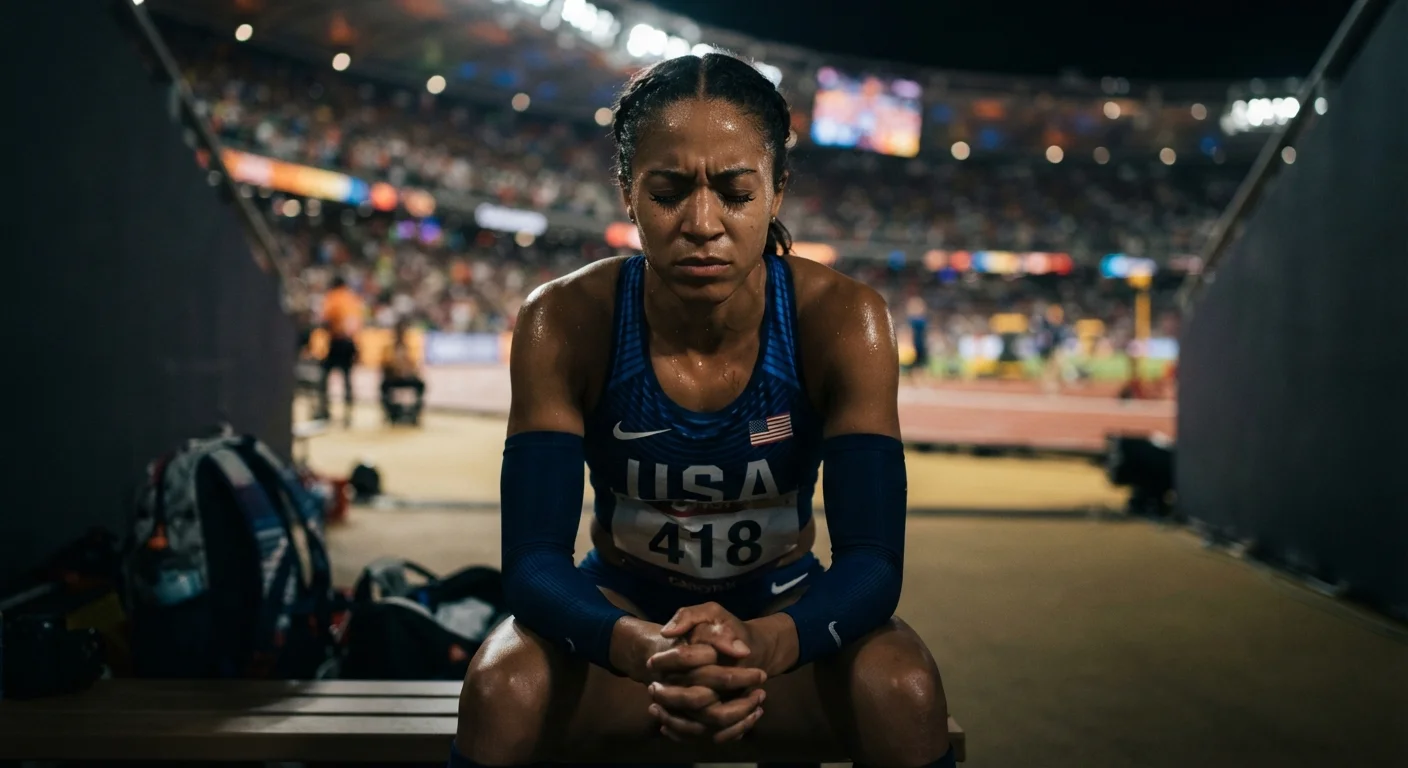
Sports psychology is the study and application of psychological principles to help athletes improve performance, manage pressure, and sustain motivation. It treats mental skills - focus, confidence, resilience - as trainable capacities, not fixed traits. Just as athletes build physical strength through repetition, they can develop mental toughness through deliberate practice.
The field draws from cognitive-behavioral theory, mindfulness research, and performance science, and is practiced by certified mental performance consultants (CMPCs) credentialed through organizations such as the Association for Applied Sport Psychology (AASP).
The Mind as a Competitive Weapon
Watch any championship moment closely - the decisive free throw, the final-set tiebreak, the penalty kick with a title on the line - and you're witnessing as much a mental performance as a physical one. Elite sport has always demanded exceptional bodies, but the athletes who sustain greatness over careers typically share something less visible: a highly trained mind.
Sports psychology has moved from the fringe to the center of professional preparation. Today, nearly every major professional organization and national governing body employs mental performance staff as a core part of their support infrastructure. As explored in the team behind the team, mental skills coaches now sit alongside trainers, nutritionists, and analysts in elite athletic environments.
What separates elite competitors mentally isn't a mysterious gift - it's a collection of specific, practiced skills that any athlete can develop.
Core Mental Skills in High-Performance Sport
Sports psychologists and performance coaches have identified several foundational skills that appear consistently among elite athletes across different sports and disciplines.
Focus and Attention Control
The ability to direct attention to the right cue at the right moment - and ignore everything else - is foundational. Distractions are everywhere: crowd noise, a missed play, a rival's trash talk. Athletes train to narrow their focus to the present moment, often using pre-performance routines as anchors.
Self-Talk and Internal Narrative
The voice inside an athlete's head matters enormously. Negative self-talk after an error can compound mistakes, while instructional or motivational self-talk can reset composure. Research consistently shows that deliberate use of positive or neutral self-talk improves both performance and emotional stability during competition.
Visualization and Mental Imagery
Mental rehearsal - vividly imagining successful execution of a skill or scenario - is one of the most widely used tools in high-performance sport. When combined with physical practice, visualization reinforces neural pathways and builds competitive confidence. Gymnasts rehearse routines mentally. Quarterbacks visualize reads and routes. Golfers picture trajectories before every shot.
Pressure Management and Arousal Regulation
Managing competitive anxiety without eliminating it is a nuanced skill. Some arousal improves performance; too much creates tension and errors. Breathing techniques, pre-competition rituals, and cognitive reframing help athletes find their optimal activation level. The connection between emotional regulation and sustained performance is documented across sports science literature - and it's a skill, not a talent. See how emotional regulation is developed for a broader look at the underlying principles.
Start With Pre-Performance Routines
One of the most accessible ways to begin mental skills training is developing a consistent pre-performance routine - a short, repeatable sequence of physical and mental cues before competition or training. It doesn't need to be elaborate. A few seconds of controlled breathing combined with a specific focus word can anchor attention and reduce anxiety effectively. Consistency matters more than complexity.
Why Mental Training Matters for Longevity
The psychological demands of elite sport don't diminish with age - they often intensify. Veterans navigate roster competition, recovery from injury, and the pressure of maintaining a standard they've set for themselves. Athletes who invest in mental skills earlier in their careers tend to adapt better to these evolving challenges.
What separates a five-year career from a fifteen-year one often comes down to resilience and adaptability - psychological qualities that can be cultivated. Mental training also plays a clear role in returning from injury. Athletes who develop psychological readiness alongside physical rehabilitation typically re-enter competition with greater confidence and lower fear of re-injury.
The mental demands differ significantly between solo competitors and team athletes. Individual sport athletes must manage failure entirely alone; team athletes navigate group dynamics, role acceptance, and shared pressure. Both require robust mental skill sets - they're just applied differently.
83%
Elite athletes using visualization regularly
A survey published in the Journal of Applied Sport Psychology found the vast majority of Olympic athletes reported using mental imagery as part of their preparation.
~60%
Performance difference attributed to mental factors
Sports psychologists commonly cite estimates suggesting mental factors account for more than half of performance variance at the elite level, where physical differences are minimal.
Top 10
US sports organizations with dedicated mental performance staff
Every NFL, NBA, MLB, and NHL team now employs or regularly consults mental performance professionals as part of their standard athlete support structure.
Building Mental Skills: A Practice, Not a Trait
The single most important takeaway from decades of sports psychology research is this: mental toughness is not something you're born with. It's built. Athletes who treat psychological preparation as a training priority - scheduling mental skill sessions the same way they schedule weight work or film review - consistently outperform those who leave it to chance.
Scouts and team evaluators increasingly recognize this. What professional teams look for when evaluating prospects now frequently includes composure, coachability, and competitive response to adversity alongside measurable physical markers.
The path forward for any athlete - from youth competitor to seasoned professional - runs through the mind as much as the gym. Investing in mental preparation isn't a sign of weakness. At the elite level, it's a defining edge.
“The mind is the athlete. The body is simply the means it uses to run faster or less fast, to hit farther or less far, to jump higher or less high.”
— Bryce Courtenay, Author and noted commentator on human performance