Key Takeaways
- The NFL features 32 professional teams; college football fields well over 130 FBS programs.
- Overtime rules differ significantly - the NFL uses sudden-death periods while college uses alternating possession formats.
- College football uses a 12-team playoff; the NFL runs a 14-team bracket capped by the Super Bowl.
- The NFL Draft connects both worlds, making college performance directly relevant to pro prospects.
- Clock management and hash mark positions differ between the two levels of play.
Option A
NFL
The pinnacle of professional football, built for parity.
Best for: Fans who want elite athleticism, a structured 32-team league, and a focused 18-week regular season.
Option B
College Football
Tradition-soaked, regionally passionate, beautifully chaotic.
Best for: Fans who love school pride, a packed Saturday schedule, and the raw drama of a 130-plus team landscape.
If you want compact, high-stakes weekly action with star-studded rosters
NFL
Sixteen regular-season games per team and a tight playoff bracket mean nearly every contest carries enormous weight.
If you love regional rivalries, school traditions, and atmosphere
College Football
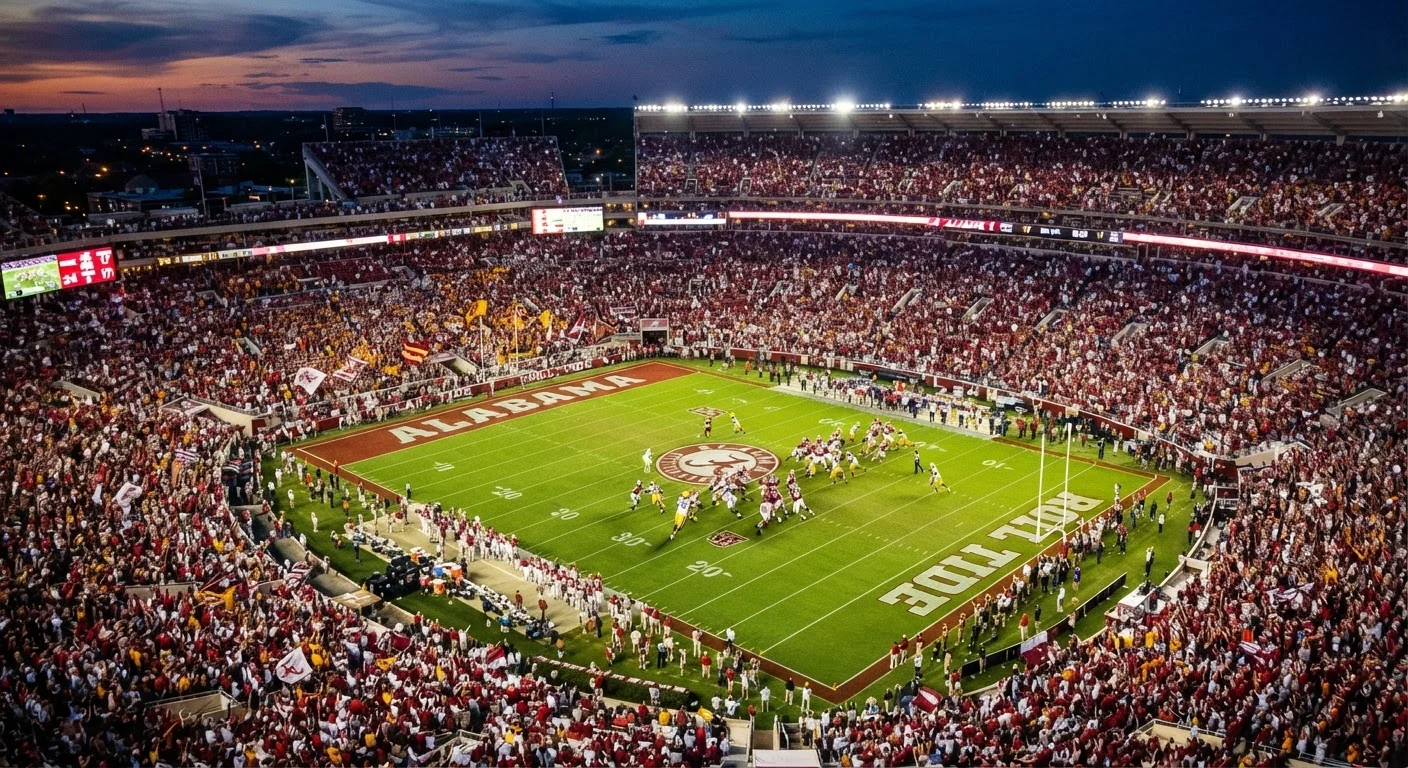
Historic rivalries like Iron Bowl and The Game carry emotional intensity that no professional matchup can fully replicate.
If you enjoy complex strategy and elite coaching adjustments
NFL
Professional coordinators and a longer prep calendar lead to more sophisticated scheme-vs-scheme chess matches.
If you want the most games and broadest variety of styles every Saturday
College Football
Dozens of simultaneous matchups across conferences expose fans to option offenses, Air Raid systems, and everything in between.
League Structure and the Scale of the Game
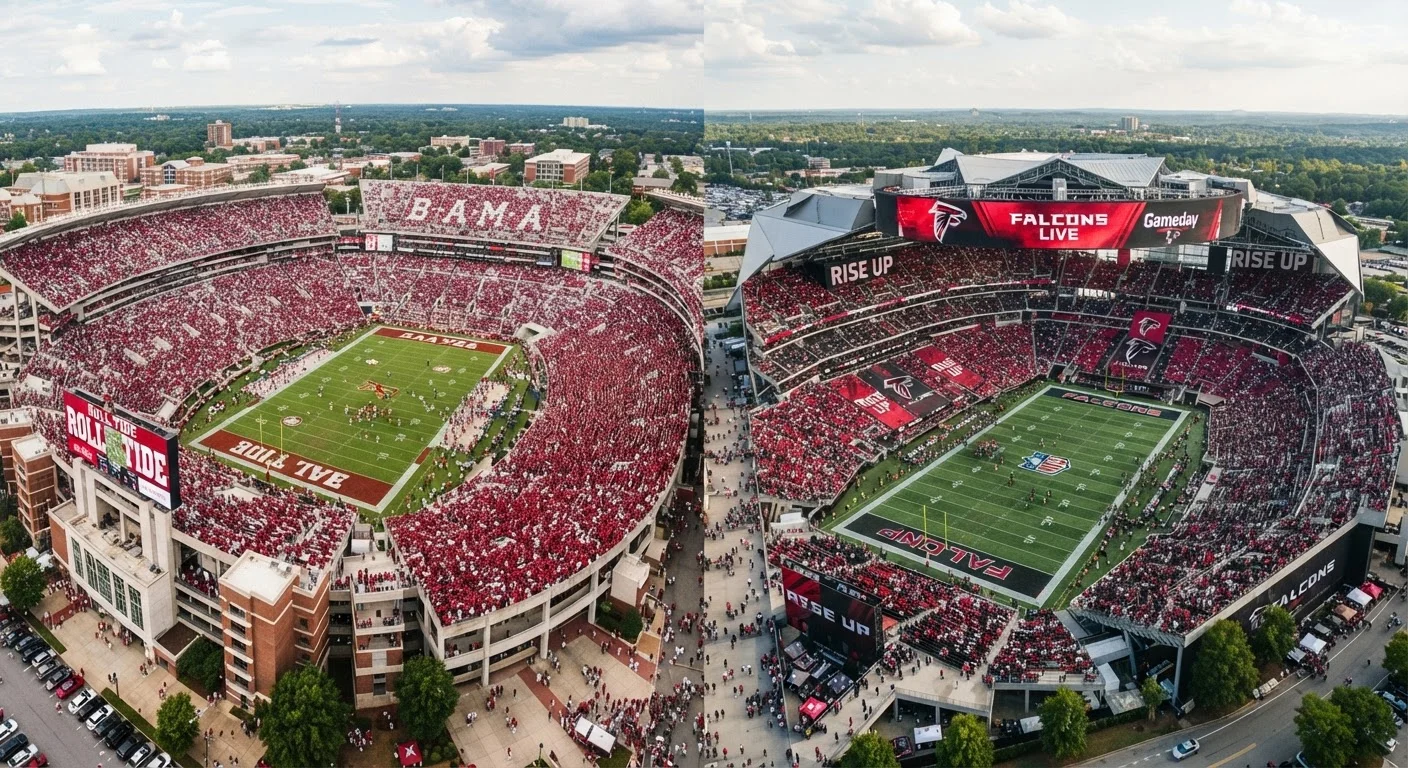
The NFL is a closed professional league with 32 franchises organized into two conferences - the AFC and NFC - each split into four divisions. That structure creates the parity-first philosophy the league is famous for, including a draft order that rewards the weakest teams first. College football, governed primarily through the NCAA's Football Bowl Subdivision (FBS), operates on an entirely different scale: more than 130 programs compete within conferences ranging from the SEC and Big Ten to smaller Group of Five leagues.
That scale shapes everything. An NFL team plays 17 regular-season games; a college team plays 12. Roster sizes differ too - NFL active rosters allow 53 players with 48 dressed on game day, while college programs routinely carry 85 scholarship players plus walk-ons. For a deeper look at how standings shake out across conferences, check out how conference and division structures shape standings.
| Criterion | NFL | College Football |
|---|---|---|
| Number of teams | 32 franchises | 130+ FBS programs |
| Regular season games | 17 games | 12 games |
| Catch rule | Two feet in bounds | One foot in bounds |
| Hash mark width | Narrower (closer together) | Wider (further apart) |
| Overtime format | Modified sudden death | Alternating possession |
| Playoff teams | 14 teams | 12 teams (expanded CFP) |
| Championship game | Super Bowl | CFP National Championship |
Rules That Look Similar But Aren't
Both games look alike on the surface, but several rules diverge sharply. Hash marks in college football are wider than in the NFL, which affects field geometry and offensive play-calling. The catch rule differs: in college, a receiver needs only one foot in bounds for a legal reception, while the NFL requires two feet (or another body part) down. Pass interference in college is a spot foul only up to 15 yards, whereas the NFL spots the ball at the infraction point regardless of distance - a massive swing on deep throws.
Clock rules also diverge. After a first down in college, the clock stops briefly to move the chains; in the NFL, it keeps running unless the ball carrier goes out of bounds or a timeout is called. These differences compound late in games and create distinct strategic environments for coaches and quarterbacks alike. How teams adjust their strategies when stakes rise is a dynamic worth understanding at both levels.
Player Eligibility Rules Differ Too
In college football, players must meet NCAA academic eligibility standards and can maintain up to four years of eligibility under certain conditions - including a COVID-19 waiver era that extended careers. NFL players must be at least three years removed from high school graduation before entering the draft. These rules create a structured pathway between the two levels, though the transfer portal and Name, Image, and Likeness (NIL) policies have added new complexity to the college side in recent years.
Overtime and Postseason Formats
Overtime is where the two games feel most alien to one another. The NFL uses modified sudden death: each team gets at least one offensive possession, but a touchdown on the opening drive ends the game immediately. College football uses an alternating possession format starting from the opponent's 25-yard line - and beginning in the third overtime period, teams must attempt a two-point conversion rather than kick an extra point, escalating tension dramatically.
The postseason structures are equally distinct. The NFL's 14-team bracket produces one champion via the Super Bowl - one of the most-watched annual events in American television. College football's 12-team College Football Playoff (CFP), introduced in expanded form for the 2024 season, selects its field through a combination of conference champions and at-large bids. For a full history of how that system evolved, see College Football's Playoff System Through the Years. For a cross-sport breakdown of overtime rules, how overtime works across major American sports is a useful companion read.
115M+
Super Bowl average US viewership
Super Bowl LVIII in February 2024 drew an estimated 123 million viewers, according to Nielsen, making it the most-watched US broadcast on record.
12
Teams in the expanded CFP field
The College Football Playoff expanded from four to twelve teams beginning with the 2024 season, dramatically broadening postseason access.
53
Players on an NFL active roster
NFL rules cap active rosters at 53 players, compared to the 85 scholarship players college programs are permitted under NCAA FBS rules.
The Pipeline: How College Feeds the NFL
One of the most compelling storylines connecting both games is the NFL Draft - the annual event where every FBS (and some FCS) player hopes to hear their name called. Scouts spend an entire college season evaluating prospects, making college film directly consequential to professional careers. A standout performance in a major bowl game or a strong combine showing can vault a player into the first round.
This pipeline means many fans watch college football specifically to follow future NFL stars before they go pro. Understanding draft positioning, combine metrics, and conference pedigree adds an analytical layer that rewards attentive viewers. If you're new to the process, our fan's guide to watching the NFL Draft breaks down the terminology without the jargon overload.
Ultimately, neither game is superior - they deliver different experiences. The NFL offers precision and parity; college football delivers passion and tradition. Knowing the structural differences only deepens appreciation for both.