Key Takeaways
- A GM is the top decision-maker for roster construction, not the head coach.
- Salary cap management is one of the most consequential - and least visible - parts of the job.
- GMs work closely with scouts, coaches, analytics staff, and ownership to make personnel decisions.
- Draft strategy and free agency are both major tools GMs use to improve a team.
- A GM's success is often measured over multiple seasons, not just one roster move.
General Manager (Sports)
A General Manager (GM) in professional sports is the executive responsible for building and managing a team's roster. They oversee player acquisitions through the draft, free agency, and trades, and are accountable for keeping the team within league-mandated salary limits. The GM typically reports to the team's owner or president and works closely with coaching staff.
In some organizations, the GM title is split or shared - titles like President of Basketball Operations or Director of Player Personnel may carry overlapping or greater authority depending on the franchise's structure.
The GM's Core Responsibility: Building the Roster
When a team wins a championship or collapses into a rebuilding spiral, the general manager sits at the center of both outcomes. The GM's primary job is roster construction - deciding which players are on the team, at what cost, and for how long.
That process runs through three main channels: the draft, free agency and trades, and contract extensions with existing players. Every decision involves tradeoffs - signing one veteran might mean passing on two younger prospects. Acquiring a star via trade could mean surrendering future draft picks the team needs to stay competitive in five years.
A GM doesn't just react to the market. The best ones set a long-term vision and systematically build toward it, balancing the pressure to win now against the discipline to develop talent over time.
32
NFL teams each managed by a GM
Every NFL franchise employs a general manager or equivalent roster-control executive responsible for player personnel decisions across the league's 32 teams.
~$200M+
Typical NFL team salary cap range
The NFL salary cap for the 2024 season was set at $255.4 million per team, illustrating the scale of financial decisions GMs oversee annually.
3-5 yrs
Average tenure of an NBA GM
Industry observers note that front-office executives typically face evaluation windows of three to five seasons before ownership reassesses leadership direction.
Salary Cap Management: The Hidden Game
Every major North American professional league operates under some form of salary cap or payroll constraint. Managing that cap is one of the most technically demanding parts of the GM role - and one fans rarely see directly.
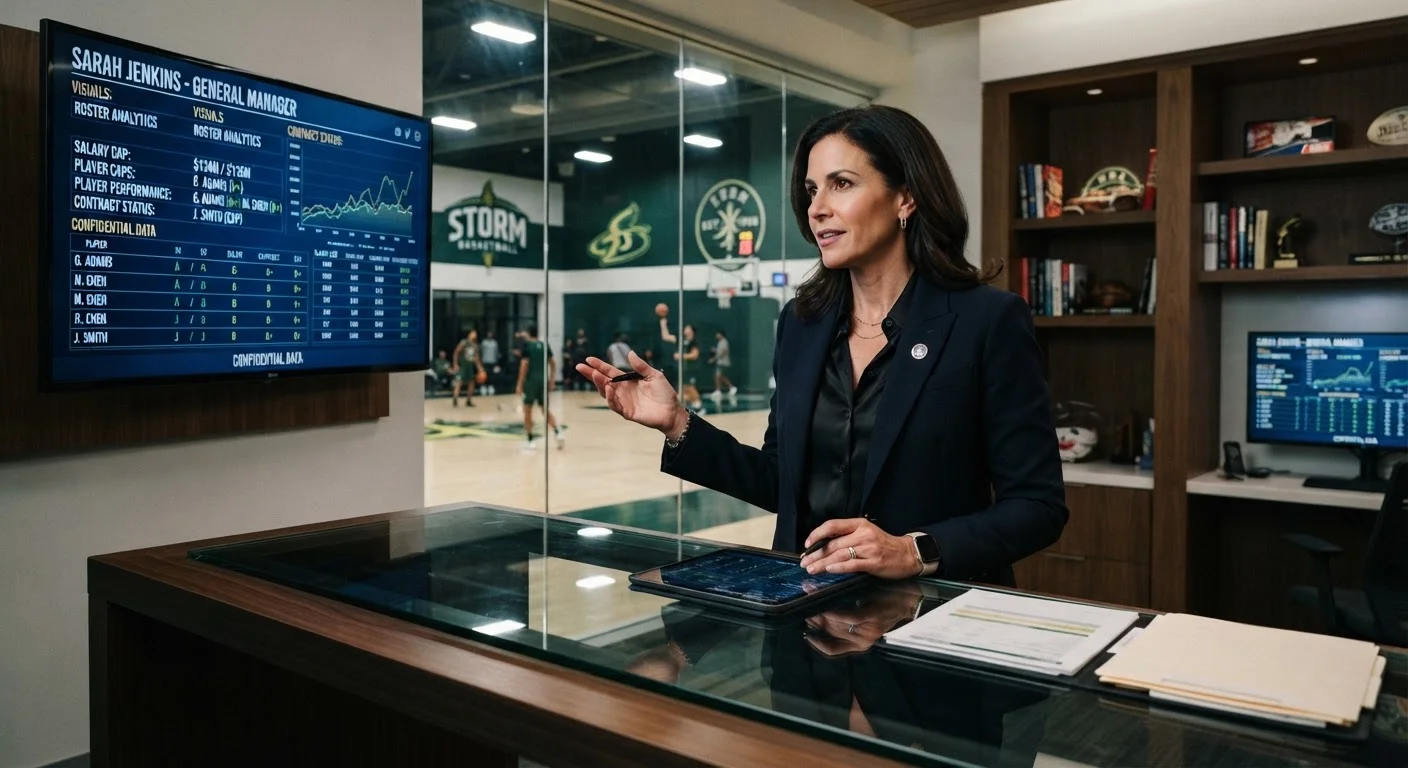
A GM needs to know, at any given moment, how much cap space the team has, which contracts expire and when, and how a potential signing or trade affects the team's financial flexibility for the next several seasons. Getting this wrong can lock a franchise into a bad contract for years.
The free agency process adds urgency: windows open and close quickly, and teams that aren't cap-ready can miss out on key signings entirely. GMs who master cap management often squeeze more competitive value out of a roster than their spending would suggest.
Reading the Cap: A Fan-Friendly Starting Point
If you want to understand why your team made a surprising move, check the team's cap situation first. Many sports media outlets publish real-time salary cap trackers for the NFL, NBA, MLB, and NHL. Seeing how much space a team has - or doesn't - often explains decisions that otherwise seem puzzling.
The Draft, Scouting, and Analytics
The annual player draft is one of a GM's most public moments - and also one of the most misunderstood. Contrary to popular belief, GMs rarely make selections in isolation. Behind every pick is months of scouting reports, medical evaluations, interviews, and increasingly, advanced statistical modeling.
GMs oversee the scouting department, set evaluation priorities, and ultimately decide how the team's draft board is structured. They also negotiate the trade-ups and trade-downs that can dramatically reshape a draft class before a single pick is announced.
Analytics departments have grown significantly in recent years, giving GMs data-driven tools to evaluate players beyond traditional statistics. The best front offices blend old-school scouting instincts with modern performance data - and the GM sets the culture that determines how those two perspectives are weighted.
Working With Coaches, Ownership, and the Front Office
A GM doesn't operate alone. The role requires constant collaboration - and occasional conflict - with the head coach, ownership, and an entire front office staff.
The GM-coach dynamic is particularly critical. Ideally, both parties share a vision for the type of players and style of play that will make the team successful. When those visions diverge, roster decisions become contentious. GMs who build franchise-defining rosters usually do so in close alignment with the coaching philosophy.
Ownership has the final say on major decisions - including, often, hiring and firing the GM. Understanding how to communicate strategy upward while executing it downward is a leadership skill that separates good GMs from great ones.
“The general manager's job is to put the coach in a position to succeed - and then stay out of the way on game day. Everything else is on you.”
— Pat Riley, NBA Executive and former Head Coach, widely regarded as one of basketball's most influential front-office figures