Key Takeaways
- The worst record does not automatically guarantee the first overall pick in all major leagues.
- Draft picks can be traded years in advance, making a team's future board very different from its current roster.
- Compensatory picks exist in several leagues, adding rounds and slots most casual fans don't realize are there.
- Teams often pass on the highest-rated prospect available in favor of filling a specific positional need.
- Draft eligibility rules vary significantly between the NFL, NBA, NHL, and MLB.
Why Draft Myths Stick Around
Every spring and summer, sports drafts command massive media attention - and with that coverage comes a flood of assumptions fans carry from water-cooler talk, highlight clips, and social media hot takes. The problem? Many of those assumptions are flat-out wrong.
Understanding how drafts actually function helps fans follow team-building decisions with sharper eyes. Whether you're tracking your favorite franchise or just trying to keep up with the conversation, separating draft fact from fiction is worth the effort. For a broader look at how player movement works across all channels, see how athletes move between teams.
Myth
The team with the worst record always picks first in the draft.
Fact
In leagues like the NBA and NHL, a weighted lottery system means the worst team has the best odds but no guarantee of the top pick.
This misconception is understandable - the logic of rewarding the weakest team seems obvious. But the NBA, for example, introduced its lottery format specifically to prevent teams from deliberately losing to secure a top pick. All non-playoff teams enter the lottery with odds weighted toward the bottom of the standings, but any of those teams can land the first selection. In the NFL, there is no lottery - but the order can still shift dramatically based on trades made years in advance.
Myth
Traded draft picks are simple and always belong to one team.
Fact
Draft picks can be traded with conditions, protections, and swap rights that make ownership genuinely complicated to track.
A pick traded today might come with a protection clause - for example, it only transfers if it falls outside the top five. If that condition isn't met, the pick rolls over to the next year with new conditions. Some trades involve multiple future picks, conditional swaps, or rights that activate only if certain player transactions occur. Keeping track of which teams actually own which future picks is a full-time analytical exercise, not a simple ledger.
Myth
Draft rounds are the same in every major sport.
Fact
The number of rounds, the number of picks per round, and the presence of compensatory picks all differ significantly by league.
The MLB Draft has historically run anywhere from a handful to dozens of rounds, depending on the era and collective bargaining rules. The NFL holds seven rounds, with compensatory picks that can push the total well past 250 selections. The NBA draft covers only two rounds, making it far more compact. The NHL runs seven rounds. Each league has its own eligibility standards, entry timelines, and slot-value structures - the differences are substantial, not cosmetic.
Myth
Picking a player early in the draft guarantees they'll become a star.
Fact
Draft position predicts opportunity, not outcome - busts occur at every slot, including first overall.
History is full of highly celebrated top picks who never developed into impact players, and late-round or undrafted athletes who became perennial All-Stars. Scouting is an imperfect science, and variables like injury, coaching fit, development environments, and personal circumstances all influence a player's trajectory in ways no pre-draft process can fully anticipate. Draft position reflects a team's evaluation at a specific moment - nothing more.
Myth
All professional sports drafts follow the same eligibility rules.
Fact
Eligibility criteria differ sharply between the NFL, NBA, NHL, and MLB, including age minimums, college requirements, and international player rules.
NFL players generally must be at least three years removed from high school graduation before entering the draft. The NBA requires players to be at least 19 years old and one year removed from high school - though this rule has been debated and may change under future labor agreements. The NHL can draft players as young as 18, and MLB frequently drafts high school players directly out of secondary school. International players add another layer of complexity, with league-specific signing windows and posting systems that operate separately from domestic draft rules.
What Fans Often Get Wrong About Picks and Order
Pick order is probably the most misunderstood element of any draft. Fans see their team finish last and assume a franchise-altering selection is guaranteed - but league rules, lottery systems, and trade history can dramatically reshape that expectation.
In the NBA and NHL, a draft lottery determines who actually lands the top spot, meaning the worst team has the best odds - not a guaranteed claim. For a detailed breakdown of how those probability systems work, the draft lottery mechanics are more nuanced than most fans realize. The NFL uses a straight reverse-order format, but how that order gets shaped by trades and compensatory picks is its own complicated story.
14
NBA lottery teams eligible annually
All 14 non-playoff NBA teams enter the draft lottery each year, with odds weighted by record - but no guaranteed outcome for the worst finisher.
7
NFL Draft rounds each year
The NFL Draft spans seven rounds, and compensatory picks - awarded based on free-agency losses - can push the total selection count well past 250.
Strategy Behind the Board: It's Not Just About Best Available
Front offices spend months - sometimes years - preparing for a single draft. The idea that teams simply take the best player on their board when their turn arrives is a dramatic oversimplification. Positional need, contract situations, scheme fit, medical evaluations, and long-term cap implications all factor into every selection.
A general manager's role in draft prep involves coordinating scouts, coaches, analytics staff, and ownership - not just reading a ranking sheet. Teams may also trade back to accumulate volume, or trade up when they identify a prospect they believe will be unavailable at their natural slot.
Trading Picks Can Backfire Badly
Trading future draft picks is a standard team-building tool, but it carries real risk. A team that deals away multiple future first-rounders while its roster declines can find itself unable to rebuild for years. Fans should understand that a depleted future pick sheet, combined with a losing record, is one of the most difficult situations a franchise can face - and it is often the direct result of aggressive trading in prior seasons.
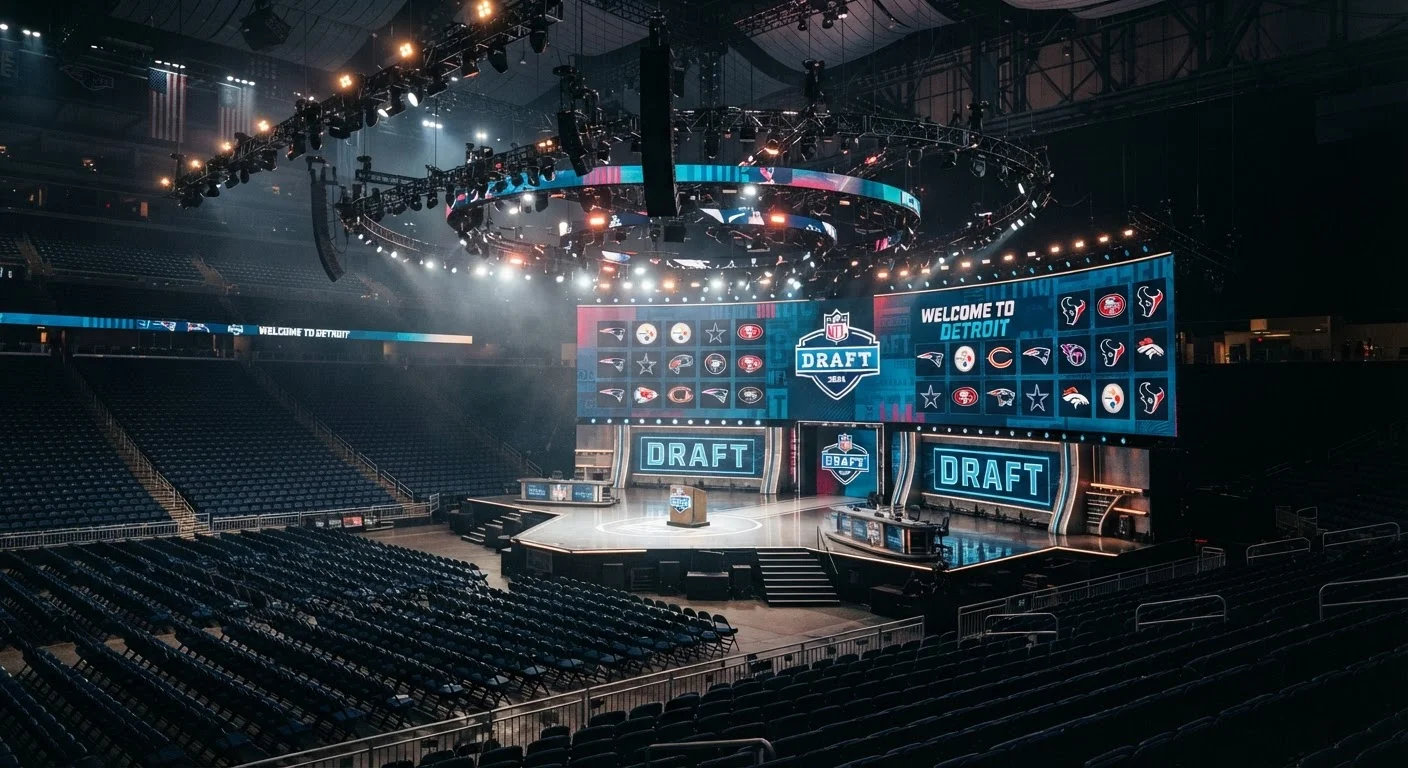
If you want to watch the process unfold in real time with a better grasp of the terminology, this fan's field guide to the NFL Draft covers the language and structure from the ground up.