

Key Takeaways
- Lithium-ion batteries lose capacity gradually through normal use - this is expected, not a defect.
- Heat is the single biggest accelerator of battery aging, more than charge cycle count alone.
- Keeping a battery between roughly 20% and 80% charge preserves capacity better than charging to 100% routinely.
- Fast charging adds convenience but contributes to faster electrode wear over time.
- Most consumer batteries reach noticeable degradation after 300-500 full charge cycles.
- Software-based battery health tools can give a useful snapshot of remaining capacity.
Battery Capacity Degradation
Battery capacity degradation is the gradual loss of a lithium-ion battery's ability to hold a full charge over time. Every charge cycle causes microscopic changes inside the battery that reduce how much energy it can store. This is a normal, unavoidable process - but the rate at which it happens is significantly influenced by how the battery is used and stored.
Degradation occurs through several mechanisms including lithium plating, solid electrolyte interphase (SEI) layer growth, and active material loss at the electrodes - each reducing usable capacity at a chemical level.
What's Actually Happening Inside a Degrading Battery
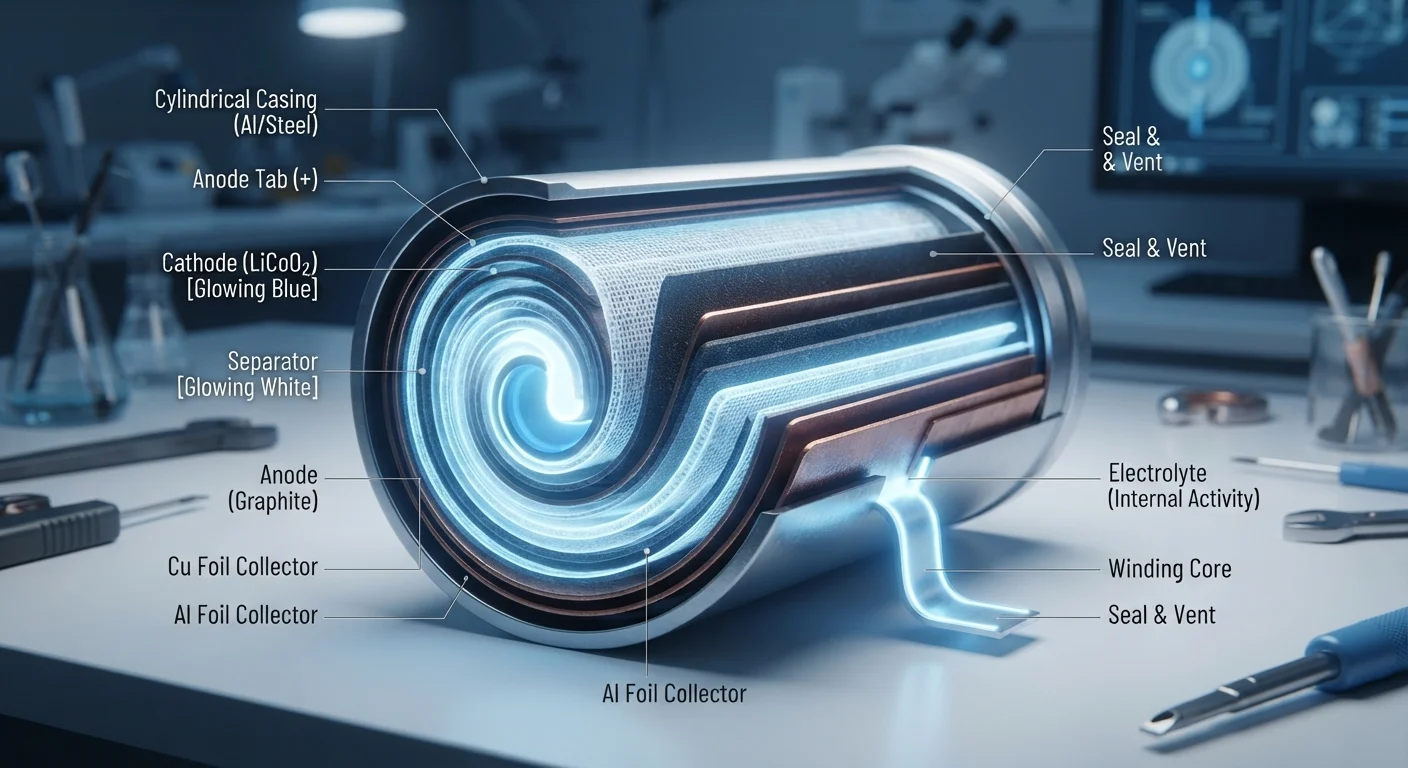
Lithium-ion batteries work by moving lithium ions back and forth between two electrodes - the anode and the cathode - through a liquid electrolyte. Charging pushes ions toward the anode; discharging releases them back. Each round trip causes minor physical and chemical stress on the battery's internal components.
Over time, three main processes erode capacity. First, a layer called the solid electrolyte interphase (SEI) builds up on the anode surface, gradually consuming lithium ions that can no longer participate in storing energy. Second, repeated expansion and contraction of electrode materials causes microscopic cracking, reducing the surface area available for ion exchange. Third, at high charge levels or during fast charging, lithium can deposit directly onto the anode surface as metallic lithium - a process called lithium plating - instead of intercalating properly into the electrode material. Each of these changes is permanent.
The result is a battery that holds less total energy, charges to a lower effective ceiling, and may also deliver power less consistently under load. This is why an older phone can show 30% charge and then shut down unexpectedly - the battery's ability to sustain output under demand has declined even if the displayed percentage doesn't reflect it accurately.
Cycle Count vs. Calendar Age
Lithium-ion batteries age through both charge cycling and time - even a rarely used battery stored at full charge in a warm environment will lose capacity. Calendar aging is driven by the same chemical mechanisms as cycle aging, just progressing more slowly. A device kept in ideal conditions degrades more slowly, but no lithium-ion battery is immune to the passage of time.
The Factors That Speed Up Aging
Not all degradation is equal. Several variables push the process faster than normal chemistry would predict.
- Heat: This is the dominant factor. Electrochemical reactions that break down battery materials accelerate sharply at elevated temperatures. A phone left on a car dashboard in summer, or a laptop running hot on a soft surface that blocks ventilation, ages its battery measurably faster than a device kept cool.
- High state of charge: Lithium-ion cells experience more chemical stress when held near 100% for extended periods. The electrolyte degrades faster at high voltages, accelerating SEI growth and capacity loss.
- Deep discharges: Allowing the battery to regularly drop to near zero stresses the electrodes. Shallow discharge cycles - staying within the middle range of charge - are gentler on the chemistry.
- Fast charging: High-speed charging forces rapid ion movement and generates heat, both of which accelerate electrode wear. Standard-speed charging is less taxing on the battery's long-term health.
~80%
Typical capacity after 500 full charge cycles
Most lithium-ion battery manufacturers rate their cells to retain approximately 80% of original capacity after 300-500 full charge cycles under standard test conditions.
2×
Faster degradation rate at elevated temperatures
Battery research consistently shows that operating or storing lithium-ion cells at high temperatures can roughly double the rate of capacity loss compared to use at moderate ambient temperatures.
20-80%
Recommended charge window for longevity
Device manufacturers and battery researchers broadly recommend keeping lithium-ion batteries within this partial-charge range to reduce electrochemical stress and slow capacity degradation.
Understanding these factors matters because they're largely within a consumer's control - and making small adjustments to charging habits can meaningfully extend how long a battery stays useful. See our device longevity guide for practical habits that reduce wear across your gadgets.
Smarter Charging Habits That Help
The most widely supported guidance from battery researchers and device manufacturers centers on keeping the charge level within a moderate range. Charging to roughly 80% rather than 100% consistently, and plugging in before dropping below 20%, reduces the chemical stress that drives capacity loss. Many smartphones now include settings that let users cap maximum charge at 80% or use scheduled overnight charging to limit time spent at peak voltage.
Heat management is equally important. Removing a protective case while charging if the device runs warm, avoiding charging on soft surfaces, and keeping devices out of direct sunlight are simple steps with genuine impact on battery longevity.
Use Your Device's Built-In Battery Health Tools
Both iOS (under Settings > Battery > Battery Health) and Android (via Settings > Battery or device-specific diagnostic apps) provide a capacity percentage that shows how much of the original battery capacity remains. Checking this periodically gives you a concrete picture of degradation and can help you decide when a battery replacement makes sense - often before performance becomes noticeably poor.
For anyone also thinking about these issues at a larger scale - electric vehicles use the same fundamental chemistry, and the same principles apply. The charging habits that shorten EV battery life mirror what matters for phones and laptops. Research into what long-term EV battery degradation actually looks like also informs our broader understanding of lithium-ion aging across all device types.
It's also worth knowing that solid-state battery technology is being developed specifically to address some of lithium-ion's inherent limitations - though widespread consumer availability is still some years away.