

Key Takeaways
- ANC uses microphones and a processor to generate an inverted sound wave that cancels ambient noise.
- The technology works best on consistent, low-frequency sounds like engine hum or air conditioning.
- Passive noise isolation - physical blocking - works alongside ANC in most modern headphones.
- High-pitched and unpredictable sounds are harder to cancel because they change too quickly for the processor to track.
- ANC quality depends heavily on microphone placement, processor speed, and ear cup seal.
Active Noise Cancellation (ANC)
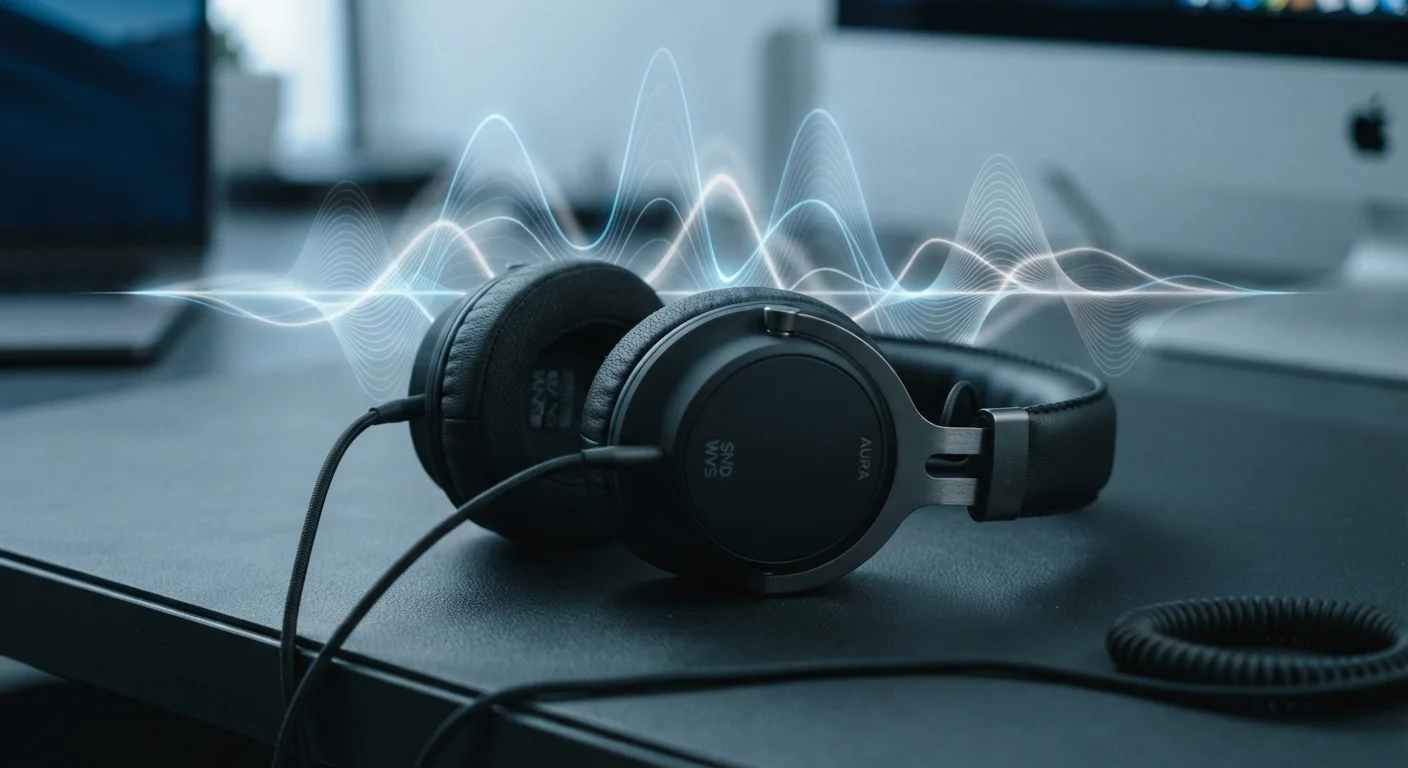
Active noise cancellation (ANC) is a technology that reduces unwanted ambient sound by generating a second sound wave specifically designed to cancel the first. Tiny microphones on the headphones sample surrounding noise, and a processor creates an opposing audio signal - called an anti-noise signal - that is played back through the speakers. The two waves collide and largely cancel each other out before reaching your ears.
This process relies on the principle of destructive interference: when two sound waves of equal amplitude and opposite phase meet, their combined pressure approaches zero, effectively eliminating the perceived sound.
The Physics Behind the Quiet
Sound travels as pressure waves - compressions and rarefactions moving through air. Every noise you hear, from a jet engine to an office HVAC unit, is a pattern of these waves hitting your eardrums. Active noise cancellation exploits a fundamental property of waves: when two identical waves that are perfectly out of phase meet, they cancel each other out. This is called destructive interference.
In practice, ANC headphones use one or more small microphones - typically mounted on the outside of each ear cup - to continuously sample the ambient sound around you. That audio data is fed into a dedicated processor, which calculates what an inverted version of the incoming wave would look like. The processor then sends that inverted signal - the anti-noise - through the headphone's speaker drivers, timed to arrive at your ear at the same moment as the original noise. The two signals meet, their pressure changes offset each other, and the sound you perceive drops dramatically.
“Noise cancellation is fundamentally a problem of prediction - you are trying to generate a signal that perfectly mirrors what you expect to hear a fraction of a millisecond from now. The better your prediction, the better your cancellation.”
— Audio Engineering Research Community, General consensus among acoustic engineers specializing in signal processing
Why Some Sounds Cancel Better Than Others
The key constraint of ANC is time. The processor must capture incoming sound, compute the inverse wave, and play it back fast enough that it aligns perfectly with the original noise. For slow, predictable, low-frequency sounds - the drone of an airplane cabin, the rumble of a train, the hum of an air conditioner - this is very manageable. These sounds have long, repetitive wave cycles that are easy to measure and invert.
High-frequency sounds are far more difficult. Their wave cycles are shorter and faster, leaving the processor with almost no time to react before the sound has already passed. Sudden sounds - a door slam, a voice spike, a barking dog - change too rapidly for real-time cancellation to fully keep up. This is why ANC headphones are transformative on long flights but only partially effective in chaotic environments like a busy coffee shop.
Transparency Mode: ANC in Reverse
Many modern ANC headphones include a 'transparency' or 'ambient' mode, which uses the same external microphones to pipe outside sound intentionally into the audio feed. This lets you hear your environment - a flight announcement, a colleague speaking - without removing the headphones. It's the same hardware, repurposed to amplify rather than cancel.
ANC and Digital Focus: Different Tools
ANC addresses physical sound in your environment, while your device's digital settings manage notifications and interruptions. If you're trying to reduce both acoustic and digital distractions, ANC handles the former - for the latter, see the differences between Airplane Mode, Do Not Disturb, and Focus modes on your device.
Feedforward, Feedback, and Hybrid Systems
Engineers have developed different microphone configurations to improve ANC performance. Feedforward ANC places microphones on the outside of the ear cup, capturing sound before it reaches the speaker. This gives the processor a head start but can struggle if the noise source shifts unexpectedly. Feedback ANC positions a microphone inside the ear cup, closer to where your ear actually is, allowing it to monitor and correct the output signal in real time - though it has less advance warning.
Most high-quality modern headphones use a hybrid approach, combining both microphone placements. The feedforward mic anticipates incoming noise while the feedback mic monitors the residual sound inside the cup and makes fine adjustments. This layered approach produces more consistent cancellation across a wider range of environments and frequencies.
Fit Matters as Much as Technology
When evaluating ANC headphones, pay close attention to how well the ear cups seal against your head. A snug, consistent seal allows passive isolation to do its share of the work, giving the active electronics the best possible starting point. Users with glasses or irregular head shapes may find that some designs provide a noticeably better seal than others - worth testing before committing.
The quality of the ear cup seal also matters enormously. Even the most advanced ANC processor is limited by how well the physical ear pads conform to your head. A poor seal lets sound leak in before ANC has a chance to address it - which is why comfort and fit are not purely aesthetic considerations. For a deeper look at how audio engineers think about sound shaping in other contexts, see how sound designers craft audio environments in film.
Understanding the Limits - and What to Expect
Knowing what ANC can and cannot do helps set realistic expectations. In consistently noisy, low-frequency environments, a well-designed pair of ANC headphones can reduce perceived noise by a substantial margin - making long commutes or flights genuinely more comfortable. In mixed or unpredictable noise environments, ANC provides meaningful but incomplete relief.
It's also worth noting that ANC headphones still capture and process audio from your environment, even when you're not playing music. If you're thinking about how devices handle ambient audio more broadly, the privacy dynamics are worth considering - similar questions arise with smart home devices that process environmental audio.
20-30 dB
Typical noise reduction from quality ANC headphones
Audio engineering benchmarks suggest well-implemented ANC systems commonly achieve 20-30 decibels of attenuation for low-frequency continuous noise.
~1 ms
Processing latency target for effective ANC
For anti-noise to align with incoming sound, ANC processors must generate and output the inverted signal within roughly one millisecond - a core engineering challenge.
ANC is a genuine engineering achievement grounded in wave physics, and understanding the mechanism helps you use the technology more effectively - knowing when to rely on it and when passive isolation or simply stepping away from noise is the better answer.