

Key Takeaways
- Different wireless protocols-Bluetooth, Zigbee, Z-Wave, Thread-serve different purposes and are not interchangeable.
- Wi-Fi connects devices to the internet but consumes far more power than mesh protocols designed for simple sensors.
- Matter is an emerging unified standard designed to make devices from different manufacturers work together.
- Interoperability-whether two devices can communicate-remains the most common frustration for smart home users.
- Understanding protocols before buying a device helps avoid compatibility dead ends.
Connected Gadget Ecosystem
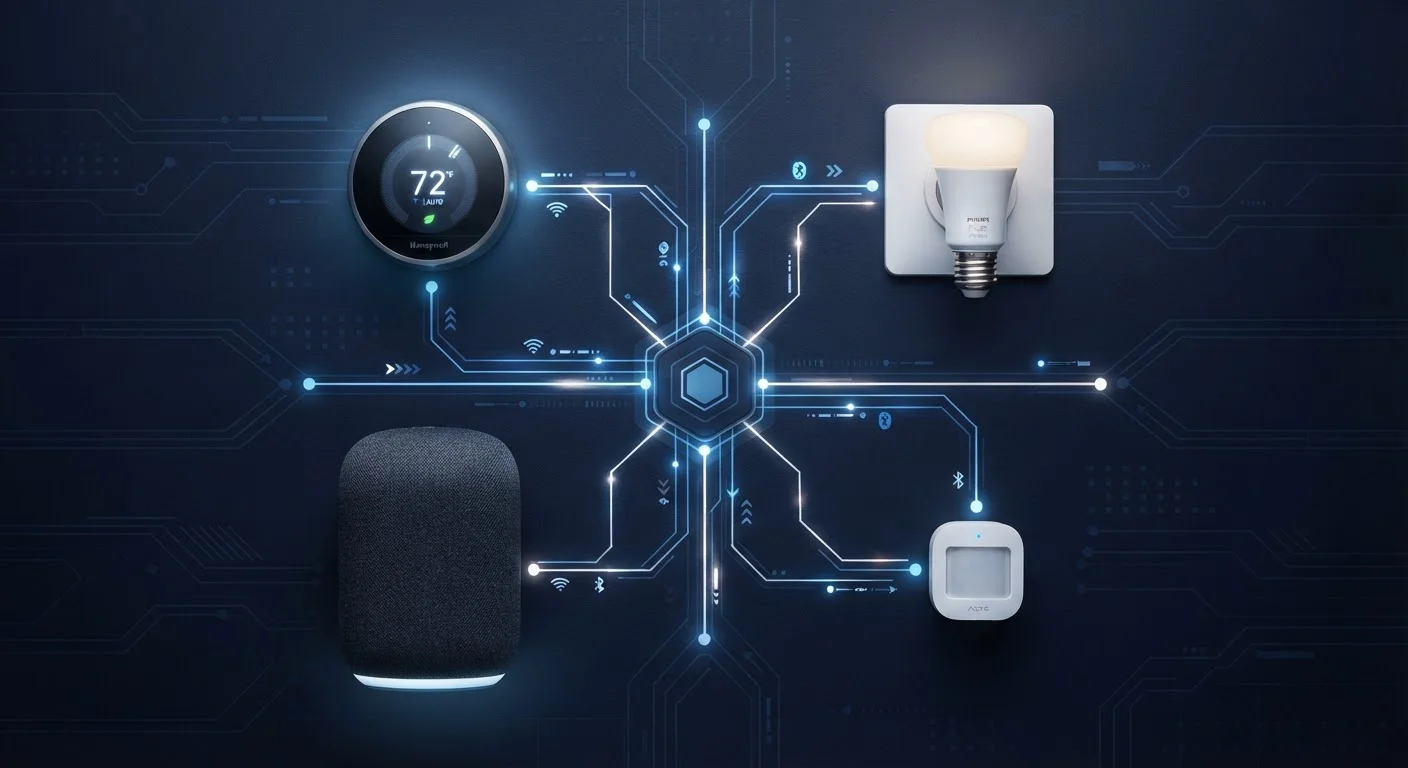
A connected gadget ecosystem is the network of smart devices in your home or life that share data and commands with each other. These devices-speakers, thermostats, locks, lights-communicate using wireless protocols, which are standardized rules that govern how signals are sent and received. The protocol a device uses determines which other devices it can talk to and how reliably.
Most consumer devices operate on one of several radio-frequency layers: Wi-Fi (2.4 or 5 GHz), Bluetooth (2.4 GHz), or low-power mesh protocols like Zigbee, Z-Wave, and Thread, each optimized for different range, bandwidth, and power-consumption trade-offs.
Why Protocols Matter More Than You Think
When a smart light responds instantly to your voice command or a sensor automatically unlocks your door, what you're seeing is the end result of a specific wireless protocol doing its job invisibly in the background. The protocol isn't a marketing feature-it's the fundamental language devices use to exchange information.
Most consumers discover protocols only when something breaks: a new device won't connect, two products from different brands refuse to cooperate, or a hub gets discontinued. Getting a basic grasp of what each protocol does-before you buy-saves real frustration later. See our introduction to smart home devices for a broader look at how these gadgets fit into everyday life.
29.3B
Connected IoT devices projected globally
According to Statista forecasts, the number of connected Internet of Things devices worldwide is projected to surpass 29 billion by 2030.
4+
Major smart home protocols in active use
Zigbee, Z-Wave, Thread, Bluetooth, and Wi-Fi each maintain significant market presence, with no single protocol dominating the full smart home device category.
The Main Protocols, Plainly Explained
Bluetooth
Bluetooth is optimized for direct, short-range connections-typically up to around 30 feet in practice. It's ideal for headphones, speakers, and locks. It doesn't require a hub or internet connection to function locally, which is an advantage when cloud services go down. For a detailed look at how Bluetooth behaves in the real world, the Bluetooth basics explainer covers pairing quirks, interference, and range in practical terms.
Zigbee and Z-Wave
Both are low-power mesh protocols built specifically for smart home devices. In a mesh network, each device can relay signals to others, extending coverage across a larger home without adding more routers. Zigbee operates on the 2.4 GHz band and has a large ecosystem; Z-Wave uses a less congested sub-GHz frequency, which can improve reliability in crowded wireless environments. Neither speaks directly to Wi-Fi-they typically require a compatible hub.
Thread
Thread is a newer mesh protocol designed with reliability and low power draw in mind. Unlike Zigbee or Z-Wave, it uses the standard IP networking model, making it easier to integrate with existing internet infrastructure. Thread is the underlying radio layer that the Matter standard runs on top of for many devices.
Wi-Fi
Wi-Fi connects devices directly to your router and the broader internet. It supports high-bandwidth tasks and requires no hub, but it consumes significantly more power than mesh protocols-making it a poor choice for battery-powered sensors that need to last months or years.
Matter: The Attempt at a Universal Language
For years, the smart home world was fragmented: a device that worked with one platform often wouldn't work with another. Matter, developed by the Connectivity Standards Alliance with participation from major technology companies, is designed to address that fragmentation directly.
A Matter-certified device can work across multiple major smart home platforms simultaneously, without proprietary bridges or locked-in apps. It runs over Thread or Wi-Fi at the radio layer, and its local-first architecture means many functions continue working even when your internet connection drops.
“The promise of Matter is that consumers can buy a device and trust it will work in their ecosystem of choice-without needing to know what protocol it runs on underneath.”
— Connectivity Standards Alliance, Governing body overseeing the Matter smart home standard
Matter doesn't eliminate the underlying protocols-Zigbee, Z-Wave, and Bluetooth still exist and still power many devices. What Matter attempts to do is sit above those layers as a shared application language, so consumers aren't forced to pick a single brand's ecosystem. For a deeper look at why interoperability has been so difficult to achieve, see why interoperability is the quiet challenge holding smart homes back.
What This Means for Everyday Buying Decisions
You don't need to become a wireless engineer to make good decisions about connected gadgets. A few practical checkpoints go a long way:
- Check the protocol before buying. A device's packaging or spec sheet lists its protocol. If you already have a Zigbee hub, buying a Z-Wave device without confirming hub compatibility creates an island.
- Look for Matter certification if long-term compatibility matters to you. It's an early signal that a device is designed to work across platforms rather than within one walled garden.
- Understand hub dependency. Some protocols require a dedicated hub; others connect directly to Wi-Fi. Hubs add cost and a potential single point of failure, but also expand what low-power devices can do.
- Cloud reliance is a long-term risk. Devices that depend entirely on a manufacturer's cloud service can become unusable if that service is discontinued. Local-first protocols reduce that exposure.
Understanding how connected devices communicate is the foundation for building a smart home setup that actually works together rather than around each other.
Start With Your Hub, Not Your Devices
If you're building a smart home from scratch, choosing your hub or platform first-and then selecting devices compatible with it-avoids the most common compatibility dead ends. Once your hub is established, adding devices that share its protocol becomes straightforward. Mixing protocols without a multi-protocol hub usually leads to isolated devices that can't be automated together.