

Key Takeaways
- A device is 'smart' when it can send and receive data over a network, enabling remote control or automation.
- Different wireless protocols (Wi-Fi, Zigbee, Z-Wave, Thread) suit different use cases and device types.
- A hub or smart speaker often acts as the coordination point that ties multiple devices together.
- The Matter standard is working to make devices from different brands work together more reliably.
- Not every upgrade needs to be 'smart' - focus on rooms and routines where automation saves real time or energy.
Smart Home Device
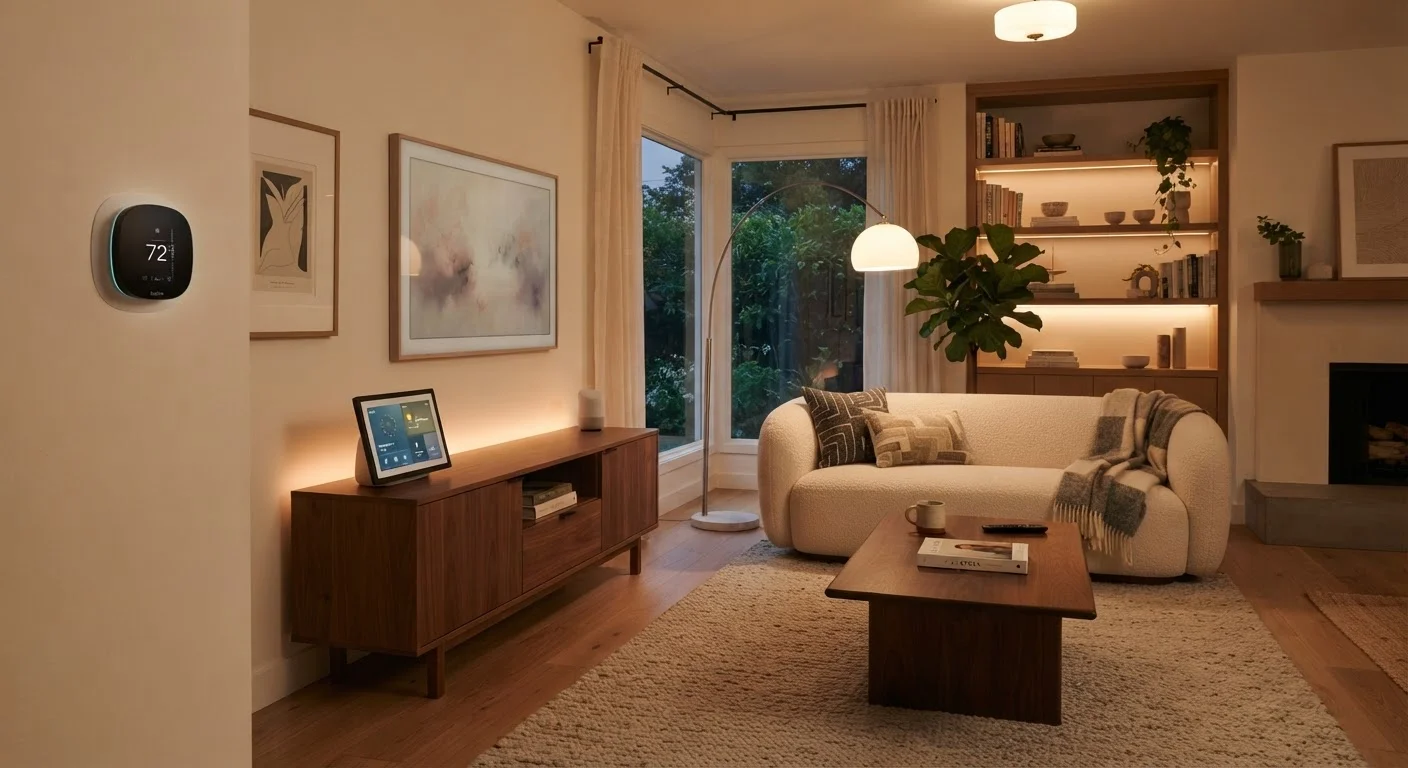
A smart home device is any appliance, fixture, or gadget that connects to a network - most often your home's Wi-Fi - so it can be monitored, controlled, or automated remotely or on a schedule. 'Smart' means the device can send and receive data, not just respond to a manual switch. That communication is what makes automation and remote access possible.
Connectivity can happen over several radio protocols - including Wi-Fi, Zigbee, Z-Wave, Bluetooth, and Thread - each with different range, power consumption, and reliability trade-offs.
What Actually Makes a Device 'Smart'
The word 'smart' gets applied to everything from light bulbs to refrigerators, which can make the label feel meaningless. In practical terms, a device earns the label when it can communicate data over a network - sending status information out and accepting commands in. A regular light switch responds only when you physically flip it. A smart switch can be toggled from a phone across the country, set to dim at sunset automatically, or report power usage to an app.
That two-way communication is the defining trait. It's what enables schedules, remote access, and integration with other devices. A Wi-Fi-connected thermostat, for instance, doesn't just control temperature - it can learn your patterns, respond to your location, and coordinate with a smart ventilation system.
Start With One Ecosystem
If you're new to smart home devices, choose one platform - such as a voice assistant ecosystem or a hub manufacturer - and stick with it initially. Mixing incompatible ecosystems early on is a common source of frustration. As the Matter standard matures, cross-brand compatibility is improving, but starting cohesively reduces setup headaches.
If you're exploring the full range of connected products available, the Gadgets hub provides plain-language breakdowns of consumer electronics, including connected home devices.
How Connected Devices Actually Talk to Each Other
Behind every smart device is a wireless protocol - the radio language it uses to send and receive messages. Choosing devices with compatible protocols is one of the most practical decisions a homeowner makes when building out a smart home.
- Wi-Fi is the most familiar. It's fast, has long range indoors, and requires no additional hub. The trade-off: Wi-Fi devices draw more power, which limits battery-powered options, and adding many devices can strain older routers.
- Zigbee and Z-Wave use low-power radio signals and form mesh networks - each device boosts the signal to the next. They're reliable for sensors, locks, and bulbs, but they require a compatible hub to connect to your broader network.
- Bluetooth is useful for short-range, direct device-to-phone communication but isn't designed for whole-home automation without a bridge.
- Thread is a newer mesh protocol built for low power and reliability, designed to underpin the Matter standard - an industry initiative meant to let devices from different brands work together seamlessly.
For a detailed comparison of these protocols, see how devices talk to each other. And for context on why cross-brand compatibility remains imperfect even today, interoperability challenges in smart homes explains the structural reasons behind the friction.
~50%
US households with at least one smart device
Estimates from industry research groups suggest roughly half of US households have adopted at least one connected home device, with smart speakers and thermostats among the most common.
3+
Average smart devices per adopting household
Households that start with one smart device tend to expand over time, often adding lighting, security, or climate devices within the first two years of adoption.
Room-by-Room Priorities: Where Smart Upgrades Pay Off
Not every room benefits equally from connected devices. The most impactful upgrades tend to address tasks that are either repetitive, energy-intensive, or easy to forget.
Entry and Security
Smart locks and video doorbells reduce the need to carry keys and let homeowners monitor arrivals remotely. These are among the most used smart devices in households that have them, because the utility is immediate and daily.
Climate Control
Smart thermostats are often cited by energy efficiency advocates as one of the higher-return smart home investments, since heating and cooling typically account for a large portion of a home's energy use. A thermostat that adjusts based on occupancy can reduce waste without requiring manual changes.
Lighting
Smart bulbs and switches let homeowners set schedules, dim automatically, and control lights remotely. For terminology around lighting upgrades generally, the home lighting upgrade glossary is a useful companion reference.
Permits and Professional Installation
Most plug-in or bulb-socket smart devices require no professional installation. However, smart switches that wire into your home's electrical system, or smart devices that integrate with HVAC or security systems, may require a licensed electrician or HVAC technician depending on your local code. Always verify local requirements before doing any wiring work yourself.
Managing Realistic Expectations
Smart home upgrades work best when they solve a specific, felt problem - not when they're added for novelty. Before installing a connected device, identify the routine or habit it will actually change. Devices that go unused because setup was complex or the benefit wasn't clear represent real money with little return. Start with one or two high-use areas, get comfortable with the ecosystem, then expand deliberately.
For a broader look at where connected technology is headed, the Trends hub covers emerging technologies shaping everyday life at home and beyond.
“The smartest home isn't the one with the most devices - it's the one where the technology reliably solves a real problem for the people living there.”
— Home Editorial Team, Editorial guidance on connected home technology