

Key Takeaways
- IoT stands for Internet of Things - physical objects embedded with sensors that connect to the internet.
- These devices collect and share data automatically, often without any action from the user.
- IoT is already present in homes, vehicles, healthcare settings, and retail environments.
- Connected devices introduce real privacy and security trade-offs that consumers should understand.
- Understanding IoT basics helps you make more informed decisions about the technology you bring home.
Start here
What IoT Actually Means
Next
How Connected Devices Work
Then
Where You Already Encounter IoT
Important to know
Privacy and Security Considerations
Wrap up
What This Means for Everyday Consumers
What IoT Actually Means
The term Internet of Things - commonly shortened to IoT - describes a broad category of physical objects that are embedded with sensors, software, or communication hardware so they can connect to the internet and exchange data with other systems.
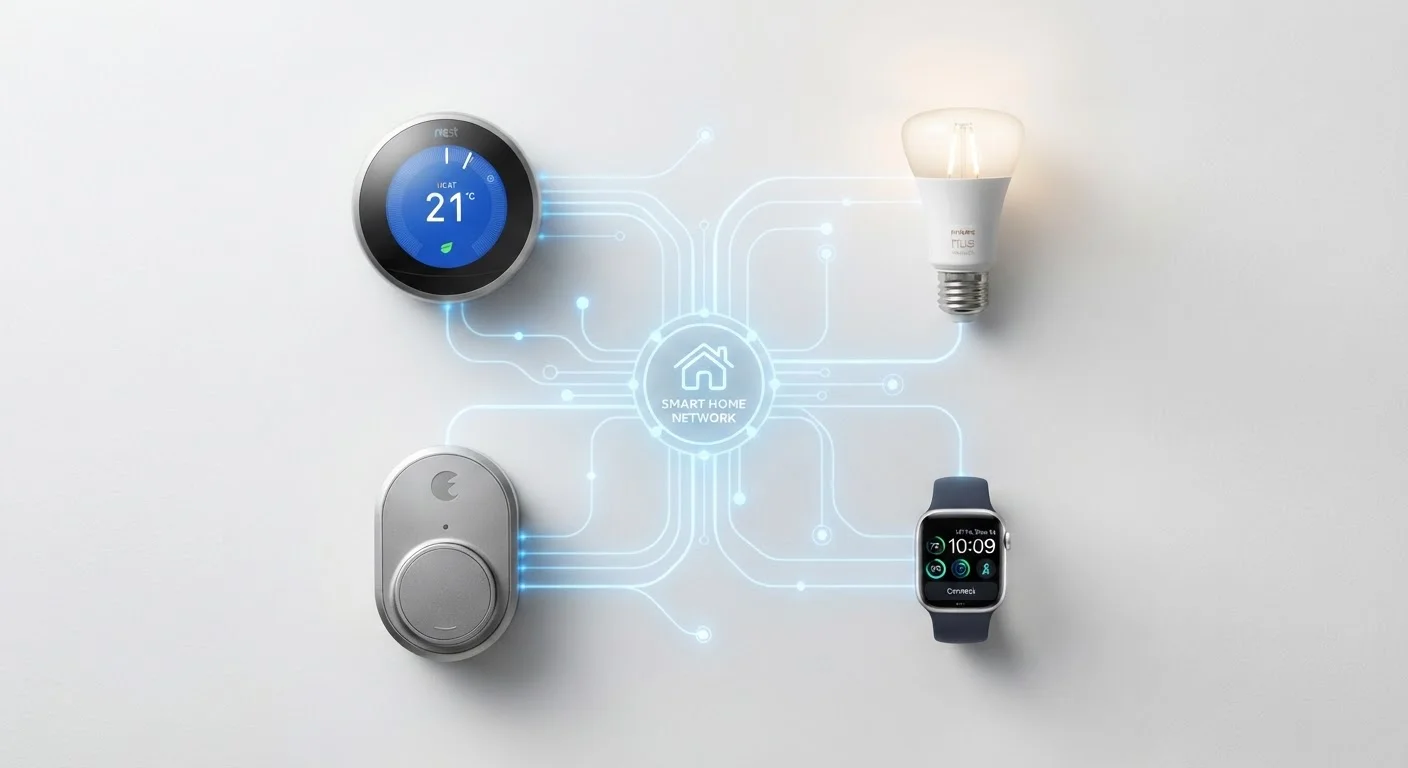
Strip away the marketing language, and the concept is straightforward: everyday objects gain the ability to send and receive information without requiring a person to actively operate them. A thermostat that adjusts itself based on your schedule, a utility meter that reports readings automatically, a vehicle that transmits diagnostic data to a service center - these are all IoT in practice.
IoT (Internet of Things)
The network of physical objects embedded with sensors and software that connect to the internet to collect and share data automatically.
Sensor
A small component that measures a physical condition - like temperature, light, or motion - and converts it into a digital signal.
Gateway
A device, often a home router, that acts as a bridge between your local IoT devices and the wider internet or cloud services.
Firmware
The built-in software that runs on a hardware device. Keeping firmware updated is important for both performance and security.
Cloud platform
Remote servers hosted by a company that store and process data sent from connected devices, often enabling remote access and app control.
Actuator
A component that takes a physical action - like turning on a motor or unlocking a door - in response to a digital instruction.
The term was popularized in the late 1990s, but the underlying idea - connecting machines so they share information - predates the modern internet. What changed was the dramatic drop in the cost of sensors and wireless connectivity, which made it feasible to embed connectivity into low-cost, high-volume consumer products.
How Connected Devices Work
Every IoT device shares a basic architecture. It starts with a sensor or actuator - hardware that either measures something in the physical world (temperature, motion, light) or takes action on it (turning a motor, opening a valve). That sensor connects to a small onboard processor, which packages the data and sends it over a wireless protocol.
The data then travels to a gateway - often your home router - and from there to a remote server or cloud platform where it can be stored, analyzed, or acted upon. Many modern devices also receive instructions back through this same pipeline, enabling remote control from a smartphone app.
One Network, Many Protocols
Not all IoT devices speak the same wireless language. Wi-Fi, Bluetooth, Zigbee, and Z-Wave each serve different use cases depending on range, power consumption, and data volume. When setting up connected devices, checking that a new device uses a protocol already supported in your home can save troubleshooting headaches later.
Different devices use different wireless standards depending on their range and power requirements. For a deeper look at how these protocols compare, see our article on how devices communicate with each other. Processing is increasingly happening closer to the device itself - a shift explained in our piece on edge computing.
Where You Already Encounter IoT
IoT is not a future technology - it is already embedded in environments most people navigate daily.
- Home: Smart thermostats, connected door locks, video doorbells, and voice-activated speakers are among the most widely adopted consumer IoT devices. If you're new to these products, our introduction to smart home devices covers the basics.
- Health: Wearable fitness trackers and some medical devices use IoT to monitor heart rate, sleep patterns, and activity levels, transmitting that data to apps or healthcare providers.
- Transportation: Modern vehicles - particularly electric models - rely heavily on connected technology for over-the-air software updates, remote diagnostics, and navigation. The EV hub covers how connected tech is reshaping personal transportation.
- Retail and logistics: Inventory tracking systems, smart shelving, and connected supply chains all depend on IoT sensors to move goods efficiently.
Privacy and Security Considerations
The same connectivity that makes IoT devices useful also introduces risks that consumers should approach with clear eyes.
IoT devices collect data - sometimes a lot of it. That data may include when you're home, how you use appliances, or in the case of some devices, audio or video from inside your home. Understanding what a device collects, where that data goes, and who can access it is worth investigating before purchase, not after.
Default Passwords Are a Known Risk
Many IoT devices arrive with generic login credentials like 'admin' or '1234' that are publicly documented and frequently exploited. Changing these immediately after setup is one of the most effective steps you can take. Do not rely on network firewalls alone - a compromised device inside your network can still cause significant harm.
Security is a separate but related concern. Many IoT devices run stripped-down operating systems that receive infrequent updates, and some ship with default login credentials that users never change. These factors make poorly maintained IoT devices a common target for exploitation on home networks.
Practical steps include changing default passwords immediately, keeping firmware updated, and - where your router supports it - placing IoT devices on a separate network segment from computers and phones.
What This Means for Everyday Consumers
IoT is not something you opt into with a single decision - it is a set of technologies increasingly woven into products across many categories. Understanding the fundamentals puts you in a better position to evaluate trade-offs rather than simply react to marketing claims.
The core questions to carry with you are straightforward: What data does this device collect? Who controls that data? What happens if the company behind it changes its policies or shuts down? Asking these questions does not require technical expertise - it requires informed skepticism, which is the most durable skill any technology consumer can develop.
For a broader grounding in the terminology that shows up across IoT and adjacent tech topics, our tech trend glossary provides a useful reference.