

Key Takeaways
- Carbon-neutral data centers balance emissions through offsets and renewables, not necessarily by eliminating them.
- Energy consumption in data centers is rising rapidly, driven by AI workloads, streaming, and cloud storage.
- Carbon offsets vary widely in quality and do not always guarantee equivalent emissions reductions.
- Water consumption for cooling is a major environmental cost that carbon-neutral labels rarely address.
- Independent, verifiable certification standards for data center sustainability remain inconsistent.
Carbon-Neutral Data Center
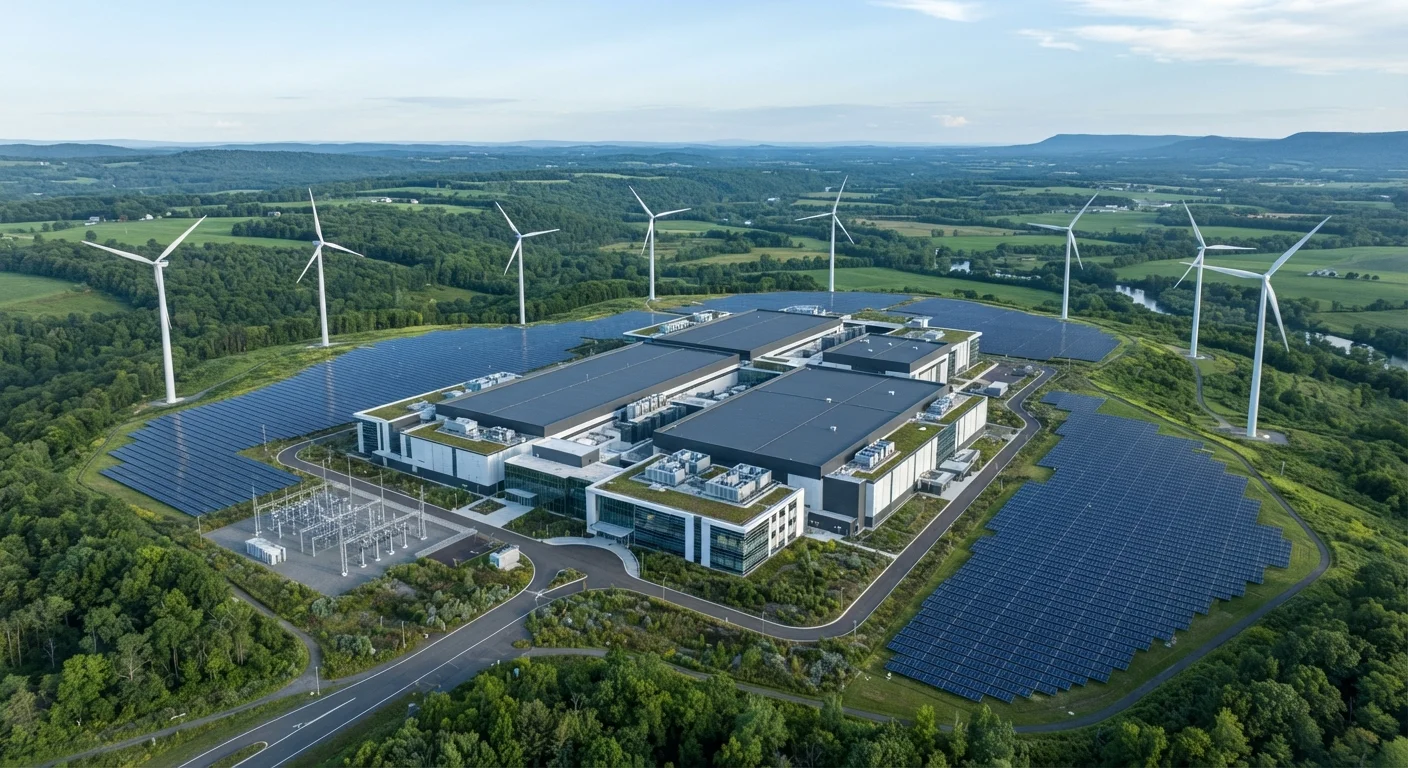
A carbon-neutral data center is one that claims to produce no net greenhouse gas emissions over a given period. This is typically achieved through a combination of using renewable energy sources, purchasing carbon offsets, and improving energy efficiency. The designation does not necessarily mean zero emissions are produced - it means the facility claims to balance or cancel out what it does emit.
Most carbon-neutral claims rely on Scope 1 and Scope 2 emissions accounting, which covers direct emissions and purchased electricity. Scope 3 emissions - from hardware manufacturing, supply chains, and end-user devices - are frequently excluded, which can significantly understate total environmental impact.
Why Data Center Emissions Are Hard to Ignore
Data centers are the physical backbone of the digital world - every cloud file, streamed video, and AI query runs through them. They are also significant energy consumers. Research from institutions including Lawrence Berkeley National Laboratory has estimated that U.S. data centers account for roughly 1-2% of national electricity use, a figure that is widely expected to climb as AI workloads expand.
When major technology companies announce carbon-neutral targets, those headlines are often met with both applause and skepticism. Understanding why requires unpacking what the label actually certifies - and what it quietly leaves out. For a broader look at how tech reckons with its environmental footprint, see our overview of sustainable tech.
1-2%
U.S. electricity used by data centers
Estimated by Lawrence Berkeley National Laboratory; expected to grow as AI and streaming demand increases.
1.1
PUE achieved by leading hyperscale facilities
Power Usage Effectiveness close to 1.0 (perfect) compared to an industry average above 1.5 for older facilities.
Millions of gallons
Water consumed annually by a single large data center
Evaporative cooling systems at major facilities can draw water volumes comparable to a small municipality's annual use.
What 'Carbon Neutral' Actually Accounts For
Carbon neutrality in the data center context typically involves three levers: energy efficiency improvements, sourcing renewable electricity, and purchasing carbon offsets to cover what remains. Each lever carries real limitations.
Energy efficiency is the most straightforward - measured by Power Usage Effectiveness (PUE), a ratio comparing total facility energy to the energy used by computing equipment alone. A PUE of 1.0 is theoretically perfect. Major hyperscale facilities have achieved ratios close to 1.1, but many older commercial data centers remain well above 1.5, meaning significant power is lost to cooling and overhead.
Renewable energy sourcing is more complex. Companies may sign long-term Power Purchase Agreements (PPAs) with wind or solar farms, or they may purchase Renewable Energy Certificates (RECs) - which allow a facility to claim green electricity without necessarily receiving it directly. RECs in particular draw scrutiny because they can be decoupled from actual grid conditions in a given region.
Carbon offsets are used to address whatever gap remains. These credits fund emissions-reduction projects elsewhere - reforestation, landfill gas capture, or clean cookstoves in developing countries. The quality of these projects, and whether they deliver their promised reductions, is not uniform. Understanding what environmental certifications actually verify is key to evaluating these claims critically.
How to Read a Data Center Sustainability Claim
Look specifically for disclosure of PUE scores, the type of renewable energy sourcing (direct vs. REC-based), offset verification standards used, and whether Scope 3 emissions are included. Transparency on all four points is a meaningful signal of a more credible commitment.
The Costs That Carbon Labels Rarely Mention
Carbon accounting, even when done rigorously, tells only part of the environmental story. Two significant costs are routinely absent from carbon-neutral announcements.
Water consumption is one. Cooling is essential to preventing server hardware from overheating, and many facilities use evaporative cooling systems that consume millions of gallons of water annually. A single large data center can use water volumes comparable to a small town, yet water use rarely appears in sustainability headlines.
Hardware lifecycle emissions are another gap. Manufacturing the servers, networking equipment, and storage systems inside a data center generates substantial upstream emissions - sometimes called Scope 3 emissions. Most carbon-neutral claims focus on Scope 1 (direct emissions) and Scope 2 (purchased electricity), leaving the embedded carbon in physical hardware largely unaccounted for.
This is the same accountability gap visible in consumer electronics more broadly. The environmental footprint of video streaming illustrates how end-to-end accounting can produce very different numbers than data center operators report alone.
Scope 3 Emissions: The Hidden Variable
Scope 3 emissions cover indirect impacts across a company's value chain - including hardware manufacturing, employee travel, and the energy use of customers accessing services. For data centers, Scope 3 can represent a significant share of total climate impact, yet they remain optional to report under most current frameworks. Some companies are beginning to disclose them voluntarily, but standardized requirements do not yet exist globally.
What Meaningful Progress Actually Looks Like
Progress is real in some areas. Purpose-built hyperscale facilities from major cloud providers genuinely achieve higher efficiency than the commercial average. Some operators are investing in on-site renewable generation, battery storage, and next-generation cooling technologies like direct liquid cooling, which uses far less water than traditional air systems.
The more credible claims tend to share common characteristics: independently audited energy data, transparent PUE reporting, verified offset quality through standards like the Gold Standard or Verified Carbon Standard (VCS), and public disclosure of Scope 3 emissions even where these are hardest to reduce. Vague claims unsupported by third-party verification should be treated with proportionate skepticism - the same critical lens recommended when evaluating any environmental product label.
For consumers and businesses alike, asking a simple question adds clarity: does this carbon-neutral claim come with audited evidence, or is it primarily a marketing statement? The answer often reveals how seriously the underlying commitment is being made.