

Key Takeaways
- Understeer means the front tires lose grip, causing the car to push wide through a corner.
- Oversteer means the rear tires lose grip, causing the tail to swing outward.
- Front-wheel-drive cars are more prone to understeer; rear-wheel-drive cars to oversteer.
- Correct responses differ: easing off the throttle helps both, but steering correction is opposite.
- Modern stability control systems detect and partially mitigate both conditions automatically.
- Speed and road conditions are the primary triggers - both are largely preventable.
Option A
Understeer
When the front wheels lose grip first.
Best for: Understanding why a car pushes wide through a corner instead of following the intended line.
Option B
Oversteer
When the rear wheels lose grip first.
Best for: Understanding why a car's tail swings out and the vehicle rotates beyond the intended turn.
If you drive a front-wheel-drive vehicle in wet or wintry conditions
Understeer awareness
FWD vehicles are structurally prone to understeer when cornering loads exceed front tire grip. Recognizing the early sensation - a vague, drifting feeling at the front - helps you respond before the car runs wide.
If you drive a rear-wheel-drive or performance vehicle
Oversteer awareness
RWD vehicles can spin the rear tires under power in corners, initiating oversteer quickly. Understanding the counter-steering response is essential before it becomes instinctive.
If you want to improve everyday safety in all conditions
Understeer awareness
Understeer is statistically the more common skid type for most US drivers, given the prevalence of front-wheel-drive cars. Learning to ease off gently rather than panic-brake is the most broadly applicable skill.
What Understeer and Oversteer Actually Mean
Both terms describe a loss of tire traction during cornering, but they involve different ends of the car and require different responses. Getting them confused - or not knowing the difference at all - leads drivers to react in ways that can make a skid worse.
Understeer occurs when the front tires lose grip before the rears do. The car is turning, but the front wheels are sliding, pushing the vehicle toward the outside of the corner rather than following the intended arc. Drivers typically feel this as a vague, floating sensation at the steering wheel - the car simply doesn't respond as expected.
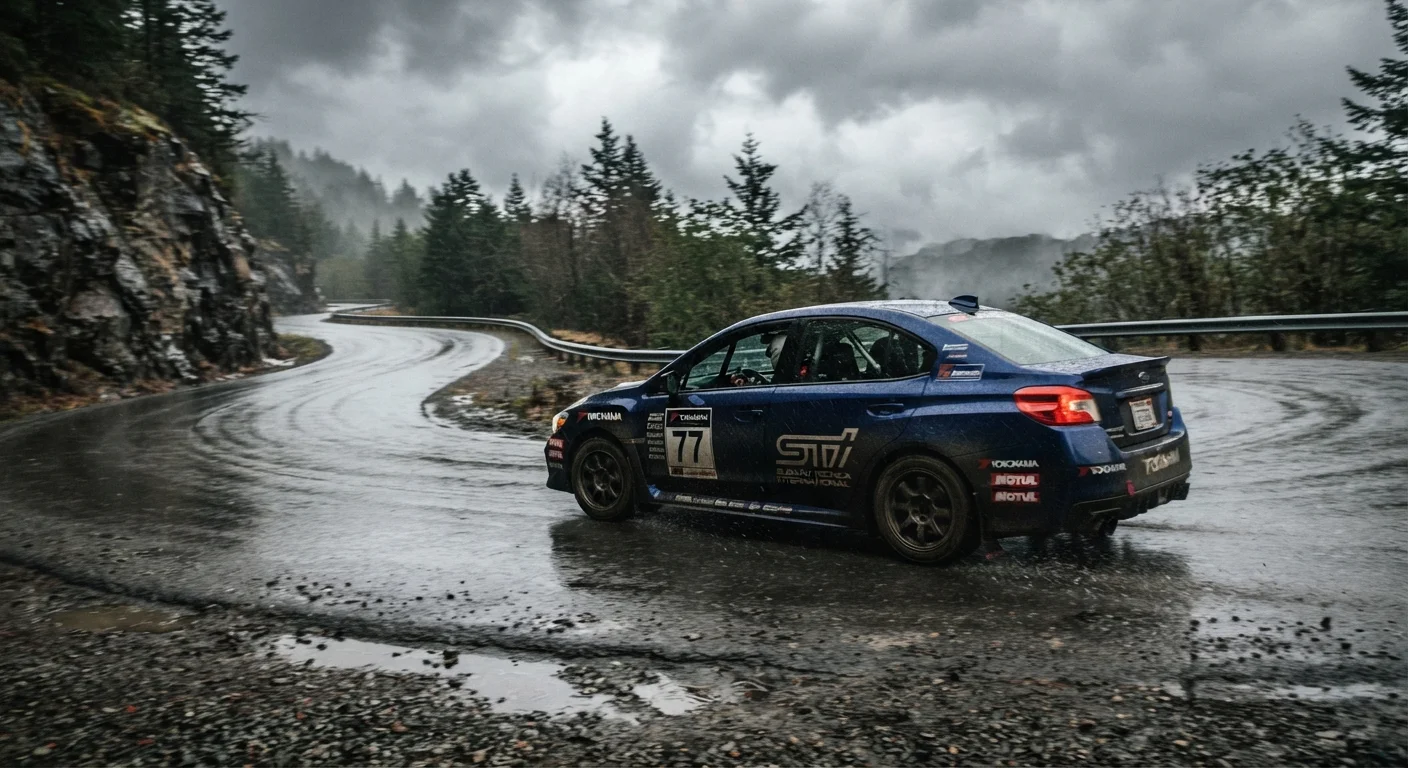
Oversteer occurs when the rear tires lose grip. The rear of the car swings outward, causing the vehicle to rotate more sharply than intended. In extreme cases this leads to a spin. Drivers feel oversteer as a sudden, often alarming yaw - the tail breaks away and the car pivots around its front axle.
Both conditions are heavily influenced by speed, surface conditions, and vehicle layout. See our guide to driving in rain, snow, ice, and fog for how changing surfaces affect grip levels overall.
| Criterion | Understeer | Oversteer |
|---|---|---|
| Which end loses grip | Front tires | Rear tires |
| What the driver feels | Car pushes wide, steering feels vague | Tail swings out, car rotates sharply |
| Common vehicle types | Front-wheel-drive cars | Rear-wheel-drive cars and trucks |
| Primary steering correction | Reduce steering input briefly | Steer into the skid (counter-steer) |
| Throttle response | Ease off smoothly | Ease off smoothly |
| Risk of outcome | Running wide off the road | Spin or loss of directional control |
| ESC intervention | Brakes outer rear wheel | Brakes front outer wheel |
Which Vehicles Are Most Prone to Each
Vehicle drivetrain layout strongly influences which type of skid a driver is more likely to experience.
Front-wheel-drive (FWD) vehicles - the most common layout among everyday US passenger cars - are naturally more susceptible to understeer. The front wheels handle both steering and power delivery, which can overwhelm front tire grip in corners, especially under acceleration.
Rear-wheel-drive (RWD) vehicles, including many trucks and performance cars, are more prone to oversteer when power is applied mid-corner, spinning the rear wheels and pushing the tail wide.
All-wheel-drive (AWD) vehicles distribute power across all four wheels, which can delay the onset of both conditions - but AWD doesn't eliminate skids. When grip limits are reached, AWD vehicles can still understeer or oversteer, sometimes with less warning because drivers are accustomed to high confidence in those vehicles.
2012
ESC mandatory on all new US passenger cars
The National Highway Traffic Safety Administration (NHTSA) required electronic stability control on all new passenger vehicles sold in the US starting with model year 2012.
~25%
Fatal crashes ESC estimated to prevent
NHTSA research has estimated that ESC could prevent a substantial share of single-vehicle fatal crashes, particularly rollovers and loss-of-control events.
Electronic stability control (ESC), mandatory on all new US passenger vehicles since 2012, detects these conditions using sensors and applies targeted brake pressure to individual wheels to help correct the skid. ESC is a meaningful safety aid, but it has limits - particularly on black ice or when entering a corner too fast for any system to compensate.
How to Respond: Two Different Corrective Approaches
The instinctive response to a skid - yanking the wheel or stamping the brakes - is often wrong for both understeer and oversteer. Correct recovery depends on identifying which end of the car has lost grip.
Correcting Understeer
- Ease off the throttle smoothly - don't brake hard, which can shift weight forward and further reduce rear grip.
- Reduce steering input slightly - counterintuitively, turning more aggressively increases front tire slip angle and worsens the push. Straightening briefly allows the tires to regain grip.
- Once grip returns, steer toward your intended path gently.
Correcting Oversteer
- Ease off the throttle - removing drive force from the rear wheels reduces the spinning that caused the slide.
- Steer into the skid (counter-steer) - if the rear is swinging right, steer right. This is the opposite of many drivers' instincts.
- Be ready to catch a secondary slide in the opposite direction once the rear begins to return.
In either case, smooth, deliberate inputs outperform panic reactions. Hydroplaning involves a related but distinct loss of traction where water film lifts all four tires - recovery there follows its own logic.
AWD Does Not Eliminate Skid Risk
All-wheel drive improves traction during acceleration and in slippery conditions, but it does not increase a vehicle's ability to steer or stop. Once cornering forces exceed tire grip - regardless of drivetrain - understeer or oversteer can occur. Drivers of AWD vehicles should avoid assuming their vehicle is immune to skids, particularly at higher speeds or on icy roads.
Prevention: The Most Reliable Strategy
Most understeer and oversteer events are preventable through conservative entry speed, proper tire maintenance, and anticipating surface conditions before a corner rather than reacting inside one.
Enter corners slower than you think you need to. Speed is the primary variable. A corner that feels manageable at 40 mph may exceed your tires' grip limit at 50 mph on the same road.
Maintain tire condition. Worn tread significantly reduces the grip threshold at which understeer or oversteer begins. Regular checks of tread depth and inflation pressure are among the simplest preventive measures available.
Recognize high-risk surfaces early. Cold pavement, wet roads, gravel, and painted road markings all reduce available traction before a skid begins. Adjusting speed and corner entry before these surfaces appear is more effective than correcting a skid that has already started. Related: what to do during a sudden tire blowout - another situation where calm, deliberate inputs prevent escalation.
Understanding the mechanics behind skids doesn't require advanced driving experience - it requires recognizing which end of the car is sliding and applying the correct correction calmly. That knowledge, combined with appropriate speed management, covers the vast majority of real-world situations US drivers encounter.