

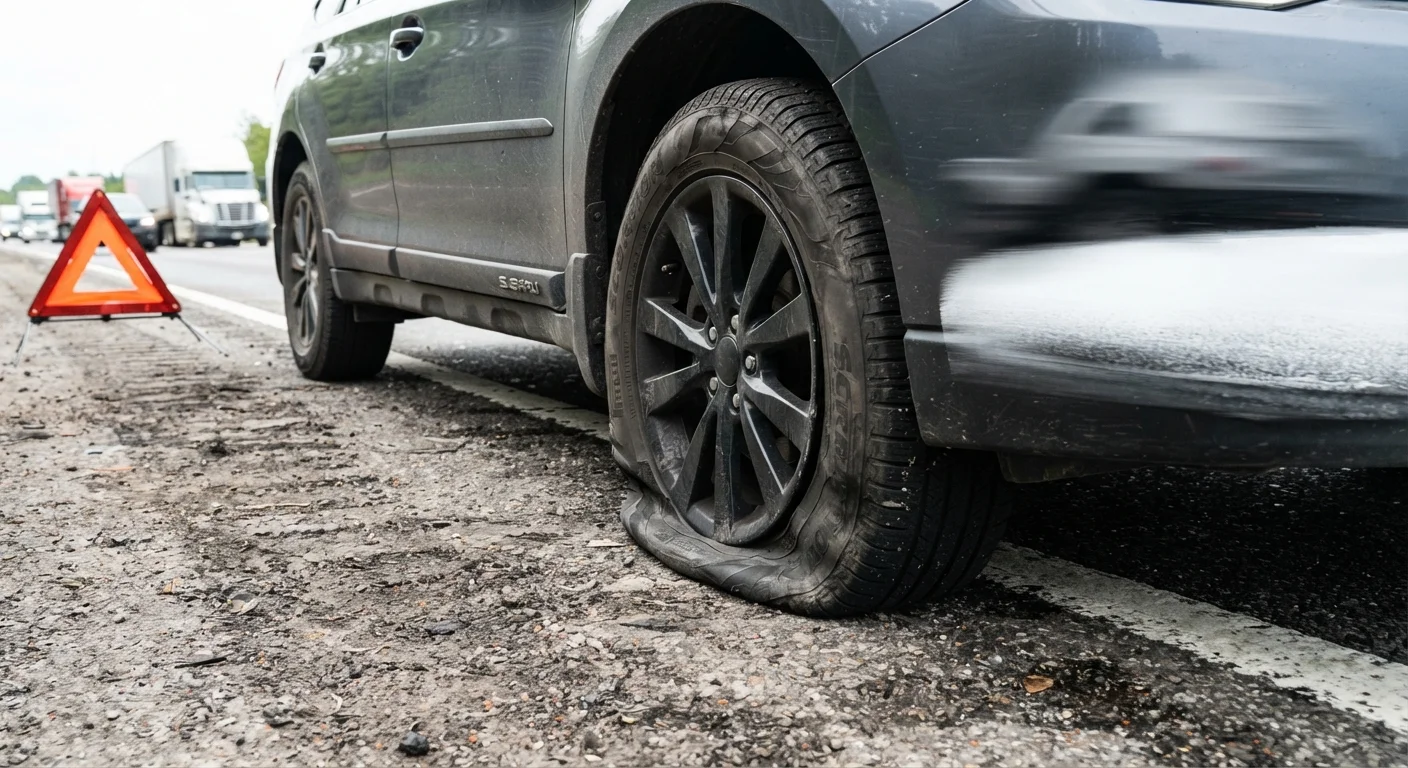
Key Takeaways
- Do not brake hard immediately after a blowout - it can cause the vehicle to spin.
- Gently accelerate briefly to stabilize the car, then gradually ease off the gas.
- Steer firmly toward your lane and guide the car to a safe stopping point.
- Hazard lights and a slow, controlled exit are essential before stopping on a shoulder.
- Inspection by a qualified mechanic should follow every blowout, even if damage looks minor.
What you will need
Why Blowouts Demand a Different Response
A tire blowout is not the same as a gradual flat. When a tire fails suddenly - from a road hazard strike, overloading, severe underinflation, or structural defect - the rapid pressure loss creates an immediate aerodynamic and mechanical imbalance. The vehicle yaws sharply toward the failed tire, and drivers instinctively respond by braking hard and jerking the wheel. Both reactions can cause loss of control.
Understanding why the counterintuitive response works helps you commit to it under stress. Briefly holding or adding light throttle keeps the drivetrain load balanced and prevents the deflated corner from digging into the pavement. Smooth steering keeps momentum in your favor. Think of it as working with physics rather than against it - similar to the approach described in our guide on regaining control after hydroplaning.
Do Not Slam the Brakes
Hard braking during a blowout is one of the most dangerous instinctive responses a driver can make. It shifts weight unevenly onto the damaged corner, dramatically increasing the risk of a spin or rollover. Keep both hands on the wheel, resist the brake pedal, and follow the controlled steps below.
Common blowout causes include driving on chronically underinflated tires, tires worn past the minimum tread depth of 2/32 of an inch, impact with road debris or potholes at speed, and overloading a vehicle beyond its Gross Vehicle Weight Rating (GVWR). None of these are entirely unpredictable, which is why preventive maintenance matters.
Prevention Starts With Tire Maintenance
Many blowouts result from sustained underinflation, worn tread, or driving over debris. Checking tire pressure monthly - including the spare - and inspecting tread depth regularly can significantly reduce your blowout risk. Consult your owner's manual for the correct inflation specification for your vehicle.
What to Do After You've Stopped
Safely reaching the shoulder is only the first part of the process. Once stopped, your priority shifts to visibility and decision-making. Keep hazard lights running at all times. If you have reflective road triangles or flares in your trunk, deploy them - these are particularly important on high-speed roads where rear-end collisions to stopped vehicles are a documented hazard.
If passengers are with you, calm and focused communication matters. A panicked passenger can increase your cognitive load at exactly the wrong moment - our article on managing a panicking passenger covers strategies for keeping the cabin calm under pressure.
Stay in the Vehicle Until It's Safe
Once stopped on the shoulder, do not exit into active traffic lanes. Turn on your hazard lights, assess surrounding traffic flow, and exit from the passenger side or away from the roadway whenever possible. If you are on a high-speed highway and feel unsafe, remain in the vehicle with your seatbelt fastened and call for roadside assistance.
When deciding whether to change the tire yourself, factor in road conditions, your physical ability, familiarity with the jack and spare procedure, and the structural condition of your spare. Many modern vehicles use compact temporary spares (sometimes called "donuts") that carry speed and distance restrictions - typically no more than 50 mph and 50-70 miles. Check your owner's manual for specifics. For a comprehensive checklist of actions once you're stationary, see our guide to handling roadside emergencies.
After the event - regardless of how the tire was changed or who changed it - have a qualified mechanic inspect the wheel assembly, brake components, and adjacent suspension parts. Blowouts can cause secondary damage that isn't visible from the outside.