

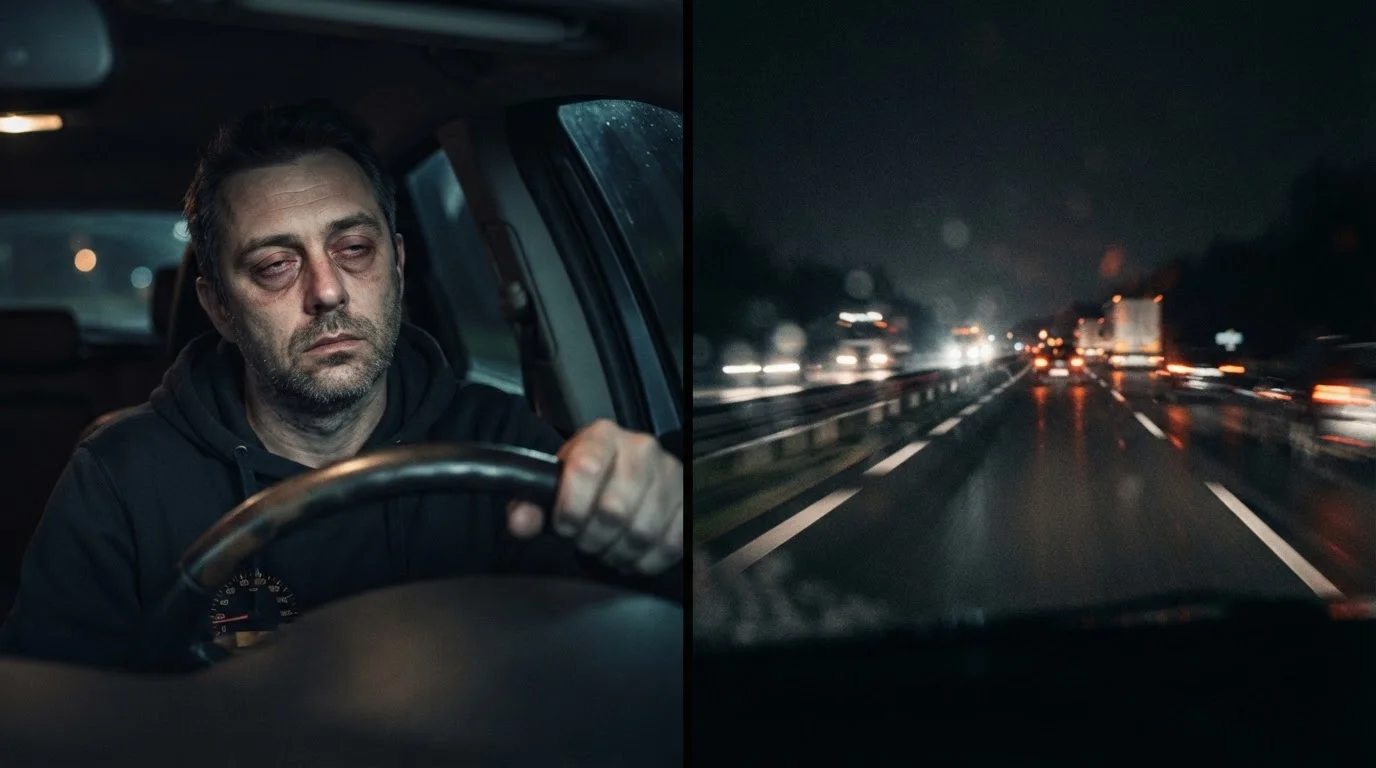
Key Takeaways
- Being awake for 18 hours produces impairment comparable to a 0.05% blood alcohol concentration.
- Drowsy driving is harder to self-detect than alcohol impairment - drivers often don't realize how tired they are.
- Both conditions severely degrade reaction time, lane-keeping, and hazard recognition.
- Microsleep episodes - lasting 4 to 5 seconds - can occur without any warning at highway speeds.
- Unlike alcohol, there is no roadside test to measure fatigue, making enforcement difficult.
Our Verdict
Research consistently shows that severe sleep deprivation produces cognitive and physical impairments that rival or exceed those caused by moderate alcohol intoxication. While drunk driving has clearer legal thresholds and enforcement tools, drowsy driving may be harder for drivers to self-regulate because fatigue impairs the brain's ability to accurately assess its own state. Both are serious, preventable causes of crashes on US roads.
| Best for | Recommended |
|---|---|
| Understanding the science of impairment | Review both fatigue and alcohol research together |
| Drivers on long overnight routes | Prioritize fatigue management strategies |
| Those concerned about legal risk and enforcement | Understand alcohol thresholds and drowsy driving laws by state |
How Each Type of Impairment Affects the Brain
Alcohol and fatigue impair driving through overlapping but distinct mechanisms. Alcohol is a central nervous system depressant that slows neurotransmitter activity, reducing reaction speed, blurring judgment, and lowering inhibition. The effects scale predictably with blood alcohol concentration (BAC) - the measurable amount of alcohol in the bloodstream.
Sleep deprivation affects the prefrontal cortex - the region responsible for decision-making, risk assessment, and impulse control - in ways that closely mirror alcohol's impact. Research published in journals including Nature and Occupational and Environmental Medicine has shown that staying awake for 17 to 18 continuous hours produces performance deficits roughly equivalent to a BAC of 0.05%, and 24 hours without sleep is associated with impairment comparable to approximately 0.10% BAC, above the legal limit in every US state.
One critical difference: a drunk driver may be more aware they are impaired. Fatigue suppresses the very cognitive functions needed to recognize fatigue, meaning a drowsy driver is often the last person to realize they are a hazard.
Comparing Key Driving Abilities
| Driving Ability | Drowsy Driving | Drunk Driving (0.08% BAC) | |
|---|---|---|---|
| Reaction time | Significantly slowed | Significantly slowed | |
| Lane-keeping accuracy | Severely degraded | Severely degraded | |
| Hazard recognition | Impaired, inconsistent | Impaired, consistent decline | |
| Risk of sudden blackout | High (microsleep) | Low | |
| Self-awareness of impairment | Poor - hard to self-detect | Variable but often present | |
| Measurable by roadside test | No current standard test | Yes - breathalyzer, blood test |
As the table illustrates, both impairments degrade driving ability across nearly every measurable dimension. Drowsy driving carries a specific danger in the form of microsleep - brief, involuntary sleep episodes lasting 2 to 5 seconds. At 60 mph, a 4-second microsleep means a vehicle travels roughly 350 feet completely unguided. Alcohol does not typically produce this abrupt loss of consciousness, though it does cause sustained lapses in attention and coordination.
For more on how the brain struggles to manage multiple demands behind the wheel, see our breakdown of distracted driving research.
The Enforcement Gap
Drunk driving has well-established legal thresholds: a BAC of 0.08% (or 0.04% for commercial drivers) triggers per se DUI charges in most states. Breath and blood testing make enforcement relatively straightforward. Drowsy driving has no equivalent test. Law enforcement must rely on observable behavior - swerving, failure to brake, witness reports - and driver admissions.
Some states have enacted specific drowsy driving statutes, and a small number allow enhanced charges when severe fatigue contributes to a fatal crash. However, prosecution remains difficult. Understanding how reckless and careless driving are defined under law is relevant here - see how courts typically distinguish these violations.
Drowsy Driving Can Still Carry Legal Consequences
Even without a standardized fatigue test, drivers who cause crashes while severely sleep-deprived can face reckless driving charges, civil liability, or - in fatal cases - vehicular manslaughter charges depending on the state. The absence of a breathalyzer equivalent does not mean drowsy driving is legally risk-free.
Younger and newer drivers are statistically overrepresented in both fatigue-related and alcohol-related crashes. Research into teen driver crash patterns sheds light on why this age group faces compounded risk.
Practical Risk Reduction for Drivers
Because the two impairments are often treated differently - one as a legal matter, one as a personal health choice - drivers may underestimate fatigue's danger. A few evidence-supported principles apply:
- Do not rely on willpower alone. Stimulants like caffeine can temporarily mask fatigue but do not restore full cognitive function.
- A short nap before a long drive matters. Even 20 minutes of sleep can meaningfully improve alertness over a multi-hour trip.
- Peak fatigue windows are predictable. Drowsiness tends to peak between 2-6 a.m. and 2-4 p.m. - plan long drives around these windows where possible.
- Sharing driving duties is effective. Rotating drivers on long trips allows each person genuine rest rather than passive riding.
Night driving introduces compounding risks - reduced visibility and a higher concentration of drowsy and impaired drivers on the road. Adjusting your habits after dark is a practical step that addresses both concerns.
Plan Your Route Around Rest
If you are driving more than two hours, build in a planned stop every 90 minutes to 2 hours. Even a brief walk and a caffeine break can help sustain alertness. If you find yourself yawning repeatedly, struggling to keep your eyes open, or drifting in your lane, treat those as hard stops - pull over safely and rest before continuing.