

Key Takeaways
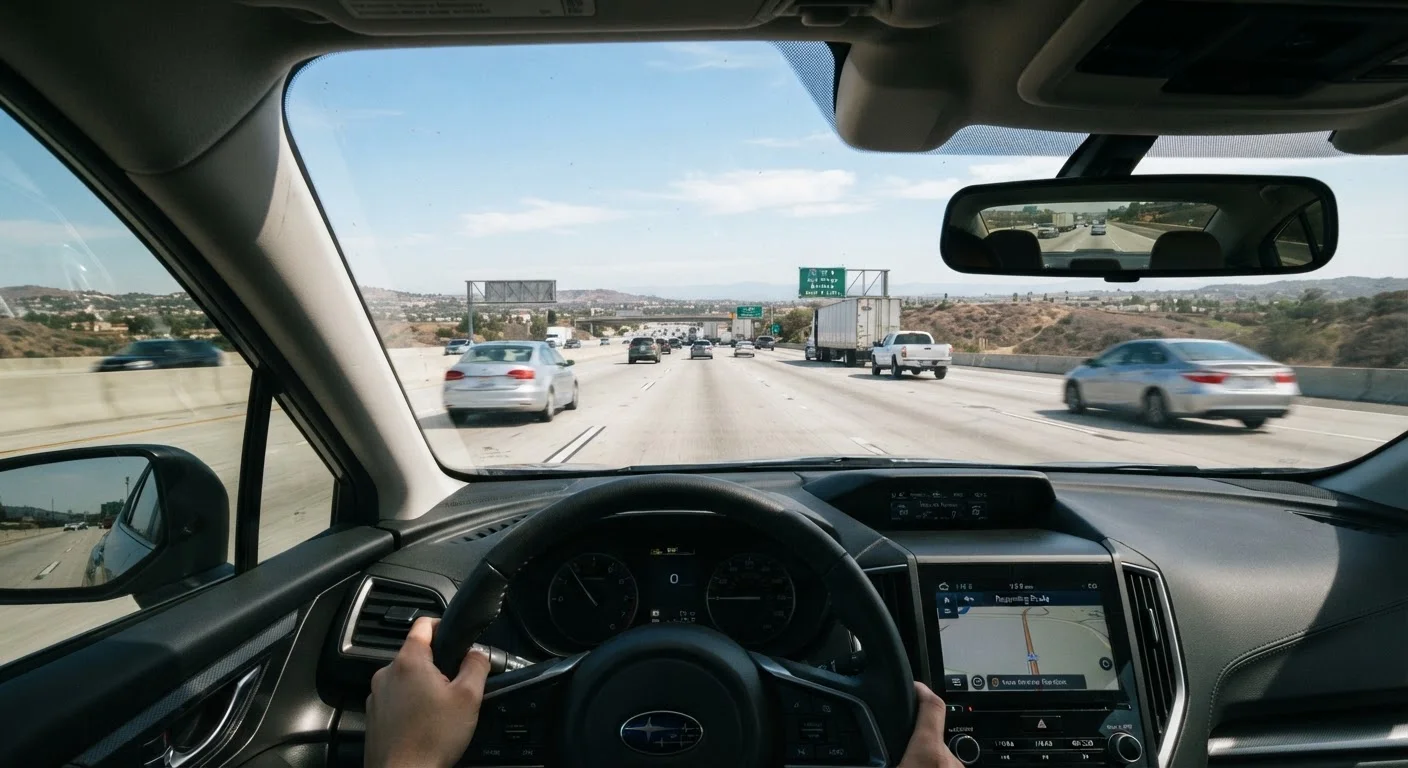
- Experienced drivers look 12-15 seconds ahead, not just at the car in front of them.
- Peripheral vision and mirror checks work together to build a full picture of surrounding traffic.
- Anticipating hazards - rather than just reacting to them - is the core skill that separates skilled drivers from beginners.
- Scanning patterns can be learned and improved with deliberate, consistent practice.
- Road context, not just road rules, shapes how skilled drivers adjust their speed and positioning.
The Difference Between Looking and Seeing
Every licensed driver looks at the road. What separates experienced drivers isn't eyesight - it's where they direct their attention and how they interpret what they find there. Beginners tend to fixate on the vehicle directly ahead. Skilled drivers treat the entire visible road environment as information, constantly building a mental model of what's happening now and what's likely to happen next.
This distinction matters because driving hazards rarely appear without warning. A car braking three vehicles ahead, a pedestrian stepping toward the curb, a dog near the road's edge - these are all detectable before they become emergencies. Seeing them early is what creates reaction time. For a deeper look at how these principles tie together, see how defensive driving actually works.
Core Scanning Practices of Skilled Drivers
The following practices reflect how experienced, safety-conscious drivers habitually process the road. None require special ability - all can be developed through deliberate repetition.
Look 12-15 seconds ahead, not just at the vehicle in front of you
At highway speeds, 12-15 seconds of visual lead time corresponds to roughly a quarter-mile of road. This gives your brain time to process and respond before a situation becomes critical. Fixating on the bumper ahead compresses reaction time to a fraction of a second.
Use a systematic mirror check every 5-8 seconds
Traffic around you changes constantly. Regular mirror checks keep your mental map of surrounding vehicles current, so lane changes and merges aren't a guess. Irregular or rare mirror use leaves dangerous gaps in your awareness.
Read road context, not just road markings
Signs and lane markings tell you the rules; road context tells you what's actually happening. Parked cars suggest potential door openings. A school zone mid-afternoon means children may be present near the road, not just in crosswalks. Experienced drivers adjust their speed and attention based on environment, not just posted limits.
Identify escape routes before you need them
In a developing hazard, drivers who've already noted where open space exists respond faster and more calmly than those who search for options in the moment. Knowing your outs reduces panic and improves decision quality under pressure.
Watch for behavioral cues from other road users
Swerving, slow drift, sudden deceleration, and erratic signaling all signal potential hazards before any collision risk exists. Interpreting other drivers' behavior predictively - rather than just reactively - is a hallmark of skilled road reading.
Building Your Scanning Habit
Scanning well isn't about being anxious or hypervigil - it's about making visual habits automatic so they don't require conscious effort. The goal is a relaxed, wide-field awareness that notices changes without fixating on any single thing.
Understanding your vehicle's blind spots is a closely related skill - certain areas around every car are simply invisible to mirrors alone. Learn where blind spots typically fall and how to manage them to complement your scanning routine. When driving on unfamiliar roads, these habits matter even more - navigating unfamiliar roads without panicking starts with the same attentional discipline. And when sharing lanes with large trucks, knowing how to share the road with semi-trailers helps you apply your scanning skills where the stakes are highest.