

Key Takeaways
- Red on road signs always signals a prohibition, restriction, or mandatory stop.
- Orange is reserved exclusively for construction and maintenance work zones.
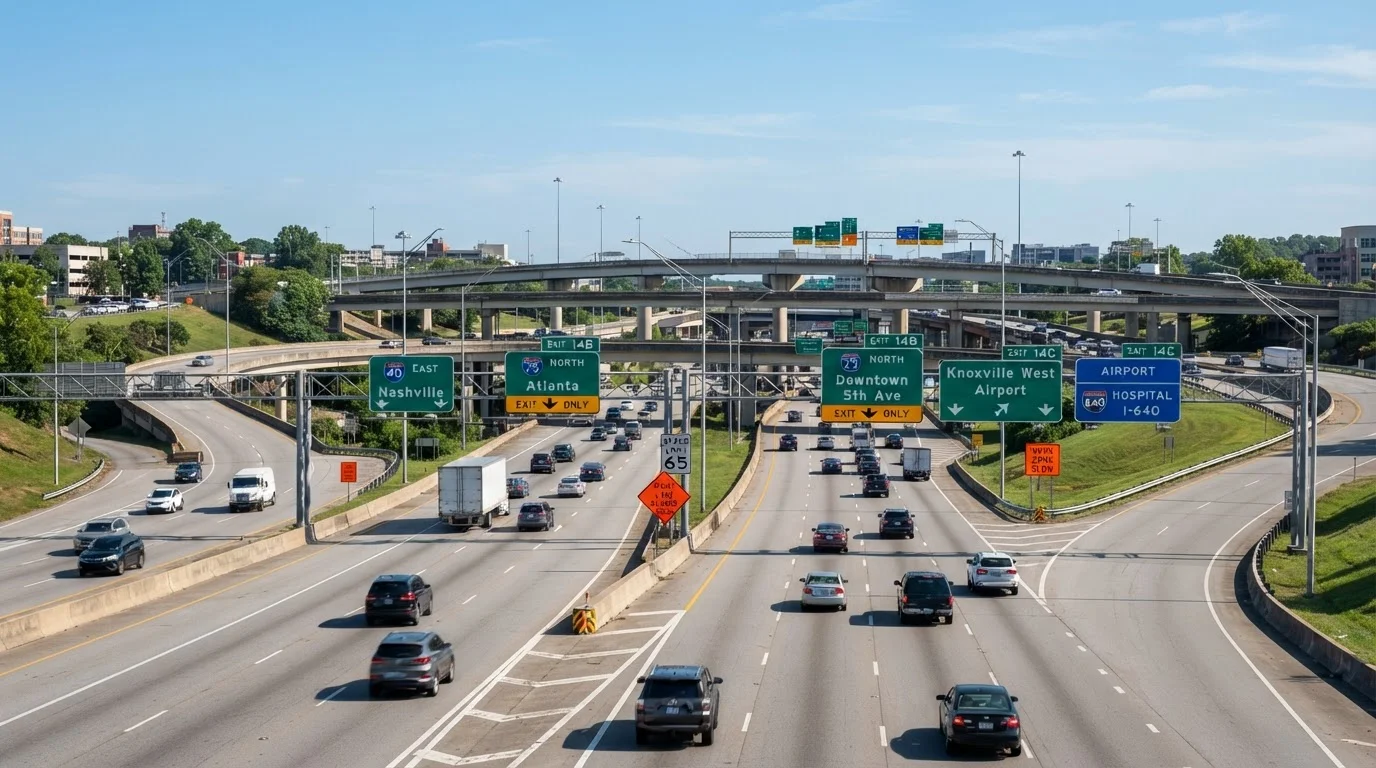
- Green signs provide directional and distance guidance on highways and streets.
- Yellow indicates a general warning about road conditions or hazards ahead.
- Blue signs point drivers to services such as hospitals, fuel, and food.
- The MUTCD standardizes these colors across all 50 US states for consistency.
Road Sign Color Coding
In the United States, road sign colors are standardized by the Manual on Uniform Traffic Control Devices (MUTCD), a federal guideline that assigns specific meanings to each color. This system allows drivers to quickly understand a sign's purpose - regulatory, warning, informational - before reading its text. The color-coding is consistent across all 50 states, which makes it universally recognizable.
The MUTCD is maintained by the Federal Highway Administration (FHWA) and is adopted, sometimes with modifications, by individual states. Color specifications are defined using precise Munsell or retroreflectivity standards to ensure visibility day and night.
The System Behind the Colors
American road signs aren't colored arbitrarily. The Manual on Uniform Traffic Control Devices (MUTCD), published by the Federal Highway Administration, assigns a specific meaning to each color used on public roads. This standardization means a driver from Maine can read signs in Arizona just as instinctively, because the color-coding carries the same message everywhere.
Understanding the system helps drivers process sign information faster - especially useful when traveling at highway speeds where reading time is limited. Here's what each color communicates.
11
Official colors in the US road sign system
The MUTCD defines 11 standardized colors for traffic control devices used on public roads across the United States.
~50%
Faster sign recognition with color coding
Research in traffic engineering consistently shows that color-coded signs are processed significantly faster than text-only equivalents at driving speeds.
700+
Standard sign designs in the MUTCD
The Manual on Uniform Traffic Control Devices contains over 700 standardized sign designs, each assigned a specific color, shape, and message.
Red, White, and Black: Rules You Must Follow
Red is reserved for the highest-priority regulatory messages - stop, yield, do not enter, and wrong-way warnings. These signs communicate legally enforceable restrictions that apply to all drivers at that location. Ignoring a red sign isn't just dangerous; it's a traffic violation.
White with black text covers most other regulatory signs: speed limits, turn restrictions, lane-use controls, and similar rules. These are the signs that tell you what the law requires in a specific stretch of road. For a deeper look at how posted limits interact with legal obligations, see our article on advisory vs. regulatory speed limits.
Together, red and white-black signs form the regulatory backbone of road communication - they tell you what you must or must not do.
Yellow and Orange: Warnings and Work Zones
Yellow signs warn drivers of upcoming hazards or changes in road conditions. Common examples include curve-ahead signs, merge warnings, pedestrian crossing alerts, and signal-ahead markers. A yellow sign doesn't prohibit anything - it asks you to be prepared and adjust your speed or attention accordingly.
A related variant, yellow-green, is specifically designated for pedestrian, bicycle, and school zone warnings. If you've noticed a slightly brighter, fluorescent-looking sign near a school or trail crossing, that's intentional - the color is engineered for higher visibility.
Orange is exclusively for construction and maintenance zones. When you see orange, expect reduced speed limits, lane shifts, workers present, or equipment on or near the roadway. These zones carry elevated fines in most states. Orange signs are temporary by nature and are removed when work concludes.
Slow Down Before You Read
In active construction zones, reduce your speed as soon as you see orange - don't wait until you've read the specific sign. The color itself is your first cue that conditions ahead require extra caution. Many states enforce significantly higher fines for speeding in work zones, especially when workers are present.
Green, Blue, and Brown: Guidance and Services
Green signs provide directional and navigational information - highway exits, route numbers, distances to cities, and street name identification. They're informational rather than restrictive, helping drivers orient themselves without implying urgency. The familiarity of green highway signs is part of why they work: drivers don't need to slow down to process them.
Blue signs point drivers toward services: gas stations, hospitals, rest areas, motels, and food. On interstates, you'll often see blue signs listing specific service options at the next exit. While these signs serve a navigational function, their blue color signals that what follows is a service amenity rather than a road condition or legal directive.
Brown signs direct drivers to recreational, cultural, and scenic destinations - national parks, historic landmarks, campgrounds, and similar attractions. They share the same navigational role as green signs but are visually distinct so drivers can immediately identify a destination as leisure-oriented rather than a standard road route.
Understanding these color cues works hand-in-hand with other road rules. For instance, green signs often appear at intersections where right-of-way rules also apply. Keeping both in mind helps drivers navigate complex situations more confidently.
Newer Colors: Pink and Coral
The MUTCD has expanded its color palette in recent years. Pink is now designated for incident management - temporary signs deployed at accident scenes or emergency detour routes. Coral has been proposed for evacuation route signage in some contexts, though its adoption varies by jurisdiction.
These additions reflect the evolving complexity of traffic management and emergency response. While pink signs remain uncommon on everyday roads, knowing they signal an active incident - rather than routine construction or a permanent rule - helps drivers respond appropriately.
Road sign literacy connects to broader driving awareness. Just as you'd read a dashboard warning light to understand your vehicle's status (see our guide on reading dashboard warning lights), reading sign colors correctly keeps you informed about the road environment around you.
Color Alone Doesn't Tell the Whole Story
Sign color communicates category and urgency, but shape adds another layer of meaning. Stop signs are octagonal, yield signs are triangular, and warning signs are typically diamond-shaped. Together, color and shape allow drivers to begin interpreting a sign even before they can read its text - a design choice that improves reaction time on high-speed roads.