

Key Takeaways
- Move your vehicle promptly once charging is complete to free up the station for other drivers.
- ICE-ing - when a non-EV blocks a charging spot - is a growing frustration with real consequences for EV drivers.
- Charging to 80% at DC fast chargers is faster, battery-friendlier, and more considerate during peak times.
- Most charging networks have idle fees that kick in automatically after a session ends.
- Simple courtesies - like not unplugging someone else's car - go a long way in shared charging environments.
Why Charging Etiquette Actually Matters
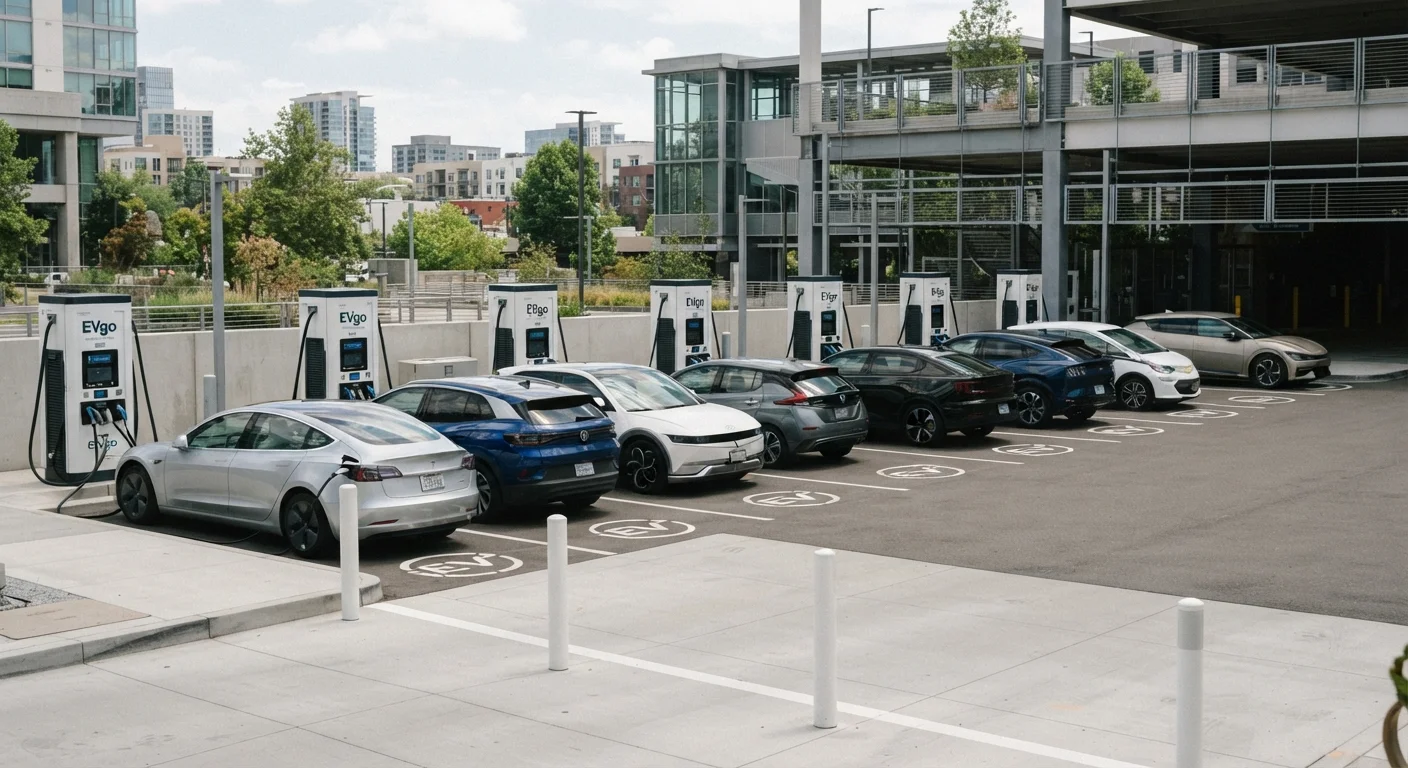
Public EV charging infrastructure is growing, but it's still a shared, sometimes scarce resource. Unlike gas stations where a fill-up takes three minutes, EV sessions can run anywhere from 20 minutes at a DC fast charger to several hours at a Level 2 station. That time difference changes how drivers need to think about shared space.
The state of public charging in America makes clear that station density varies widely by region - in rural and suburban corridors, a single station with four ports may serve dozens of drivers a day. When one person monopolizes a stall unnecessarily, the ripple effect is real and immediate.
Etiquette at public chargers isn't just politeness. It's the shared logic that keeps a limited system functional for everyone.
Move your vehicle as soon as charging is complete
Leaving a fully charged car parked at a stall blocks access for drivers who may be low on range. At high-demand stations, even a 30-minute overstay during peak hours can create a cascading wait for multiple drivers.
Charge to around 80% at DC fast chargers when possible
Fast chargers slow significantly above 80% due to battery chemistry - the final 20% can take as long as the first 80%. Stopping at 80% keeps sessions shorter, reduces queue times, and aligns with most automakers' battery care guidance.
Never unplug another driver's vehicle without clear indication they are finished
Unplugging someone else's car mid-session can interrupt a critical charge, potentially leaving a driver stranded. It also violates the basic trust that makes shared infrastructure work.
Respect informal queues at busy stations
At high-traffic stations without automated queue systems, drivers arriving first have an understood priority. Cutting the line creates conflict and undermines the cooperative dynamic EV drivers depend on.
Keep cables tidy and return equipment to its holster after use
A cable left lying on the ground can be damaged by vehicle tires, creates a trip hazard, and signals to the next driver that the station may be out of service. Proper cable management keeps shared equipment functional longer.
The Core Rules Most EV Drivers Follow
The EV community has developed a set of practical norms, most of them born out of frustration and problem-solving. None are legally enforced in most jurisdictions, but they're widely recognized across charging networks and online EV communities.
One nuance worth understanding: etiquette differs slightly by charger type. At DC fast chargers - designed for road-trip top-ups - the expectation is to charge and move. At Level 2 stations in parking garages or retail lots, longer stays are more common and often acceptable, especially if the lot itself is low-traffic. Context matters.
If you're still working out the best strategy for longer trips, navigating public networks across the US offers a practical breakdown of how different network types operate and what to expect at each stop.
Common Frustrations - and How to Avoid Causing Them
A few behaviors consistently top the list of complaints among EV drivers at public stations:
- ICE-ing: When a gasoline-powered vehicle (called an ICE vehicle - internal combustion engine) parks in an EV charging spot without charging, it blocks access entirely. Some municipalities have begun issuing fines for this, but enforcement is inconsistent. EV drivers can't do much when it happens to them, but they can advocate for clearer signage and enforcement at facilities they use regularly.
- Lingering past a full charge: Most network apps send a push notification when charging is complete. Staying parked for an hour after that wastes a stall. Many networks - including several major US providers - automatically apply idle fees once a session ends and the lot isn't empty. Check your network's policy in the app before you step away.
- Unplugging another car without permission: Unless a vehicle is clearly done charging and blocking the only available port, unplugging someone else's car is broadly considered a serious breach. Some drivers leave contact info on their dashboard for exactly this scenario.
- Skipping the queue: At busy stations, an informal queue often forms. Jumping ahead of a driver who arrived first is poor form and creates conflict.
Idle Fees: What Most Drivers Don't Check
Most major US charging networks apply idle fees automatically once a session ends and the station reports other vehicles waiting. These fees - typically a per-minute charge - are designed to incentivize timely vehicle removal. The specifics vary by network and location, so it's worth reviewing the fee structure in the app you use most before your next session. In some cases, fees are waived if the lot is empty.
Habits at the charger also intersect with battery health. Repeatedly charging to 100% at fast chargers adds thermal stress over time. The charging mistakes that quietly shorten EV battery life are worth knowing - good etiquette and good battery practice often align.
Making Public Charging Work Better for You
The simplest way to reduce friction at public stations is to plan your sessions around 80%. DC fast chargers slow significantly after 80% state of charge, so the last 20% takes disproportionately long. Stopping at 80% gets you back on the road faster, reduces the load on the battery, and frees the stall for the next driver sooner. It's a practice that benefits everyone without any real cost to you on most trips.
If you're new to public charging, understanding what public charging actually costs helps you make informed decisions about when and where to charge. Session fees, idle fees, and time-of-use rates all affect the math - and knowing them helps you plan efficient, courteous stops.
For drivers who rely heavily on public infrastructure, setting up home charging where possible takes significant pressure off the public network. Setting up home EV charging is often simpler than drivers expect, and reserving public fast chargers for road trips is both practical and considerate.
Plan Ahead to Avoid Peak-Hour Congestion
Public charging demand tends to spike during commute hours and on holiday travel days. If your schedule allows, charging during off-peak windows - mid-morning or late evening - typically means shorter waits and, at some time-of-use rate stations, lower per-kWh costs. Checking station availability in real time through network apps before you arrive helps you avoid wasted trips to full or out-of-service locations.
Public charging works on trust and shared norms. The drivers who follow these practices consistently tend to have fewer frustrating experiences - and they make the network less frustrating for everyone around them.