

Key Takeaways
- The sticker price is only one part of what an EV costs you over time.
- Energy costs for EVs are generally lower than gasoline but vary significantly by region and driving habits.
- EVs typically have fewer routine maintenance needs, though some service costs remain.
- Insurance premiums for EVs can run higher than comparable conventional vehicles.
- Depreciation patterns for EVs differ from traditional cars and deserve careful consideration.
- Home charging equipment represents an upfront infrastructure cost unique to EV ownership.
Total Cost of EV Ownership
Total cost of ownership (TCO) refers to every expense associated with owning a vehicle over its entire lifespan - not just the purchase price. For electric vehicles, this includes energy costs, maintenance, insurance, depreciation, and any infrastructure expenses like home charging equipment. Understanding TCO allows consumers to make more complete financial comparisons between EV and conventional vehicle options.
TCO calculations often express costs on a per-mile or per-year basis, enabling apples-to-apples comparisons across vehicle types and ownership durations.
Why the Purchase Price Is Only the Beginning
Sticker shock is real - but for electric vehicles, the purchase price can be one of the more misleading numbers in the ownership equation. Whether you're comparing an EV to a conventional gas vehicle or evaluating two different EV models, the upfront cost tells only part of the financial story. As our explainer on budgeting for major purchases makes clear, smart financial planning means accounting for every cost category over your expected ownership period.
For EV buyers, the relevant cost categories include energy (charging), maintenance, insurance, depreciation, and infrastructure - most notably, home charging equipment. Each of these behaves differently for an electric vehicle than it does for a traditional internal combustion engine (ICE) vehicle, and understanding those differences helps you build a realistic ownership budget.
~$0.03-$0.05
Estimated EV cost per mile for energy
Consumer Reports and the US Department of Energy have noted EV energy costs commonly fall in this range, compared to roughly $0.08-$0.12 per mile for a typical gasoline vehicle, though figures vary by region and driving pattern.
~40%
Reduction in maintenance costs vs. ICE vehicles
A 2020 University of Michigan Transportation Research Institute study estimated EV owners spend roughly 40% less on maintenance and repair compared to owners of conventional internal combustion engine vehicles.
$1,000-$2,500
Typical home Level 2 charger installed cost
Installation costs vary based on electrical panel capacity and local labor rates; some utility rebate programs can reduce net out-of-pocket expense significantly.
Energy Costs: Electricity vs. Gasoline
Fueling an EV means paying for electricity rather than gasoline. In most US markets, electricity is less expensive per mile than gasoline when rates are compared on an energy-equivalent basis. However, the actual savings depend heavily on local electricity prices, your driving volume, and when you charge.
Charging at home overnight - especially on off-peak utility rates - typically delivers the lowest per-mile energy cost. Public fast-charging, while convenient for long trips, costs significantly more per kilowatt-hour at most networks. Drivers who rely heavily on public charging may find their energy savings eroded compared to those who primarily charge at home.
Check Your Utility's EV Rate Plan
Many US utilities offer dedicated EV rate plans or time-of-use pricing that rewards overnight charging with lower electricity rates. Before settling into a charging routine, contact your utility provider to ask whether an EV-specific rate plan is available in your area. The savings can add up meaningfully over years of ownership.
Maintenance: Where EVs Often Save Money
One of the clearest financial advantages of EV ownership is reduced routine maintenance. Because electric motors have far fewer moving parts than combustion engines, EVs eliminate many of the recurring service items ICE vehicle owners pay for regularly: oil changes, coolant flushes, transmission service, spark plugs, and timing belt replacements.
That said, EVs are not maintenance-free. Tires wear out - and EV tires can wear somewhat faster due to the additional vehicle weight and instant torque delivery. Brake fluid, cabin air filters, wiper blades, and periodic battery health assessments are still part of responsible EV ownership. For a broader look at what vehicle upkeep actually costs, see the real cost of owning a car.
Insurance and Depreciation: Two Costs That Often Surprise EV Owners
Insurance premiums for EVs have generally run higher than for comparable conventional vehicles. Insurers cite higher repair costs - EV body repairs can be complex, and replacement parts for some models are expensive or supply-constrained. Rates vary significantly by model, insurer, and driver profile, so comparing quotes across multiple providers is worthwhile.
Depreciation is arguably the largest single cost of car ownership - EV or otherwise - and it deserves careful attention. Depreciation is often called the biggest hidden cost of car ownership, and for EVs, the picture has been more unpredictable than for traditional vehicles. Rapid improvements in battery technology and frequent new model introductions can accelerate the depreciation of older EV models. Residual values vary considerably by brand and model, so researching historical depreciation patterns for any specific vehicle is advisable before purchase.
Infrastructure Costs and the Long View
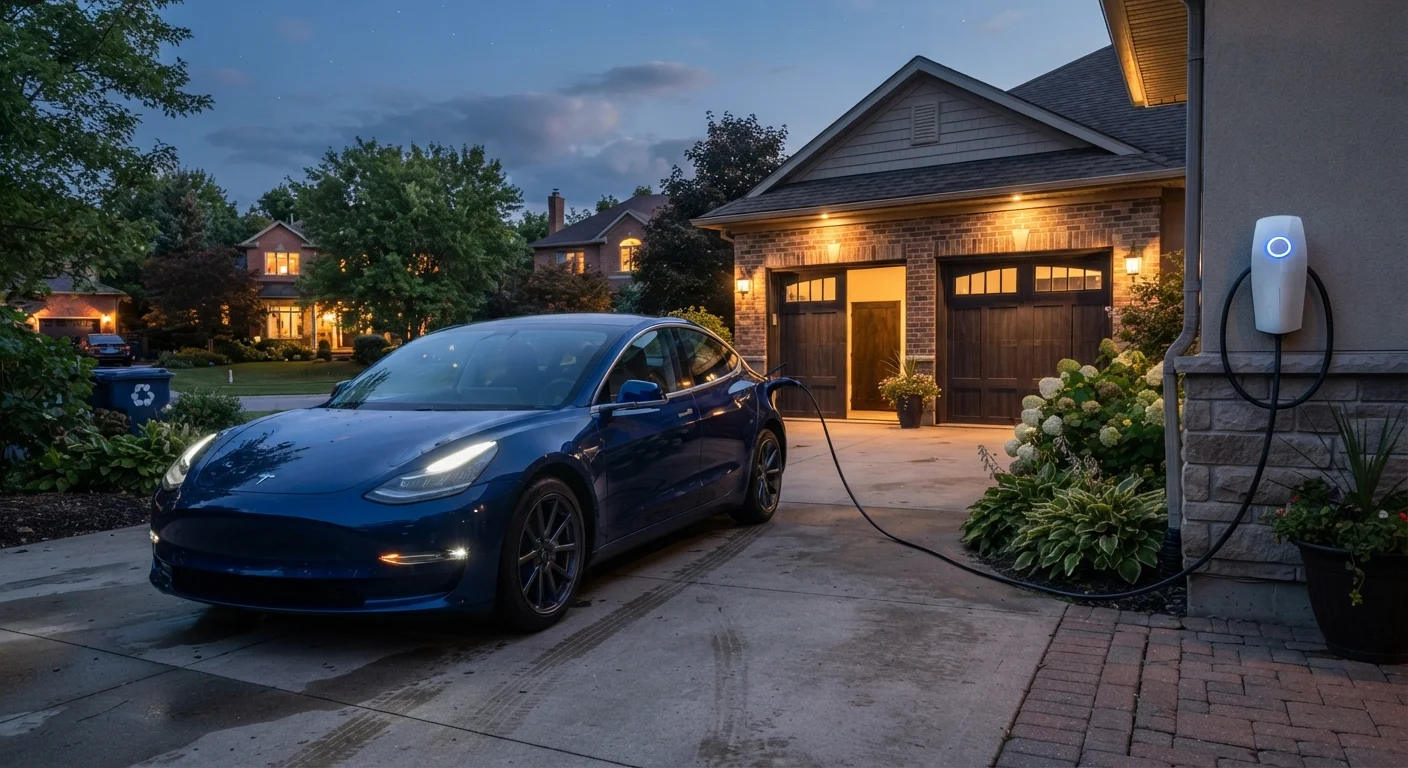
Unlike gas vehicles, most EV owners benefit from installing a Level 2 (240-volt) home charging station. While a standard 120-volt outlet can technically charge an EV, it is significantly slower and impractical for daily use with many models. Installing a Level 2 charger involves both equipment and electrical work, with total costs that vary based on your home's existing wiring and local electrician rates. Some state and utility programs offer rebates that offset part of this cost - check with your utility provider for current offerings.
Considered over a full ownership period, these infrastructure costs are typically a one-time expense that spreads out over many years of use. When evaluating the complete financial picture, it helps to think about EV ownership the same way our guide on leasing vs. owning frames vehicle decisions: total exposure over the full term, not just monthly outlay.
For first-time EV buyers, our companion piece EV ownership from day one covers the practical side - charging basics, range expectations, and what surprises new owners most often encounter. And for a structured approach to the full ownership cost picture, the Ownership hub is a useful starting point.
This article is for general informational purposes only and does not constitute financial or purchasing advice. Individual costs vary by location, vehicle model, driving habits, and personal circumstances. Consult qualified professionals for guidance specific to your situation.