

Key Takeaways
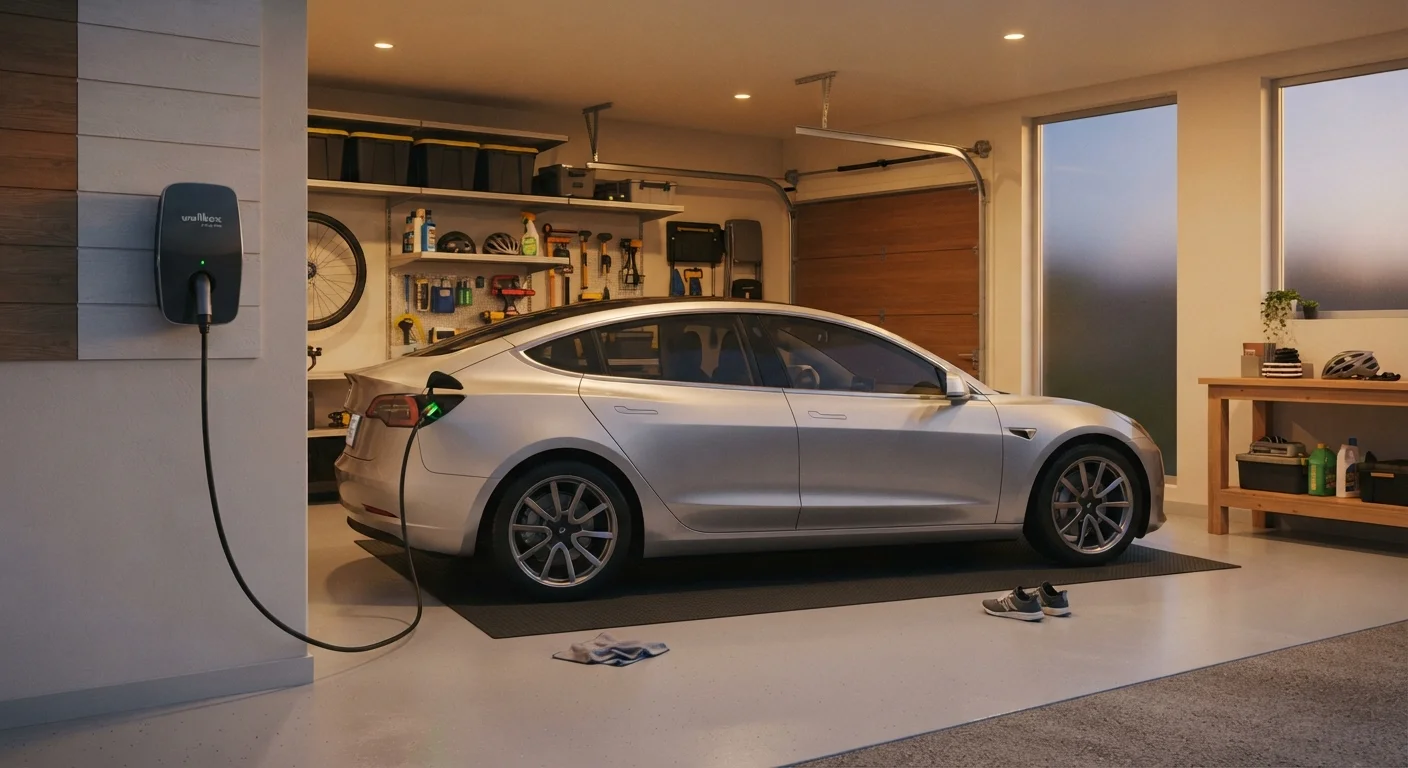
- Most EV owners do the majority of charging at home overnight, not at public stations.
- Rated range figures are estimates - real-world range varies with temperature, speed, and climate use.
- EVs eliminate oil changes and have fewer brake-wear issues, but tires and cabin filters still need attention.
- Total ownership costs depend on electricity rates, charging equipment, insurance, and depreciation.
- First-year EV ownership involves a learning curve; most drivers adapt quickly to new routines.
Start here
How EV Charging Actually Works
Next
Understanding Range - and Range Anxiety
Then
Maintenance: What Changes and What Disappears
When you're ready
Costs Beyond the Purchase Price
Finally
Common First-Year Surprises
How EV Charging Actually Works
For most new EV owners, charging replaces the gas station - and the biggest shift is that it usually happens at home. Understanding the three levels of charging is essential before your first day behind the wheel.
Level 1 Charging
Charging using a standard 120-volt household outlet. It's the slowest method but requires no special equipment beyond the cable that comes with the vehicle.
Level 2 Charging
Charging via a 240-volt circuit, similar to a large home appliance. It charges significantly faster than Level 1 and is the most common home setup for EV owners.
DC Fast Charging
High-power public charging that delivers direct current to the battery, adding substantial range in a short time. Best suited for road trips rather than everyday use.
Regenerative Braking
A system that converts the energy created when slowing down back into electricity, which is stored in the battery. It reduces brake pad wear and extends driving range.
Range
The estimated distance an EV can travel on a fully charged battery. Official figures are produced under test conditions; real-world range varies based on weather, speed, and driving habits.
State of Charge (SOC)
The percentage of battery capacity currently available - essentially the EV equivalent of a fuel gauge reading.
- Level 1 (120V): Uses a standard household outlet. Adds roughly 3-5 miles of range per hour. Adequate for low-mileage drivers but slow for daily commuters.
- Level 2 (240V): Requires a dedicated circuit, similar to a clothes dryer. Adds 15-30 miles per hour. Most home owners install a Level 2 unit in their garage.
- DC Fast Charging: Found at public charging networks. Can add significant range in 20-40 minutes. Best used for road trips rather than daily charging, as frequent fast charging can affect battery longevity over time.
Public charging networks vary in availability and connector compatibility. Check that your vehicle's connector type works with the networks available in your area. For a full breakdown of charging terminology, see the EV terminology glossary.
Understanding Range - and Range Anxiety
Every EV carries an official range estimate, but that number is produced under standardized test conditions. Real-world range can differ based on several factors:
- Temperature: Cold weather reduces battery efficiency and cabin heating draws from the same pack. Hot weather can also affect performance.
- Speed: Highway driving at high speeds consumes energy faster than city driving.
- Climate use: Running heat or air conditioning draws power directly from the battery.
- Driving style: Aggressive acceleration shortens range; smooth, anticipatory driving extends it.
Range anxiety - the worry of running out of charge - is common among new EV owners but tends to diminish quickly. Studies and owner surveys consistently find that most drivers cover well under 100 miles daily, which falls comfortably within the range of most current EVs. Planning longer trips around available fast-charging stops, using your vehicle's built-in navigation, and keeping charging habits consistent reduces uncertainty significantly.
Build a Charging Routine Early
Treat plugging in like locking your front door - do it every time you park at home, regardless of how much charge remains. Keeping the battery between roughly 20% and 80% for daily use is widely recommended by manufacturers to support long-term battery health. Save full charges for road trips.
Maintenance: What Changes and What Disappears
One of the most tangible differences in EV ownership is a simplified maintenance schedule. Because electric motors have far fewer moving parts than internal combustion engines, several routine services disappear entirely:
- No engine oil changes
- No spark plug replacements
- No timing belt or chain service
- Reduced brake pad wear, thanks to regenerative braking recapturing energy during deceleration
What remains? Tires wear normally - and because EVs are heavier than comparable gas vehicles, tire wear may actually be slightly accelerated. Cabin air filters, windshield washer fluid, and wiper blades still need periodic replacement. Thermal management systems use coolant that may require service over time. Battery health is worth tracking, though most manufacturers design batteries to retain substantial capacity over many years of normal use.
For a detailed comparison, see how EV upkeep compares to gas cars.
Costs Beyond the Purchase Price
Purchase price is only one part of EV ownership economics. First-time buyers benefit from thinking through the full picture before committing.
- Home charging equipment: A Level 2 charger installation typically costs between $500 and $2,000, depending on electrical panel capacity and installation complexity.
- Electricity costs: Charging at home is generally less expensive per mile than gasoline, but the actual savings depend on your local electricity rates and how often you rely on pricier public charging.
- Insurance: EV-specific factors - including battery replacement costs and specialized repair networks - can affect premiums. See how EVs affect insurance coverage for context.
- Depreciation: EV resale values vary by model and market conditions; battery technology evolution affects how quickly older models depreciate.
- Tax incentives: Federal and state programs may offset purchase costs for qualifying buyers, but eligibility requirements apply. Consult a tax professional for guidance specific to your situation.
A fuller breakdown of these variables is available in our EV ownership costs explainer.
Don't Overlook Installation Costs
A Level 2 home charger may require an electrical panel upgrade if your home's capacity is limited - a cost that isn't always obvious upfront. Get an assessment from a licensed electrician before purchasing charging equipment. Improper installation of high-voltage charging circuits poses serious safety and fire risks; this is not a DIY project.
Common First-Year Surprises
Even well-prepared buyers encounter unexpected adjustments. Here are the most common ones:
- Adapting to one-pedal driving: Strong regenerative braking means lifting off the accelerator slows the car noticeably. Many drivers find this intuitive after a short adjustment period.
- Software updates: Many EVs receive over-the-air updates that can change behavior, add features, or occasionally require a reboot - similar to a smartphone.
- Charging etiquette: At shared public chargers, it's expected practice to move your vehicle once charging is complete to free the spot for others.
- Noise level: EVs are substantially quieter than gas vehicles, which some drivers love - and which requires extra awareness around pedestrians and cyclists at low speeds.
- Routine feels different: Instead of a weekly gas stop, you'll likely plug in most nights. This shift becomes second nature quickly for most owners.
The day-to-day differences of EV ownership guide covers these adjustments in greater depth. For broader ownership foundations, the Ownership hub covers insurance, maintenance, and vehicle management topics relevant to all drivers.