

Key Takeaways
- Regenerative braking converts braking energy into electricity rather than wasting it as heat.
- EV brake pads typically last longer than those on gas-powered vehicles because friction braking is used less.
- One-pedal driving is a mode that maximizes regenerative braking, allowing most stops without touching the brake pedal.
- Regenerative braking efficiency can vary with battery temperature, charge level, and road conditions.
- The system works alongside conventional friction brakes, which remain available for hard stops and emergencies.
Regenerative Braking
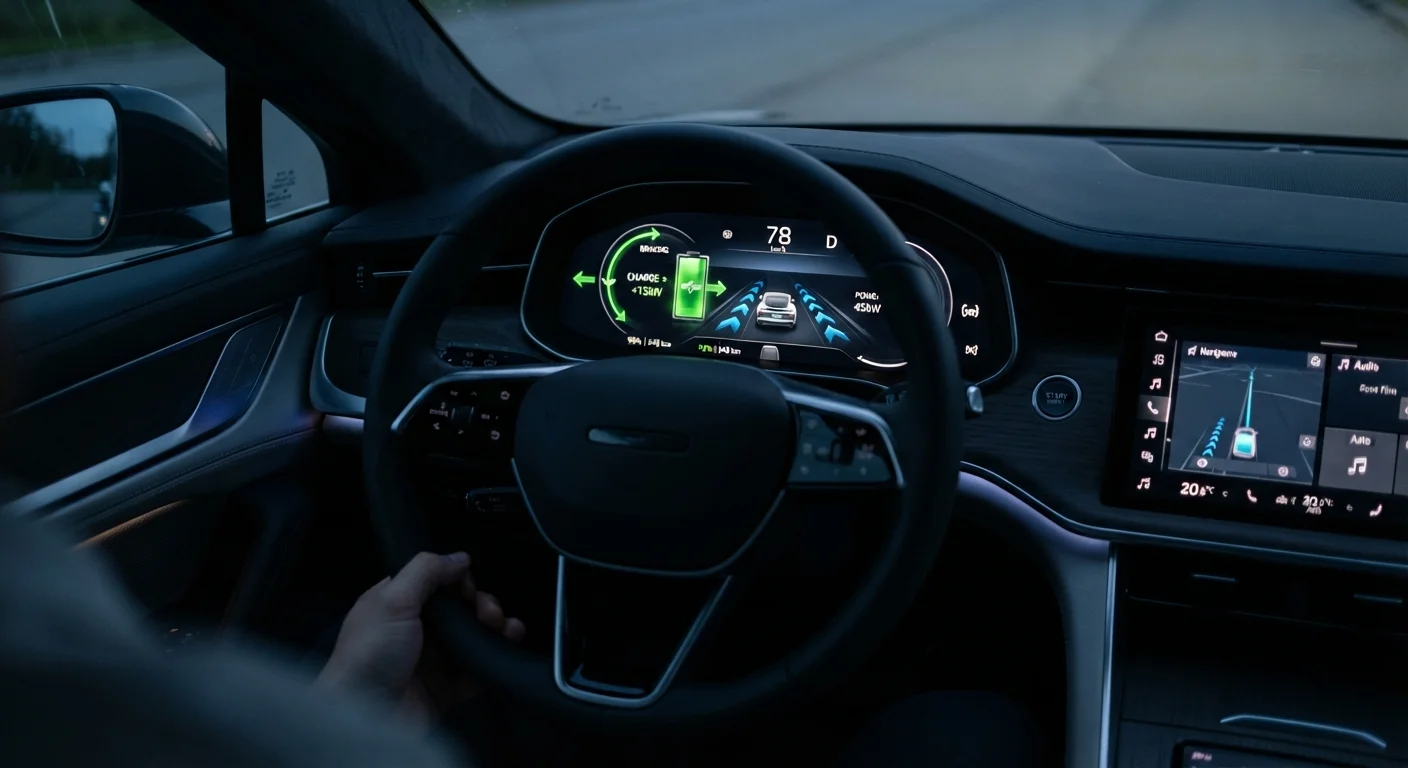
Regenerative braking is a technology used in electric and hybrid vehicles that captures the kinetic energy produced when you slow down and converts it back into electricity. Instead of that energy being lost as heat - as it is in conventional friction brakes - it flows back into the battery pack. The result is extended driving range and reduced wear on your brake pads.
The electric motor runs in reverse during deceleration, functioning as a generator. This creates electromagnetic resistance that slows the vehicle while simultaneously producing an electrical current fed back to the battery.
How Regenerative Braking Works
In a conventional vehicle, pressing the brake pedal engages friction pads against rotors, converting your car's forward momentum into heat that dissipates into the air - energy that's gone for good. Regenerative braking takes a fundamentally different approach.
When an EV driver lifts off the accelerator or applies light braking, the electric motor reverses its role. Instead of consuming electricity to turn the wheels, it becomes a generator: the spinning wheels drive the motor, which produces electrical current. That current is then directed back into the battery pack through the power electronics.
The electromagnetic resistance created by this generator action is what physically slows the vehicle. It's the same principle used in industrial braking systems and even old-fashioned dynamo bicycle lights - motion in, electricity out. To understand how this fits into the broader EV drivetrain, see how electric cars actually work.
Up to 70%
Braking energy potentially recoverable in city driving
The U.S. Department of Energy notes that regenerative braking can recover a significant share of the energy lost during urban deceleration, though real-world results vary by vehicle and driving style.
~30%
Potential urban range increase from regenerative braking
According to the U.S. Department of Energy's Alternative Fuels Data Center, regenerative braking can contribute meaningfully to extending EV range in stop-and-go conditions.
One-Pedal Driving Explained
Many EVs offer what manufacturers call one-pedal driving - a mode that cranks regenerative braking strength high enough that the car decelerates firmly when you simply release the accelerator. In many city driving situations, you can bring the vehicle to a complete stop without ever touching the brake pedal.
This takes a short adjustment period. Drivers accustomed to gas cars, where lifting off the throttle produces only mild engine braking, often find the stronger deceleration initially surprising. Within a few days of regular driving, most people adapt naturally and report that it makes stop-and-go traffic less fatiguing.
Adapting to One-Pedal Driving
Give yourself at least a week of regular driving before judging whether one-pedal mode suits you. Start in light traffic where you have more reaction time, and practice modulating your accelerator release gradually rather than lifting abruptly. Most drivers find the adjustment faster than expected, and many prefer it once they've adapted.
It's worth noting that one-pedal driving does not disable conventional brakes. Hard braking inputs and emergency stops still engage the friction brake system seamlessly. The two systems work in concert, with the vehicle's electronics blending them to deliver the right stopping force for the situation.
Range Benefits and Real-World Limits
The energy recovery from regenerative braking is most valuable in stop-and-go urban traffic, where a vehicle decelerates frequently. Studies and manufacturer data generally show that regenerative braking can recover a meaningful portion of the energy that would otherwise be lost - though actual figures vary widely by driving style, vehicle weight, and route profile.
Highway driving at steady speeds offers fewer opportunities for regeneration, so its range benefit is less pronounced in that context. Cold weather also reduces battery efficiency and can limit how much regenerated current the battery accepts, lowering the system's effectiveness in winter months.
When descending long grades, regenerative braking serves an additional purpose: it helps manage vehicle speed without overloading the friction brakes. This is worth understanding alongside brake fade on long descents, a risk that conventional vehicles face when drivers rely too heavily on friction braking downhill.
Battery State of Charge Affects Regeneration
When an EV's battery is nearly fully charged, it has limited capacity to accept additional electricity from regenerative braking. Some vehicles automatically reduce regenerative braking strength in this state to avoid overcharging. If you notice lighter-than-usual deceleration on pedal lift shortly after a full charge, this is the likely explanation - not a system fault.
Maintenance and Long-Term Implications
One practical side effect of regenerative braking is reduced wear on conventional brake components. Because friction brakes are engaged less often in everyday driving, brake pads and rotors on many EVs last significantly longer than those on comparable gas-powered vehicles.
However, this reduced use introduces its own consideration: brake rotors can develop surface rust if they sit unused for extended periods, particularly in humid climates. Most EV owners and technicians consider this a manageable tradeoff rather than a serious concern, since routine driving cycles the friction brakes enough to keep surfaces clean.
For a broader look at how EV ownership changes your maintenance routine, EV maintenance compared to gas cars covers what disappears from the service schedule and what new items take their place.