
The Environmental Footprint of an EV: Lifecycle Emissions From Manufacture to End of Life

Key Takeaways
- EVs produce zero tailpipe emissions but carry a higher manufacturing carbon cost than conventional vehicles.
- Battery production is the largest single source of an EV's manufacturing emissions.
- An EV's lifetime emissions depend heavily on how the local electricity grid generates power.
- On average, lifecycle analyses find EVs emit significantly less CO₂e than gasoline cars over a vehicle's life.
- Battery recycling and second-life reuse are improving but remain an evolving part of the emissions picture.
- The grid is getting cleaner over time, which steadily improves the lifetime emissions profile of EVs already on the road.
Lifecycle Emissions (EV)
Lifecycle emissions refer to the total greenhouse gases produced by a vehicle across its entire existence - from raw material extraction and manufacturing, through years of operation, to eventual disposal or recycling. For electric vehicles, this analysis is often called a "well-to-wheel" or "cradle-to-grave" assessment. It captures the full picture rather than just what comes out of a tailpipe (which, for an EV, is nothing).
Formal lifecycle assessments (LCAs) follow standardized methodologies such as ISO 14040/14044 and typically express results in grams of CO₂-equivalent (CO₂e) per kilometer driven.
Why the Tailpipe Is Only Part of the Story
When someone argues that EVs "aren't really green" because of their manufacturing process, they're raising a legitimate question - just an incomplete one. Evaluating any vehicle solely on what exits its exhaust (or doesn't) misses the upstream and downstream emissions that every car generates throughout its life.
A lifecycle assessment (LCA) attempts to account for all of it: the energy used to mine lithium, cobalt, and nickel; the emissions from stamping, welding, and assembling the vehicle; the carbon intensity of the electricity (or gasoline) consumed over years of driving; and finally what happens when the vehicle reaches the end of its useful life. For EVs specifically, battery end-of-life outcomes are an increasingly important variable in that final accounting.
No single number captures every scenario - results shift based on vehicle size, battery chemistry, regional electricity sources, and how many miles the car ultimately travels. But LCAs give researchers and policymakers a structured way to compare technologies on equal terms.
Manufacturing: Where EVs Start at a Disadvantage
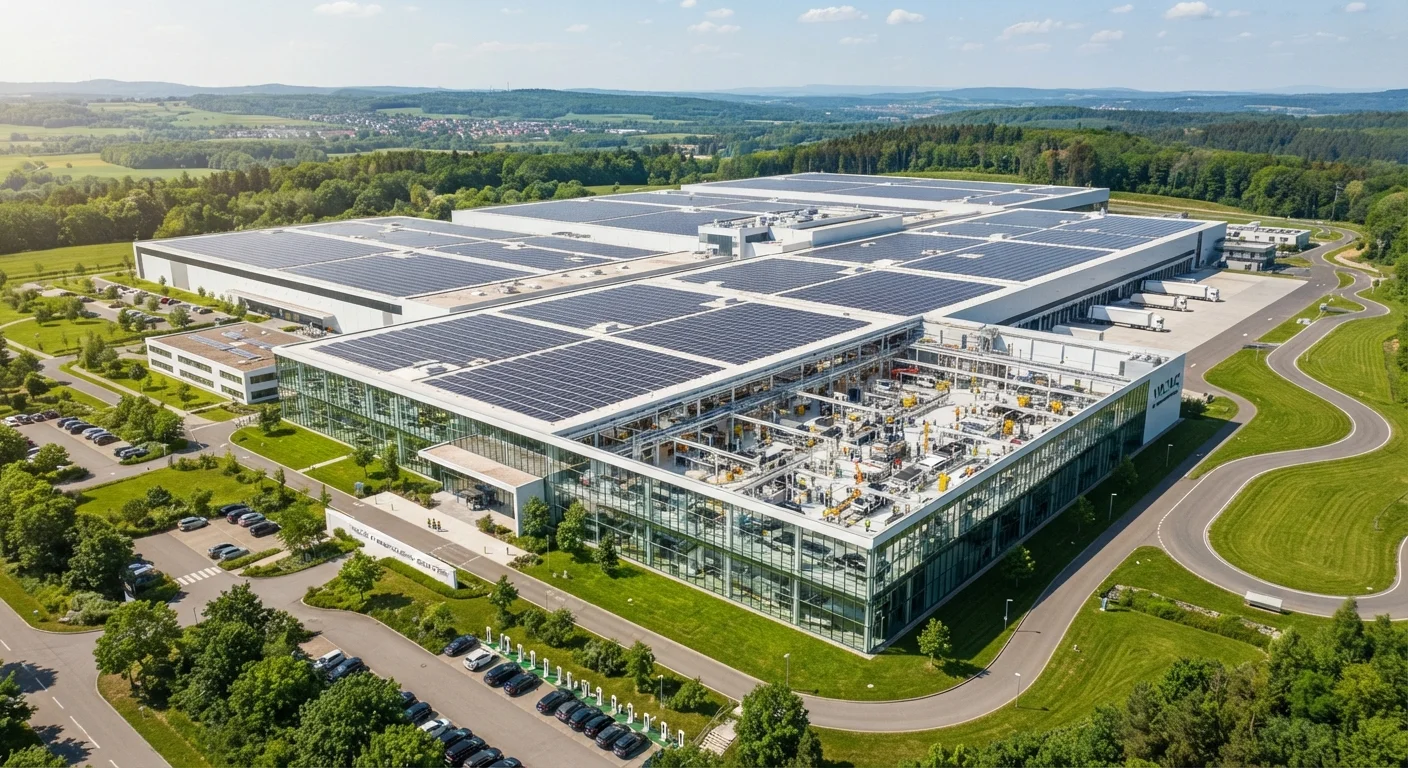
Building any vehicle requires enormous energy. Casting metal, forming glass, and assembling electronics all generate emissions before the car ever moves. For EVs, the battery pack adds a significant additional layer.
Producing a large lithium-ion battery pack - the kind powering a long-range EV - currently generates substantially more CO₂e than building a conventional engine and transmission. Estimates vary widely depending on where the battery is manufactured and the carbon intensity of that region's grid, but multiple peer-reviewed studies place battery production as the single largest source of manufacturing-phase emissions for EVs.
~40-60%
Lower lifetime CO₂e vs. gasoline cars (typical US scenarios)
Multiple lifecycle analyses, including research from the ICCT, consistently find EVs emit roughly 40-60% less CO₂-equivalent over their full lifetime compared to gasoline vehicles across average US grid conditions.
~1-4 years
Typical carbon payback period for EVs in the US
Studies modeling average US driving distances and grid mixes generally estimate EVs recover their higher manufacturing emissions within one to four years of typical operation.
~40-50%
Share of EV manufacturing emissions from battery production
Research from institutions including MIT and the ICCT attributes roughly 40-50% of a new EV's total manufacturing-phase emissions specifically to battery pack production, varying by pack size and factory energy source.
This means an EV starts its operational life with a higher "carbon debt" than a gasoline vehicle. The key question lifecycle analysts ask is: how quickly does real-world driving erase that deficit?
The Operational Phase: Where Grid Mix Becomes Central
Once an EV is on the road, its emissions profile is shaped almost entirely by one factor: the carbon intensity of the electricity it consumes. A car charged predominantly on solar or wind power generates a fraction of the operational emissions of one charged from a coal-heavy grid.
In the United States, the grid varies dramatically by region. The Pacific Northwest - heavy with hydropower - offers very low-carbon charging. Parts of the Midwest historically reliant on coal present a less favorable picture, though that is shifting as renewable capacity expands. The EPA's eGRID database tracks the emissions intensity of every US grid region and is a useful reference for understanding local conditions.
Your Grid Region Changes the Math
The EPA's eGRID tool allows consumers to look up the carbon intensity of their specific utility's electricity supply. Drivers curious about how their local grid affects their EV's operational emissions can use this publicly available resource as a starting point. Keep in mind that grid mixes shift seasonally and evolve year over year as new generation sources come online.
Critically, as grids decarbonize over time, EVs already on the road automatically benefit. A car sold today will be driven for a decade or more - and the electricity it draws in year eight will likely be cleaner than what it consumed in year one. Gasoline vehicles don't share this advantage; their fuel's carbon intensity is largely fixed.
Understanding how operational charging differs from day-to-day refueling expectations is covered in depth in our look at EV ownership versus gas car ownership.
End of Life: Recycling, Second Life, and Open Questions
The final phase of an EV's lifecycle involves what happens when the battery can no longer reliably power the vehicle. At that point, two pathways exist: second-life reuse (repurposing packs for stationary energy storage, for example) and direct recycling to recover raw materials.
Both pathways can reduce the lifecycle emissions burden. Recovering lithium, cobalt, manganese, and nickel from old packs reduces demand for virgin mining - one of the more emissions-intensive parts of the supply chain. Recycling technology is advancing, though the industry is still scaling up to handle the volume of batteries that will reach end-of-life in the coming decades. For a fuller look at where this infrastructure stands today, see our explainer on what happens to EV batteries at end of life.
The honest caveat: battery recycling rates and second-life deployment are still maturing. LCA models that assume high recycling rates project better outcomes than current real-world rates fully support. This is a genuine area of ongoing research and policy development, not a settled calculation.
What the Evidence Actually Shows
Despite the complexity, a consistent finding emerges across major lifecycle analyses - including studies from the International Council on Clean Transportation (ICCT), the European Environment Agency, and academic institutions: over a full vehicle lifetime, EVs produce meaningfully fewer lifecycle CO₂e emissions than comparable gasoline vehicles in most parts of the world, including across most of the United States.
“When you look at the full lifecycle - from mining the materials to driving the car to recycling the battery - electric vehicles come out significantly ahead of gasoline vehicles on carbon emissions in nearly every region where they're being sold today.”
— Georg Bieker, Researcher, International Council on Clean Transportation (ICCT)
The advantage is not uniform. Larger battery packs, heavier vehicles, and coal-intensive grids compress the benefit. But the directional finding - that EVs carry a lower lifecycle carbon burden over typical ownership periods - holds up under peer review in the vast majority of modeled scenarios.
It's also worth noting that the manufacturing-phase emissions gap is narrowing. Battery production is becoming less energy-intensive as manufacturers improve efficiency and shift toward lower-carbon energy sources in their factories. Battery longevity research also matters here: a battery that lasts longer spreads its manufacturing emissions across more miles, improving the per-kilometer footprint.
This article is for general informational purposes only. Data in lifecycle analyses varies by methodology, region, and assumptions. Readers seeking specifics for policy or purchasing decisions should consult primary research sources.