

Key Takeaways
- Your owner's manual is the single most useful document that comes with your car - read it.
- Most states require minimum liability insurance before you can legally drive.
- Vehicle registration and title transfer have strict deadlines that vary by state.
- Routine maintenance intervals are set by your manufacturer, not guesswork.
- Safe habits formed early can reduce your long-term risk and insurance costs.
Start here
Read the Owner's Manual First
Next
Get Your Insurance in Order
Then
Register the Vehicle and Secure Your Title
When you're ready
Schedule Your First Maintenance Service
Build for the long run
Build Safe Driving Habits Early
Read the Owner's Manual First
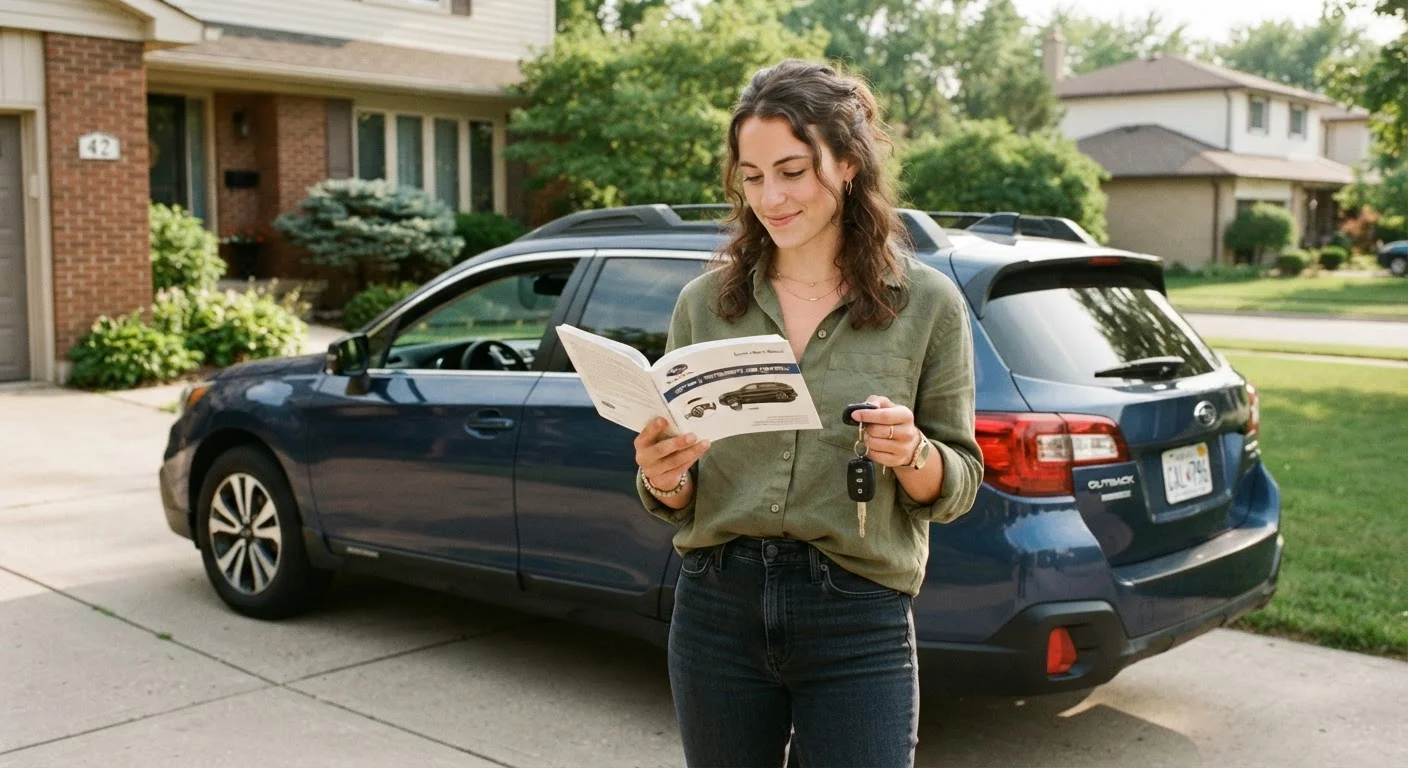
Most new owners toss the owner's manual in the glove box and forget it exists. That's a costly habit. The manual tells you exactly which fuel grade to use, what your tire pressure should be, when to service the transmission, and how every dashboard warning light is defined. Ignoring it means relying on guesswork for decisions that directly affect your safety and your wallet.
Spend at least 30 minutes scanning the manual on day one. Pay special attention to the maintenance schedule, the warning light index, and any notes about towing capacity or load limits if those apply to how you intend to use the vehicle. If you purchased a used car without a physical manual, most manufacturers post digital versions on their official websites at no cost.
Owner's manual
A booklet provided by the vehicle manufacturer that explains how to operate and maintain your specific car, including service intervals, warning lights, and specifications.
Liability insurance
A type of auto insurance that pays for damages or injuries you cause to other people or their property in an accident - it does not cover damage to your own vehicle.
Vehicle title
A legal document that proves who owns a vehicle. It must be transferred to you when you buy a car and is separate from the registration.
Maintenance schedule
A manufacturer-specified timetable - usually based on mileage or time intervals - that tells you when to perform services like oil changes, tire rotations, and inspections.
VIN
Vehicle Identification Number - a unique 17-character code assigned to every car that encodes details about its make, model, origin, and history.
Comprehensive coverage
An optional (or lender-required) insurance type that covers non-collision damage to your vehicle, such as theft, fire, flooding, or hail.
Get Your Insurance in Order
In every US state, driving without at least the minimum required liability insurance is illegal. Liability coverage pays for harm you cause to other people and their property - it does not pay for repairs to your own car. If you financed your vehicle, your lender will almost certainly require comprehensive and collision coverage as well.
Before you drive anywhere, confirm your policy is active and you have proof of insurance - either a physical card or a digital copy accessible on your phone. For a plain-language explanation of coverage types, deductibles, and what each one actually protects, see our auto insurance basics guide.
Keep Digital Copies of Key Documents
Photograph your insurance card, registration, and any warranty documents and store them in a secure cloud folder. If your glove box is ever lost, stolen, or damaged, you'll have instant access to the information you need during a traffic stop or after an accident.
Register the Vehicle and Secure Your Title
State registration deadlines for newly purchased vehicles typically range from 10 to 30 days. Missing them can result in fines. Registration requires proof of insurance, the vehicle's title or a bill of sale, and payment of applicable fees. Requirements differ by state, so visit your state's Department of Motor Vehicles (DMV) website for the exact checklist.
Your title is your legal proof of ownership. If you paid cash, the title transfers directly to you. If you financed, the lender typically holds the title until the loan is paid off. Store any title documents you receive securely at home - not in the car. For a thorough look at titles, registration, and every other ownership stage, our guide on comprehensive car ownership covers the full lifecycle. You can also learn to decode your vehicle's history using your VIN.
Don't Miss Your Registration Deadline
Driving an unregistered vehicle - even briefly - can result in fines, and in some states your car may be impounded. Check your state's DMV website within the first few days of ownership to confirm the exact deadline and required documentation for your situation.
Schedule Your First Maintenance Service
Your owner's manual contains a manufacturer-specified maintenance schedule - this is your roadmap. Common early priorities include an oil and filter change, tire rotation, brake inspection, and checking coolant and windshield washer fluid levels. If you bought a used vehicle with an unclear service history, treat the oil change as urgent rather than optional.
Keep a simple log of every service performed, the date, and the mileage. This record protects your warranty, helps you stay on schedule, and adds documented value if you ever sell the car. If you're curious how electric vehicles differ in maintenance demands, our guide on EV ownership from day one provides a useful comparison.
Build Safe Driving Habits Early
The habits you form in your first months of ownership tend to stick. Basic practices - consistent mirror checks, smooth braking, maintaining safe following distances, and avoiding distracted driving - reduce your crash risk and can help moderate your insurance premiums over time. Familiarize yourself with the rules of the road that are specific to your state, since traffic laws vary in meaningful ways.
New drivers should also build confidence in higher-demand scenarios gradually. Our guide to driving on the interstate for the first time is a practical resource for anyone not yet comfortable with highway speeds and merging. The broader Driving hub covers emergencies, road rules, and safety fundamentals worth bookmarking.
This article is for general informational purposes only and does not constitute legal, financial, or professional automotive advice. Consult your state's DMV and a licensed insurance professional for guidance specific to your situation.