

Key Takeaways
- A car title is the official legal document proving who owns a vehicle.
- If a lender financed your vehicle, they typically hold the title until the loan is paid off.
- Title status - clean, salvage, or rebuilt - significantly affects a vehicle's insurability and resale value.
- Losing a title doesn't mean losing the car; most states allow you to apply for a duplicate.
- Transferring title correctly when buying or selling protects both parties from liability.
Car Title
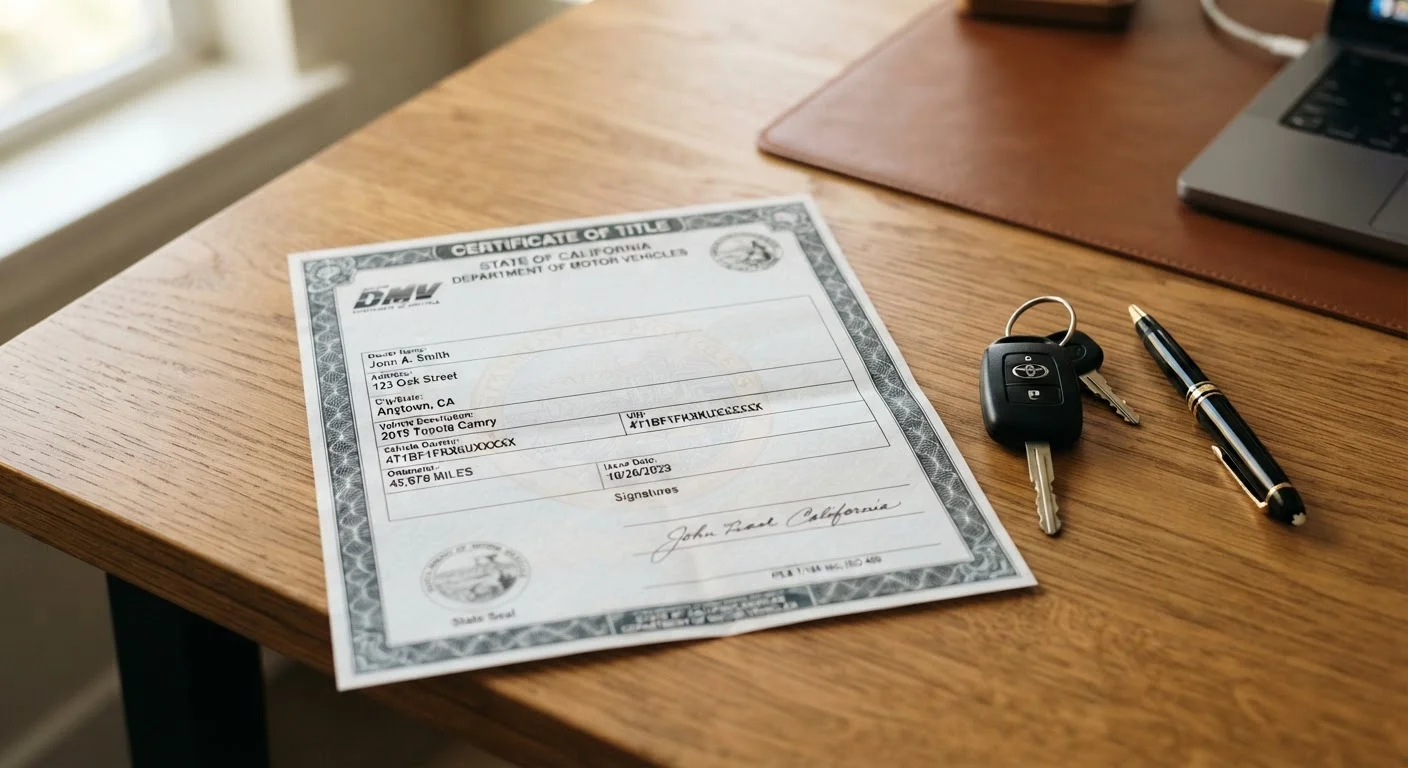
A car title - officially called a Certificate of Title - is a legal document issued by your state's motor vehicle agency that identifies the registered owner of a vehicle. It serves as the official proof of ownership, similar to a deed for real estate. Without a valid title, you generally cannot legally sell, register, or in many cases insure a vehicle.
Titles include key identifying information such as the Vehicle Identification Number (VIN), make, model, year, odometer reading at time of transfer, and any lienholder (lender) details if the vehicle is financed.
What a Car Title Actually Is
Think of a car title as the birth certificate of your vehicle's ownership. It's a government-issued document - produced by your state's Department of Motor Vehicles or equivalent agency - that formally records who legally owns a specific vehicle. Every title is tied to a unique Vehicle Identification Number (VIN), which links the document to one specific car, truck, or motorcycle. You can learn more about how VINs work in our guide to Vehicle Identification Numbers.
The title records the owner's name and address, the vehicle's year, make, model, and body type, the odometer reading at the time of each ownership transfer, and any lienholders - lenders who have a financial interest in the vehicle because it was used as collateral for a loan.
It's important not to confuse a title with a vehicle registration. Registration is a recurring process that authorizes you to operate the vehicle on public roads and must be renewed periodically. The title, by contrast, is about ownership - who the vehicle legally belongs to - and only changes when ownership is transferred.
What a Title Proves - and Why That Matters
A car title is your legal evidence that you own the vehicle. This matters in several practical situations every owner will eventually face:
- Selling the vehicle: A buyer has no reliable way to confirm you have the legal right to sell without a title. Completing a sale without one can expose both parties to legal risk.
- Registering the vehicle: States typically require proof of ownership to issue license plates and registration.
- Insuring the vehicle: Insurers generally need to verify ownership. See our overview of auto insurance basics for more on what documentation coverage requires.
- Financing or refinancing: Lenders use the title to establish their lien - their legal claim against the vehicle if the loan isn't repaid.
50
States with unique title issuance rules
Each U.S. state administers its own titling laws, meaning requirements, fees, and processing times can differ significantly depending on where you register your vehicle.
~30 days
Typical window to transfer title after purchase
Most states require the new owner to complete a title transfer within 30 days of purchase; late transfers often incur additional fees or penalties.
Title status also matters. A vehicle can carry a clean title, a salvage title, or a rebuilt title, among other designations. Each status signals something meaningful about the vehicle's history and can affect what coverage insurers will offer and what a future buyer might pay. Our article on salvage, rebuilt, and clean title statuses breaks down what each designation means in practical terms.
Financed Vehicles: Who Holds the Title?
If you financed your vehicle through a bank, credit union, or dealership lending arm, you may not have the physical title at all - at least not yet. The lender is typically recorded as a lienholder and may retain the document until the loan balance reaches zero.
Once you've made your final payment, the lender is required to release the lien. Depending on your state, they'll either send you the clean title directly or notify the DMV electronically so the updated title can be issued to you. If you don't receive your title within a reasonable period after payoff, contact your lender and your state DMV - don't let it lapse.
Store Your Title Somewhere Safe
Once you receive a clean title - whether after purchase or after paying off a loan - keep it in a secure location such as a home safe or a fireproof document box. Do not store it in your vehicle; if your car is stolen, losing the title creates an additional layer of complication. A clear, legible title with no alterations is much easier to transfer when the time comes.
For a comprehensive look at every stage of vehicle ownership - from initial title to eventual trade-in - our guide on comprehensive car ownership is a useful reference.
Transferring, Replacing, and Protecting Your Title
When a vehicle changes hands - through a sale, gift, or inheritance - the title must be formally transferred. This typically involves the seller signing the back of the title, recording the sale price and odometer reading, and the buyer submitting the signed title to the DMV along with applicable fees and taxes. Our detailed walkthrough on what's involved in a car title transfer covers the specifics of this process.
If you've lost your title, a duplicate can usually be obtained through your state DMV for a modest fee. You'll typically need a government-issued ID and your vehicle's VIN. Acting promptly is wise - a missing title can complicate any future sale or financing.
Checking a vehicle's title history before purchasing a used car is equally important. A vehicle history report can surface past title events - including salvage designations, odometer rollbacks, or unresolved liens - that the seller may not volunteer.
This article provides general educational information about vehicle titles and is not legal advice. Title laws and procedures vary by state. Consult your state's motor vehicle agency or a qualified professional for guidance specific to your situation.